
LumaFlex Essential for pets: in-depth review
Know What Matters
The quick guide to choosing a red light therapy device for pets.
Written by: Alon Landa
Reviewed: March 2026
Updated: March 2026
Note on independence: We are not affiliated with LumaFlex. We purchased a LumaFlex Essential unit and tested it using our standard in-house method. Individual units, measurement tools, and test setup can change results, so treat our numbers as “what we measured on our device,” not a claim about every unit ever produced.
This article is part of our Red Light Round Up series. If you want the broad clinical overview, protocols, and condition guidance, see red light therapy for dogs.
Introduction to Luma Flex
The LumaFlex is a well-made wrap with a very large treatment area, and the brand makes a real effort on education. The main issue is performance: our irradiance measurements were far below what is published on their website, and the wrap format makes fur and skin contact a limiting factor for dogs, especially for deeper targets like hips and spine.
🐶 Not sure if at-home PBM fits your dog’s condition?
Take the 2-minute quiz and get a starting point based on condition and goals.
Anderson
Is LumaFlex Essential effective for dogs?

LumaFlex Essential can support superficial comfort and tissue recovery when red and near infrared light reaches the skin and the delivered dose is adequate. For deeper targets like hips and spine, results depend on measured irradiance, time-to-dose, and fur contact, and performance can drop if light is lost in fur or there are air gaps. Use it as an adjunct to veterinary diagnosis and a clear protocol, not as a replacement for medical care.
The basics: what LumaFlex is trying to be
LumaFlex Essential is a flexible LED wrap that aims to deliver photobiomodulation (PBM) at home. In reviews and product pages, you will see a mix of terms:
Photobiomodulation (PBM), also called red light therapy, low-level laser therapy (LLLT), LED therapy, cold laser, and near-infrared therapy, refers to the same therapy category using red and near-infrared light to influence cellular biology.
That matters because “laser vs LED” is not the deciding factor. Delivered wavelength, delivered dose, and treatment interval are what drive outcomes.
Pet-first design vs “also works for pets” design
Some light therapy products are built around human use cases first: flat, hairless skin, predictable contact, and easy strap placement. Pets introduce different constraints, especially fur, anatomy, and compliance (movement, positioning, tolerance). A pet-first device design usually includes at least one of the following: a fur strategy (contact optics or fur-parting tip), dose guidance that accounts for coat type and body region, and protocols written for veterinary use cases rather than human wellness routines.
In our view, the LumaFlex Essential behaves more like a human wrap adapted for pets. The wrap format can be convenient, but it does not solve the biggest pet-specific constraint: consistent skin contact through fur.
Our scorecard for LumaFlex essential

1) Device specs (measured irradiance): D-
What LumaFlex publishes (website):
- Red: 45 mW/cm²
- Near-infrared: 30 mW/cm²
- Total: 70 mW/cm²
What we measured (our purchased unit):
- About 10 mW/cm² in the center
- About 5 mW/cm² toward edges and between LEDs
Minimum viable delivery (based on WALT guidance)
WALT veterinary PBM guidelines propose a minimum irradiance of 25 mW/cm² for non-superficial targets (for example, joints, deeper soft tissue), with superficial skin targets often tolerating lower requirements. If a device is measuring below that minimum at the skin, then after real-world losses (fur scatter, small air gaps, uneven pressure), the delivered light at deeper target tissue becomes less predictable.
See proposed WALT veterinary PBM guidelines: /proposed-walt-guidelines/
Video: our irradiance spot-check (meter demo)
This video shows our spot-check method using a light meter and the same general setup across multiple at-home devices, including the LumaFlex Essential. These measurements reflect what we observed on our purchased unit with our test setup. Results can vary by unit, distance, contact pressure, and meter characteristics.
Method notes (why numbers vary across tests)
- Meter readings depend on distance, angle, and whether the device is flush to the meter surface.
- LED wraps can read differently across the center vs edges and between LEDs.
- Fur and air gaps reduce delivered dose in real use, even if a device tests well on a flat surface.
What this video shows (text summary)
- We compare multiple red light therapy devices on the same meter for a consistent point of reference.
- We take readings at the center and across other areas to illustrate how output can vary across a wrap.
- We use these readings to estimate time-to-dose, then discuss how fur and contact can lower real delivered light.
If you believe the published 75 mW/cm², you expect a certain time-to-dose at the skin. At the levels we measured (5 to 10 mW/cm² across much of the wrap surface), sessions can become long. More importantly, these measurements are below the 25 mW/cm² minimum referenced in the WALT guideline summary for non-superficial targets, which means the device may be poorly suited for deeper goals once fur and contact losses are included.
Fairness note: If LumaFlex has third-party lab reports (with test distance, spot size, and measurement method), we would love to review them and update this section.
2) Build quality and design: B
This is where LumaFlex shines. The wrap format is durable and feels like it can survive regular use. As LED wraps go, it is a nicer build than many “velcro pad + plastic cover” designs.
The trade-off is physics: wraps are great for coverage, but they struggle with consistent skin contact and fur separation in real dogs.
3) Clinical information accuracy and clarity: Needs work
Two separate issues here:
- Specs clarity: Our measurements do not match the published numbers. That is the core concern because specs determine dosing.
- Suggested treatment guidance: The suggested treatment times and patterns we saw do not appear to map cleanly to parameter-based veterinary dosing concepts (fluence, irradiance, interval). When guidance is vague, owners tend to under-dose, over-dose, or stop using the device.
4) Beyond the device (education + support): B
They do more education than most. That is real value.
What is missing is the boring part that drives outcomes: compliance systems and clinician feedback loops. Most at-home devices fail because people cannot keep a schedule for weeks, cannot adjust based on response, and do not know when the plan is wrong.
If you want the framework we use to judge devices:
Download The Smart Pet Parent’s Guide to Choosing a Red Light Therapy Device (checklists, red flags, and questions to ask before you spend).
Matilda
The big limiter for dogs: fur + contact

Wraps and pads often assume “human skin conditions,” meaning a flat, hairless surface.
Dogs are the opposite: fur scatters light and creates air gaps. Even small gaps matter.
What this means for LumaFlex:
- On short-haired dogs, thin-coat areas, or clipped areas, you might get better delivery.
- On dense coats, double coats, or dark coats, a wrap can lose a large fraction of dose before light even hits skin.
- For deeper targets (hip joint, spine, deep muscle), low irradiance plus fur loss is a rough combination.
This is why pet-specific delivery tools exist (comb tips, contact optics) and why in-clinic Class IV systems can sometimes “brute force” depth with higher output, while home devices usually cannot.
Why the minimum matters with fur
Even if a device is close to a minimum threshold on bare skin, fur and imperfect contact can reduce delivered light enough to fall below that minimum. That is one reason wraps and pads often perform better for superficial areas than for deep joint or spinal targets on real dogs.
Why our measured irradiance matters
Most owners read “watts” or “number of LEDs.” Those numbers are usually not the right question.
The right questions are:
- What is irradiance at the treatment surface (mW/cm²), under real use?
- How long does it take to deliver a target dose (J/cm²) to a given area?
- Does fur and contact reduce that dose enough to matter?
If the device is truly around 75 mW/cm² at skin, you can reach common veterinary “healing range” doses faster. If it is closer to 5–10 mW/cm², sessions become longer, and “real-world compliance” becomes harder.
LumaFlex vs MedcoVet Luma: what is actually different?
This is the cleanest way to frame the comparison without getting into hype.
1) Treatment area
- LumaFlex: very large coverage area (wrap format)
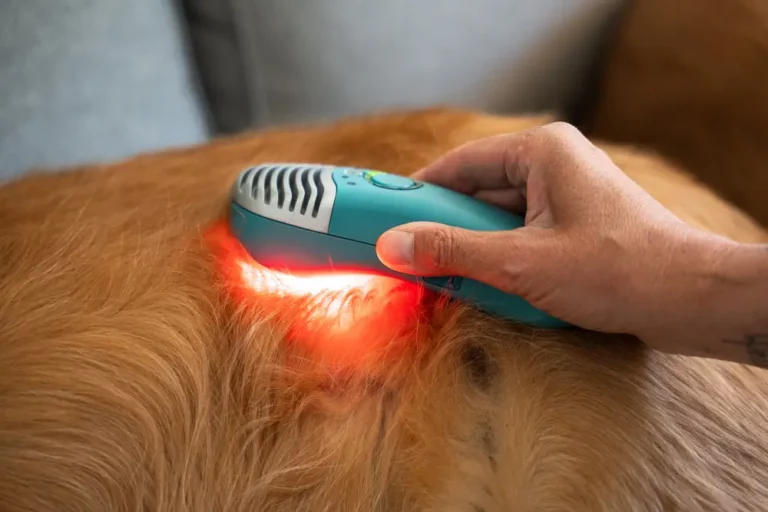
- Luma: smaller spot treatment area, designed for targeted application
Large area can be helpful for broad muscle regions, but it also increases the risk of “dose dilution” if irradiance is low or contact is inconsistent.
2) Fur delivery design
- LumaFlex: no built-in fur separation tool
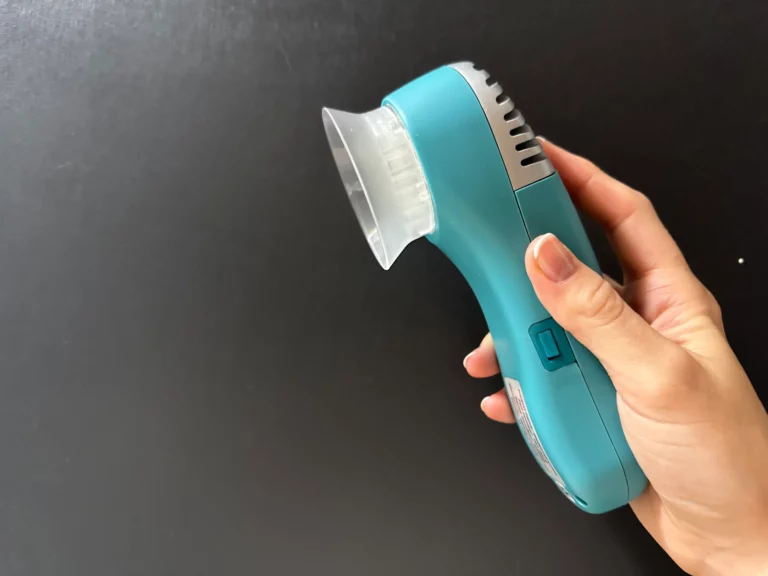
- Luma: optical comb to part fur and get closer to skin contact
For many dogs, fur delivery is the difference between “this is possible at home” and “this is frustrating.”
3) Outcomes are about protocol, not branding
Both devices can only perform as well as:
- wavelength choices
- delivered irradiance
- delivered dose (time x irradiance)
- interval (3–5x/week loading phase is common for many chronic issues)
- correct target location
If you want a protocol that matches your dog’s coat, target tissue, and schedule:
If you want a protocol that matches your dog’s coat, target tissue, and schedule:
Ella
Lumaflex and Medcovet Luma Specification Comparison:
Parameter | MedcoVet | LumaFlex | Notes |
Infra Red | 606mW | 1.44 W | Estimated from measured average irradiance (5 mW/cm2) x treatment area (718 cm2) = about 3.6 W total. IR vs red split uses the brand’s published ratio (about 60/40), not the website’s mW/cm2 claims.* |
Red Light | 404mW | 2.15 W | |
Other Light | 0mW | 0mW | |
Total Light | 1010mW | 3.6W | |
Treatment area | 14.5cm^2 | 718cm^2 | The LumaFlex is a wrap with large treatment area |
Power density | 70mW/cm^2 | 5mW/cm^2 | Per World Association of Laser Therapy (WALT) For healing, 50-100 mw/cm^2, for analgesic >300mW/cm^2. |
Comb | Yes | No | Very important as about 80% of light is lost in the fur |
Treatment times | 1 min 30 seconds per spot | 3-5 sessions/week (5-10 mins per area) | Suggested treatments don’t align with veterinary guidelines |
Heat Sink | Yes | No | None needed. Doesn’t have enough power. |
*We could not reconcile the irradiance values published on the LumaFlex website with what we measured on our purchased unit, so we estimated total output from our measurements instead of using the website’s mW/cm2 numbers. We used our measured average irradiance of 5 mW/cm2 (to reflect edge and between-LED regions) and multiplied it by the stated treatment area of 718 cm2 to estimate total emitted power: 0.005 W/cm2 x 718 cm2 = 3.59 W (about 3.6 W). We then estimated the infrared and red wattage by applying the IR/red proportion provided in the LumaFlex specs (about 60% infrared, 40% red). This yields about 2.15 W infrared and about 1.44 W red. These are calculated estimates based on our measured irradiance and the published ratio, not a direct lab measurement of total watts by wavelength.
LumaFlex “FDA approved” claim
You will see LumaFlex describes their light therapy device as “FDA approved.” That phrase can mean very different things depending on what, exactly, was reviewed and for what intended use.
For human medical devices, the FDA has defined pathways like FDA cleared (often via 510(k)) and FDA approved (typically via PMA). Those terms apply to specific products, for specific intended uses, under specific classifications.
What “FDA approved” does not automatically mean
- It does not automatically mean “tested for pets” or “approved for veterinary use.”
- It does not automatically confirm that the device delivers enough light to reach target tissue through fur.
- It does not tell you the dosing, protocol quality, or clinical outcomes you should expect.
What to ask a company claiming “FDA approved”
If a company uses FDA language, ask them to provide the exact documentation for the specific product being sold:
- What is the exact FDA status? (cleared vs approved vs registered/listed)
- What is the product’s intended use on the FDA record? (human use vs veterinary use, OTC vs prescription, etc.)
- What is the clearance or approval identifier? (for example, a 510(k) number or PMA number, if applicable)
- Which specific model is covered? (brand families often have multiple versions)
If they cannot provide a clearance or approval identifier, treat the claim as unverified marketing until you can confirm it independently.
What we asked, and what we received
We asked LumaFlex support for the clearance number associated with the “FDA approved” claim. Their reply stated they do not have that information available to share at the moment and pointed to an HSA/FSA page instead. (Screenshot on file.)
A common point of confusion: HSA/FSA and FDA
HSA/FSA eligibility is a reimbursement and tax topic. It is not the same thing as FDA clearance or approval. If a customer support reply points you to HSA/FSA info instead of providing a clearance/approval identifier, that does not validate an “FDA approved” claim.
Bottom line
Use FDA-related language as a prompt to verify details, not as proof of pet-specific effectiveness. For most pet owners, the more useful decision filters are still:
- wavelength and irradiance at the skin
- delivered dose and realistic session times
- fur-contact strategy
- protocol guidance and safety constraints
Who LumaFlex may fit best
Potentially a better fit if:
- your dog is short-haired, or you are comfortable clipping target areas
- your target is superficial or moderately deep tissue over broad regions
- you want a wrap format for convenience
- you are comfortable building your own protocol and tracking objectively
You should think twice if:
- your dog has thick, long, or double coat, and you do not want to clip
- you need deep-joint targeting (hips, spine) and want shorter sessions
- you want clinician-backed protocol adjustments and adherence support
What we would want to see to change our rating
If LumaFlex wants a cleaner “specs” story, these would help:
- third-party irradiance mapping across the wrap (center, edges, between LEDs)
- test distance, measurement method, and spot-size definition
- recommended dose targets by condition with clear “time-to-dose” logic
- pet-specific delivery guidance for fur (contact, parting, clipping expectations)
Clinical Summary
Mechanism: Red and near infrared light therapy is a form of photobiomodulation. Photons are absorbed by cellular chromophores, supporting signaling linked to inflammation modulation, circulation changes, and tissue repair.
Evidence level: Moderate for select musculoskeletal indications in dogs when parameters and schedule are appropriate. Evidence varies by condition, device delivery, and study design.
When it works best: Superficial targets and broad soft tissue areas when the wrap maintains skin contact and a consistent schedule. Best-case use is supporting pain relief and recovery as part of multimodal care.
When not to use: Suspected malignancy without veterinary oversight, uncontrolled infection requiring medical management, photosensitivity reactions, pregnancy without clinician guidance, and cases needing urgent evaluation.
Clinical questions veterinarians ask about LumaFlex and LED wraps
Final thoughts: LumaFlex Essential for pets, what it does well and where it hits limits
The lumaflex is clearly aiming to be an easy, at-home red light therapy option, a red light therapy wrap you can throw on, press start, and fold into a wellness routine. For broad coverage across the body, that format can feel like a win, especially if you care about convenience, battery life, and keeping sessions simple. Many owners want natural non invasive healing, minimal side effects, and a repeatable way to support better circulation, blood flow, energy levels, and overall wellness.
Where our review of the Essential gets more cautious is the gap between published specs and what we measured. The LumaFlex Essential is marketed as red and near infrared, including 850nm near infrared. Those wavelengths can be useful in photobiomodulation, red light for the skin’s surface and near infrared light therapy for deeper targets. But dose drives outcomes. When our lumaflex device readings came in lower than the numbers shown online, it changed the practical reality: it can make deep tissue penetration harder, extend session time, and increase the odds that treating chronic pain, joint pain, and reduced joint pain becomes a long grind instead of a tight plan.
That does not mean nobody benefits. A wrap can still help with comfort and reduce inflammation for some dogs, and it can support tissue repair for superficial targets. It can also fit owners who are happy to clip coat, prioritize convenience, and stick to a schedule for injury recovery and muscle recovery, including faster post workout recovery and joint recovery support. In that world, lumaflex red light therapy can still play a role.
Two other pieces matter. First, education. LumaFlex does more than most with Lumaflex Academy and course content, and some owners will value free lifetime access. Second, claim clarity. If you see FDA cleared language, verify exactly what that refers to, for which model, and for which intended use. HSA FSA eligibility is not proof of clearance. Ask for the clearance identifier. If the answer is vague, treat it as unverified until confirmed.
So who is this for? If you want a red light therapy panel style wrap, broad coverage, and you are comfortable putting in the time to reach dose, the lumaflex essential can fit. If you want deeper targeting through fur with shorter, more predictable sessions, you will need a different approach. Start with our red light therapy for dogs pillar for protocols and safety, then use the roundup to compare red light therapy devices across real constraints like fur contact, time-to-dose, and clinical guidance.
And yes, you will see plenty of marketing language in this category, glowing skin claims, peak performance promises, athletic performance hype, win a free gift promos, 50 gift card essential offers, and customer photo review stacks. None of that tells you dose. Focus on the boring parts, red light wavelength, delivered irradiance, time-to-dose, and whether the design can actually reach skin.
🐾 Ready to Take the Next Step?
Whether you’re just learning or ready to act — we’ve got you.
👉 Book a Free Consult
Talk to a licensed clinician about your pet’s condition and get a personalized plan. No pressure, just real help.
👉Learn More About the Luma
Explore how our at-home red light therapy device works, why it’s different, and what it can do for your pet.

About the Author
Alon Landa is the CEO and co-founder of MedcoVet, a leader in at-home red light therapy for pets. With over 20 years of experience in medical technology and firsthand involvement in developing the Luma, Alon combines deep technical knowledge with a passion for improving pet health. He regularly collaborates with veterinarians and pet parents to advance photobiomodulation (PBM) care at home.
📍 Based in Boston, MA
📖Read more from Alon here

About the Medical Reviewer
Chris Cranston has over 20 years of hands-on experience in small animal physical rehabilitation and is a trusted voice in pet mobility and recovery. She is co-host of the PetAbility Podcast and was among the first 100 professionals worldwide to earn her Certified Canine Rehabilitation Practitioner credential through the University of Tennessee. Chris founded FlowDog in Massachusetts and continues her work through concierge rehab, consulting, and teaching.
Read More about Chris here.





Thanks for highlighting how red light therapy can support recovery in pets, especially for conditions like arthritis and post-surgical healing. It’s great to see a product designed specifically with veterinary input, which adds a layer of trust and credibility. The science-backed approach really resonates when looking for non-invasive treatment options.