
Top Benefits of Red Light Therapy for Cats’ Health and Healing

The Luma has made such a drastic difference for our cat, Apollo. Since beginning his treatment, Apollo has become more calm and seems happier! Using the Luma has become a part of our routine which Apollo seems to look forward to. We are so happy that his chronic kidney disease is also static!



Apollo
Red light therapy for cats uses specific light wavelengths to reduce pain and boost healing. This therapy enhances cellular energy, aids tissue repair, and reduces inflammation. In this article, find out how it works and its benefits for your cat’s health.
Key Takeaways
- Red light therapy enhances cellular energy production in cats, promoting healing, reducing inflammation, and alleviating pain.
- The therapy is non-invasive, safe for at-home use, and can effectively treat various conditions like arthritis, injuries, and skin irritations.
- Veterinarian-recommended devices like the MedcoVet Luma enable pet owners to administer professional-grade light therapy safely and conveniently at home.
Understanding Red Light Therapy for Cats
Red light therapy, often categorized under low level laser therapy, is a medical treatment that uses specific wavelengths of light to produce desired outcomes, such as reducing pain and promoting healing. The most effective wavelengths for stimulating cellular processes range between 600-850nm, which penetrate the skin and enhance cellular energy production by activating molecules involved in ATP synthesis. For deeper tissue treatment, wavelengths from 600 nm to 1,100 nm are often employed.
This therapy works by stimulating adenosine triphosphate production and increases blood flow, which boosts cellular energy and promotes growth and repair at the cellular level, especially aiding damaged cells . The effectiveness of red light therapy can be influenced by factors such as light wavelength and treatment duration, making it crucial to use the right equipment and follow proper guidelines. Red light and near-infrared light are particularly beneficial as they penetrate deeper layers of tissue, facilitating more comprehensive healing.
Understanding how red light therapy works allows us to appreciate its potential to improve our cats’ health and alleviate pain . This non-invasive treatment boosts cellular energy through photobiomodulation, leading to better cellular function, reduced inflammation, and enhanced tissue repair.
We’ll explore the different types of light-based therapies and their specific benefits for cats.
Laser Therapy – Red Light Therapy – Cold Laser Therapy
Light therapy is gaining popularity, supported by over 7000 studies. However, terms like laser therapy, red light therapy, and cold laser can be confusing. Let’s clarify what each means for your cat’s health.
A Brief History of Lasers and LEDs: In the 1970s, lasers were all the rage in medicine, especially for treating surgical incisions . They were powerful enough to reach deep inside tissues without needing an incision, revolutionizing diagnostics and treatments alike. Meanwhile, LEDs were mostly blinking away on Christmas trees—not exactly groundbreaking. But things have changed. Fast forward to today, and LEDs are now at the core of some of the most effective treatments for inflammation, pain relief, and healing.
Understanding these tools helps clarify their roles in veterinary care. Whether it’s laser therapy, red light therapy, or cold laser, each brings unique benefits to the table. They all share a common goal: healing your pets with the wonder of light, minus the dramatic side effects.
Let’s explore these therapies, starting with the concept of the ‘cold laser.’
What’s in a “Cold Laser”?
A “cold laser” isn’t actually cold—it’s just low-power. It won’t heat up or burn tissue, which is why it’s sometimes called a “soft” laser. This gentle approach can still penetrate deep, allowing it to stimulate healing in tissues without any risk of overheating. Cold lasers are the quiet heroes of light therapy, working effectively without the flash.
Despite their low power, cold lasers are highly effective in stimulating cellular repair and reducing inflammation. They are safe for frequent use and ideal for treating chronic conditions in cats, making them a popular choice in low level laser therapy veterinary laser therapy.
The Rise of the LED and Red Light Therapy: Thanks, NASA
In 1999, LEDs got a major boost thanks to none other than NASA. The same technology that powers car headlights today found its way into medical treatments. LEDs, specifically “Red Light Therapy,” emerged as a contender for therapeutic uses, especially because of their ability to penetrate tissue without the intensity of traditional lasers.
This technological leap allowed LEDs to be used in a variety of medical applications, including veterinary care. The ability to provide effective treatment without the need for high-powered lasers makes LEDs a versatile and safe option for at-home therapy.
Why “Red Light Therapy” Isn’t Just About the Color
Let’s clarify—red light therapy isn’t just red. Most red light therapy devices also use infrared light, which can reach deeper layers of tissue than red light alone. However, the name stuck, even though “Red and Infrared Light Therapy” would be more accurate. So, while “red” might be in the title, the benefits go far beyond one part of the light spectrum.
Infrared light plays a crucial role in enhancing the therapeutic effects of red light therapy. It penetrates deeper into the tissues, promoting more comprehensive healing and pain relief. This dual-action makes red light therapy a powerful tool in veterinary care.
Enter the Scientists—and a Mouthful
Just when we thought things were simple enough, science coined a new term: “Photobiomodulation.” While this term is precise, describing the use of light to adjust biological processes, it doesn’t exactly roll off the tongue. Think of it as a way to trigger healing responses without causing damage, primarily by reducing inflammation and supporting cells repair. But we’ll keep it simple and stick with terms you’re more likely to see in the clinic.
Photobiomodulation is a mouthful, but its benefits are straightforward. By using light to influence cellular processes, it helps reduce inflammation, promote tissue repair, and enhance overall healing. This scientific basis underscores the effectiveness of light-based therapies in veterinary medicine.
So, Which Therapy Is Right for Your Cat?
Regardless of what you call it—laser therapy, red light therapy, or cold laser—each form of light therapy brings something unique to the table. They all share the same goal: healing your pets with the wonder of light, minus the dramatic side effects.
Veterinary laser therapy is tailored to meet the specific needs of each cat, depending on their condition and overall health. Consulting with your veterinarian can help determine the most suitable treatment option for your feline friend.
How Red Light Therapy Promotes Healing in Cats
Red light therapy helps cats by reducing inflammation and promoting recovery through enhanced cellular energy production, particularly in healing wounds . Increased ATP production leads to improved cellular function, decrease inflammation, and enhanced tissue repair. This therapy can stimulate blood circulation, reduce inflammation, and speed up healing processes in cats.
The key mechanisms through which red light therapy promotes healing include stimulating cellular activity and increasing blood flow. This not only helps in faster wound healing but also provides pain relief and reduces inflammation. Red light therapy has been shown to heal fresh wounds quickly and effectively.
Understanding how red light therapy works allows us to appreciate its potential to improve our cats’ health. This non-invasive treatment boosts cellular energy through photobiomodulation, leading to better cellular function, reduced inflammation, and enhanced tissue repair.
We’ll explore the different treatment options, including light-based therapies, and their specific benefits for your feline friends.
Cats Don’t Complain — But They Still Hurt
Cats are masters of mystery. They don’t limp dramatically or cry out when something’s wrong. Instead, they hide. Sleep more. Stop jumping. Play less. Or just seem… off. Whether it’s arthritis, strained muscles, or sore joints, your cat depends on you to catch the signs they’re too proud to show. That’s why being proactive is everything.
Laser therapy isn’t just a tool for pain relief — it’s a way to care for your cat before things get worse. A way to meet them with gentle healing, right at home, when they need it most.
Key Benefits of Red Light Therapy for Cats
Red light therapy reduces pain feelings in cats, offering significant relief for those suffering from chronic discomfort. A pet owner reported improved mobility and comfort for their cat, resulting from effective management of severe arthritis symptoms through pain free red light therapy.
The treatment stimulates the production of collagen and elastin, which aids in skin health and tissue repair, promoting quicker recovery from injuries. Red light therapy has been recognized as a non-invasive alternative for cats with medication sensitivities, enhancing overall wellness.
Conditions Treated by Red Light Therapy in Cats
Red light therapy can alleviate pain and inflammation in cats affected by conditions like arthritis or injuries, providing much-needed relief from discomfort . This therapy may assist in alleviating mobility issues, including arthritis in cats. A case study indicated that a cat experienced improved mobility and decreased pain after utilizing a red light therapy device post-surgery.
This therapy can be beneficial for treating skin irritations like eczema and hot spots in felines. Feline acne is one of the skin conditions that can be effectively treated through red light therapy. Collagen and elastin production can be stimulated, aiding in skin health for cats.
Red light therapy can promote healing in surgical sites, aiding recovery after operations. Another case study highlighted a cat named Ella who showed remarkable recovery from a broken leg, with her owners attributing significant improvement to daily light therapy treatments.
Why More Vets Are Recommending At-Home Laser Therapy
For years, laser therapy was only available in clinics. But the technology has changed — and now, veterinarian-approved laser therapy is safe for home use with the right device.
💡 That’s where Luma comes in. Luma uses the same clinically-researched red and infrared wavelengths trusted in veterinary settings — in a compact, safe, and easy-to-use device designed for pet parents.
Types of Laser Devices Used in Veterinary Medicine
Not all lasers are created equal. Here’s a breakdown of the three types of laser therapy devices you’ll find in veterinary care:
1️⃣ Super High-Powered Lasers
Clinic-use only. Requires expert handling. Power: ~25 watts. Use: Must be constantly moved over the skin to prevent burns.
Pros: Fast results, deep tissue penetration. Cons: High risk of burns, complex to use, expensive.
2️⃣ Stationary Devices (like Luma)
Stationary devices like Luma are safe for home use and pose no risk of burns. These devices have a power output of around 1 watt, allowing them to remain still during treatment without the need for constant movement. They are user-friendly, making them ideal for pet parents who want to administer treatment at home.
The pros of these devices include safety for both skin and eyes, simplicity of use, and shorter session times, making them perfect for mild to moderate superficial tissue depth. However, they are best suited for less severe conditions as they do not penetrate as deeply as high-powered lasers.
3️⃣ Superpulse Lasers
Superpulse lasers blend safety with power, but they require longer sessions. These lasers operate by pulsing light extremely fast to reduce heat buildup and maintain safety. They offer the benefits of deep penetration while minimizing the risk of burns.
However, superpulse lasers are more expensive and less common in home settings due to their cost and the longer treatment times required. They are typically used in professional veterinary clinics where their advanced capabilities can be fully utilized.
At-Home Laser Therapy: Why It’s Often Better Than the Clinic
Veterinary clinics use high-powered lasers that require expert handling. They’re great for emergencies but hard to use consistently for many conditions like arthritis.
Luma is different. It’s a safe, low-intensity device that delivers frequent, therapeutic doses without any risk of burns, stress, or overexposure.
✅ Photobiomodulation follows a biphasic dose-response curve
More light isn’t always better. Low-to-moderate doses stimulate healing, but going too high can actually stop or reverse the benefit, as too much light can be absorbed.
Frequent, low-intensity sessions keep treatments in the sweet spot.
✅ Cumulative dosing beats sporadic blasts
A 23-dog osteoarthritis study with 3 sessions per week showed improvements starting in week one and continuing for 6+ weeks, with many dogs treated showing significant progress.
Clinical protocols recommend 18–24 sessions over time, not one huge dose every month.
✅ Low-power, pulsed light often outperforms high-power lasers
Meta-analyses of sports and veterinary data show that gentle, frequent treatment wins, especially for chronic conditions like arthritis and IVDD. Systematic reviews of home PBM devices found positive outcomes across pain management, wound healing, wound care, and mobility when used 3–7 times a week.
✅ Real-world compliance matters
High-power lasers can work, but only if you go to the clinic 2–3 times a week. Consistency trumps brute force.
Luma’s low-intensity, eye-safe beam lets you treat at home in 10 minutes, even on busy days. This helps maintain gains between vet check-ins instead of starting from scratch every visit.
Choosing the Right Red Light Therapy Device for Your Cat
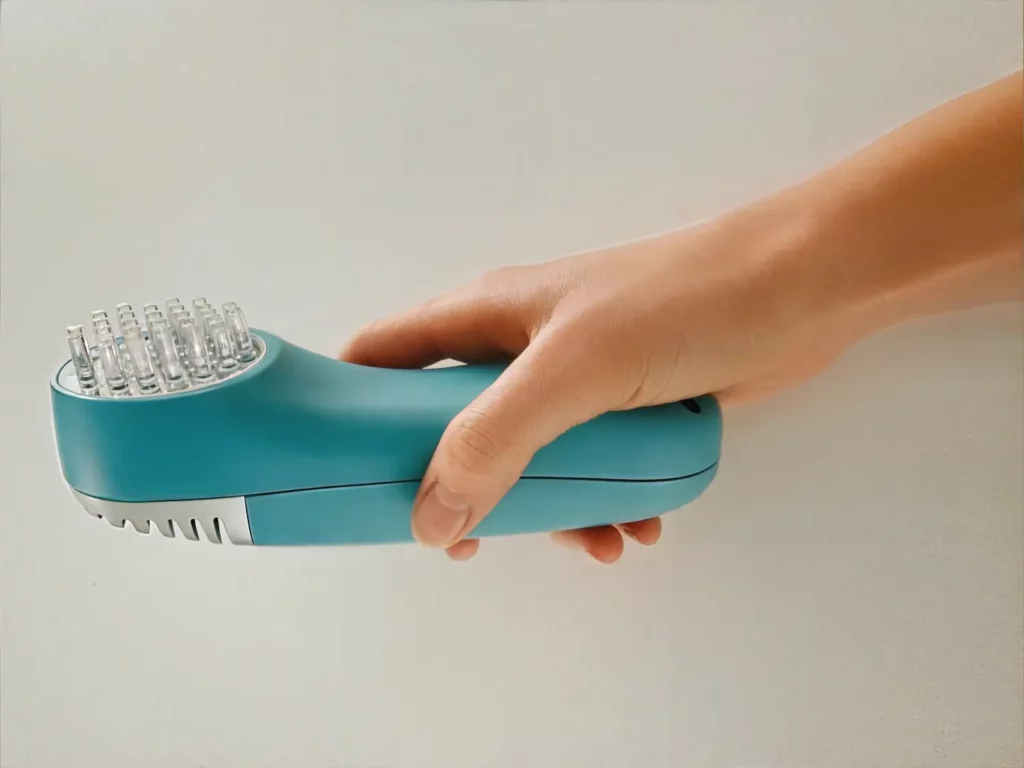
Red light therapy can be performed with a variety of devices. These include handheld units as well as larger therapy panels. Several products are specifically targeted for cats, making it easier to find the right fit for your pet.
One recommended red light therapy device for pets is the Photizo Vetcare, which offers high irradiance, a pre-programmed dosage timer, and portability.
Medcovet Luma
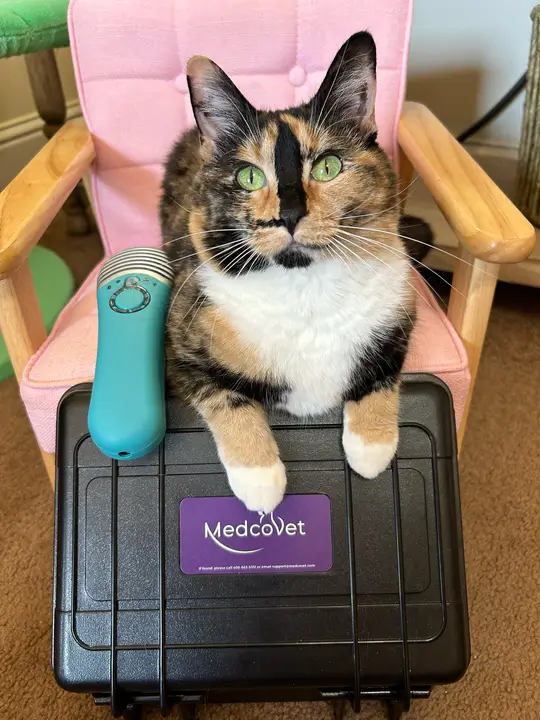
The MedcoVet Luma is a veterinary-grade laser therapy device designed for home use by pet parents — with guidance from veterinary rehabilitation specialists.
It delivers the wavelengths proven effective in cats (630–850 nm) and includes:
✅ A stationary design — no risk of burning
✅ Easy setup with step-by-step guidance
✅ Fast sessions (usually under 15 minutes)
✅ Safe use near the eyes and sensitive skin
✅ No sedation, no noise, no stress
We help you know exactly where to place the light, how long to treat, and how to track your cat’s improvement.
🐱 Comfortable, calming, and cat-approved.
Try it with your cat — start with a free consult »
Trusted by 250+ Clinics — And Now, by You
Clinics across the U.S. use the Luma. But with MedcoVet, you don’t need to step foot in one to access that same level of care. You’ll receive a free veterinary rehab consultation, access to the Luma—our professional-grade therapy device, and personalized support through your pet’s healing journey.
Safety and Effectiveness of Red Light Therapy for Cats
Red light therapy is also known as photobiomodulation, which utilizes red and near infrared light to encourage cellular regeneration and reduce inflamm . It is a non-invasive treatment that uses red and near-infrared light to encourage cellular regeneration and reduce inflammation. It is natural, safe, and effective with no side effects. However, overuse may cause skin sensitivity or irritation in some cats.
The therapy can be administered safely at home, making it less stressful for cats who dislike vet visits. The effectiveness of red light therapy is influenced by several factors. These include wavelength, power, duration and frequency of treatment, as well as the specific condition being addressed. Consulting a veterinarian before starting red light therapy ensures the correct parameters are used for your cat’s needs.
How to Administer Red Light Therapy to Your Cat
Sessions typically last between 5 to 15 minutes for each treatment area to promote healing without causing overstimulation. It’s recommended to administer red light therapy 2 to 5 times per week, depending on the specific condition being treated.
Always keep the device away from your cat’s eyes to avoid potential harm during therapy. Monitoring the treated areas for any signs of overheating is crucial for your cat’s safety during therapy.
Case Studies and Testimonials
Red Light Therapy for Cats Summary
To sum it up, red light therapy is a powerful, non-invasive treatment that can significantly improve your cat’s health and well-being. From reducing pain and inflammation to promoting faster healing and improving mobility, the benefits are extensive. With the advent of at-home devices like Luma, providing this advanced care has never been easier.
As more pet owners and veterinarians recognize the potential of red light therapy, it’s becoming a staple in modern veterinary care. By incorporating this therapy into your cat’s routine, you’re not just addressing current health issues but also promoting long-term wellness. So, why wait? Explore the possibilities of red light therapy and give your feline friend the gift of better health today.
Frequently Asked Questions

About the Author
Alon Landa is the CEO and co-founder of MedcoVet, a leader in at-home red light therapy for pets. With over 20 years of experience in medical technology and firsthand involvement in developing the Luma, Alon combines deep technical knowledge with a passion for improving pet health. He regularly collaborates with veterinarians and pet parents to advance photobiomodulation (PBM) care at home.
📍 Based in Boston, MA
📖Read more from Alon here

