Luma Light Therapy Devices: Which “Luma” Are You Looking For?
Stop guessing. Get the checklist.
Download The Smart Pet Parent’s Guide to Choosing a Red Light Therapy Device and learn what specs matter for pets (and what to ignore).
Written by: Alon Landa
Reviewed: March 2026
Updated: March 2026
When people search luma, they usually mean a red light therapy device. The catch is that “Luma” shows up in several product names, and they are not the same device, not the same design, and not the same real-world fit for pets.
This page helps you identify which “Luma” you mean, then compare options using the few specs that actually predict outcomes on a furry animal.
Looking for the full clinical guide with protocols, dosing, and condition-specific use? Start here: red light therapy for dogs.
For parameter-based science, dosing, and safety concepts: /science-of-red-light-therapy/.
What does “Luma” mean in red light therapy searches?
“Luma” is a shared name used across multiple red light therapy devices, so it does not identify one specific product by itself. Devices with “Luma” in the name can differ in measured irradiance, coverage area, fur contact, and protocol support. Compare them using delivered wavelength, delivered irradiance at the skin, time-to-dose, and whether the design can maintain skin contact through fur.
What people mean by “Luma” in pet light therapy
In pet rehab circles, “Luma” often gets used like shorthand for light therapy in general. That leads to confusion fast, because:
Photobiomodulation (PBM), also called red light therapy, low-level laser therapy (LLLT), LED therapy, cold laser, and near-infrared therapy, refers to the same therapy category using red and near-infrared light to influence cellular biology.
Laser vs LED is not the deciding factor. Outcomes depend on delivered wavelength, delivered irradiance at the skin, delivered dose, and treatment interval. Fur and air gaps can reduce delivered light further, especially for deep targets.
PBM has been studied for decades in veterinary and translational medicine. The reason results vary across devices is not magic, it is parameters and delivery.
Want a step-by-step plan instead of guessing?
Use the Roadmap to go from “I want to try red light therapy” to a clear plan: what to treat, how often, what to track, and when to adjust.
Mizzy
Which “Luma” device are you looking for?
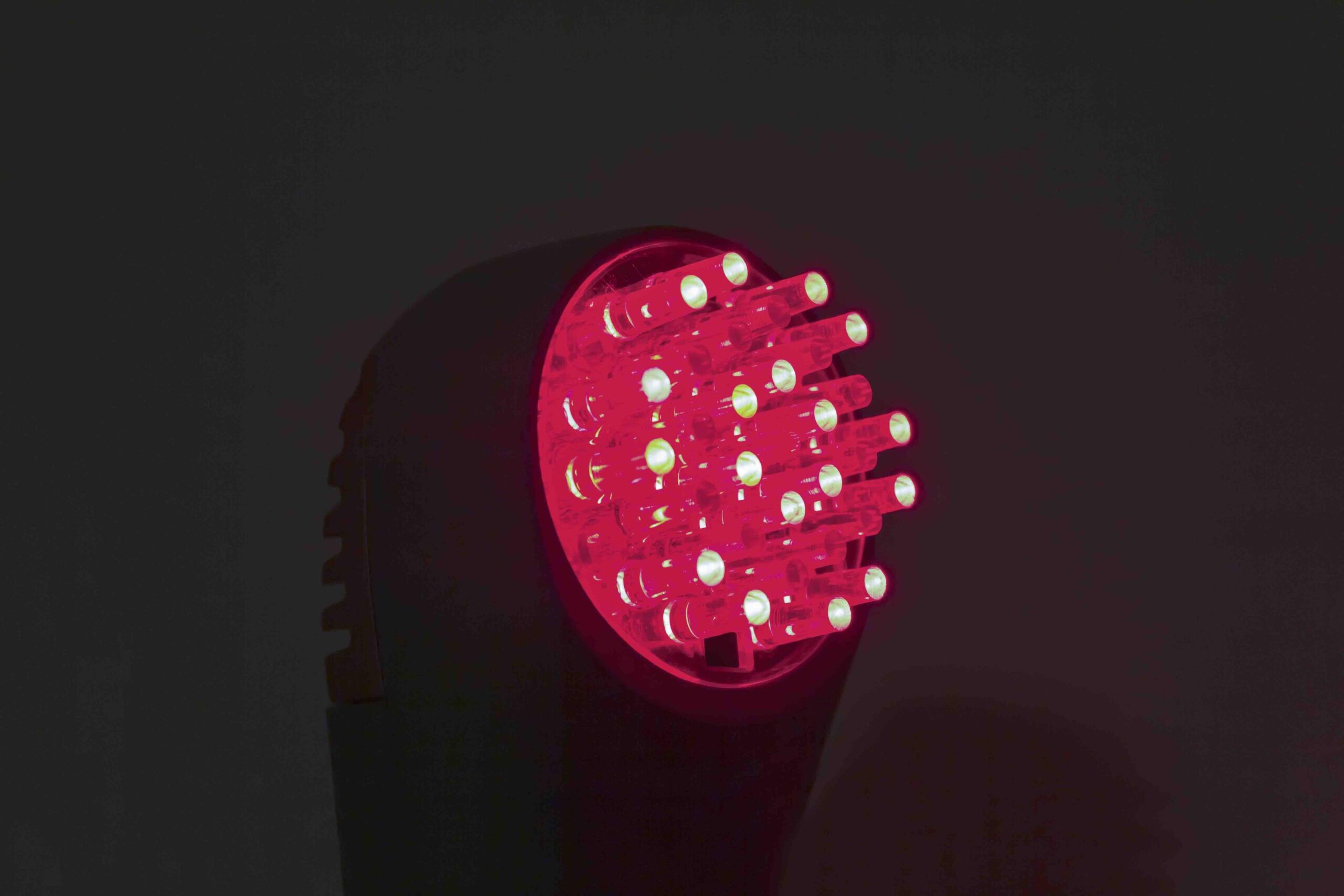
There are several red light therapy devices with “Luma” in the name. They are not the same category of product, and the differences affect outcomes, session time, and what conditions they realistically fit.
Use this as a shortcut: match the name you saw, then jump to the full review. If you are still deciding whether PBM is a fit for your dog, start with the clinical overview and protocols: red light therapy for dogs.
Know what matters before you spend money
Download The Smart Pet Parent’s Guide to Choosing a Red Light Therapy Device.
It includes the exact checklist we use: specs to look for, red flags, and questions to ask any company.
Caspian
MedcoVet Luma
Best fit for: pet-first at-home PBM where fur, targeting, and consistency are the main constraints.
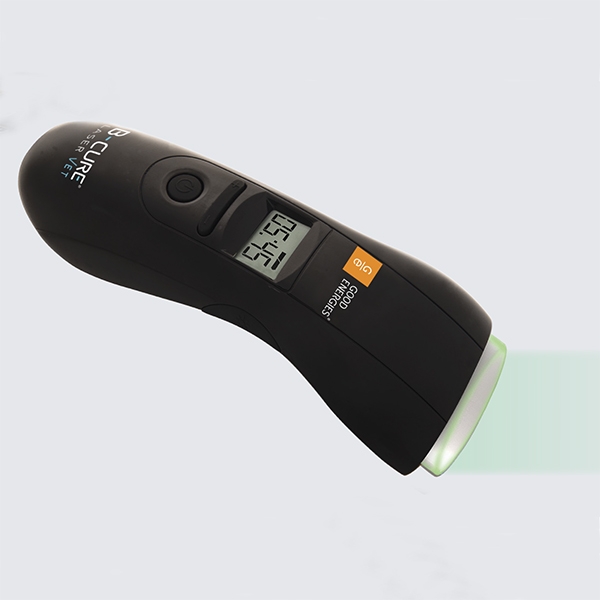
What it is: a targeted handheld red light therapy device built for pets. It is non-invasive and drug-free, and it is used to support pain relief and recovery as part of veterinary care plans.
Common use cases: MedcoVet positions Luma for arthritis and joint pain support, post-surgical recovery support (with veterinary guidance), soft tissue injury recovery support (including muscle strains), and other conditions where consistent at-home sessions matter.
Why it tends to work better at home: fur and adherence are the two practical constraints that derail most at-home devices. Luma is built around a fur-contact strategy and guided use so owners can treat consistently over weeks.
Long-haired breeds: MedcoVet designed Luma for use on furry pets, including long-haired breeds, where coat can reduce delivered light.
Clinic adoption and support: Luma is used or recommended by 250+ veterinary clinics and that every Luma includes clinician-backed support and personalized treatment plans. Pet owners can also book a free clinician consultation and take a vet-reviewed quiz to check fit before committing.
Read: MedcoVet Luma review
Clinical overview and protocols: red light therapy for dogs
LumaFlex Essential
Best fit for: owners who want a wrap format and broad coverage, and who understand that real delivery depends on coat and contact.
What it is: a large-area LED wrap.
Where it can shine: broad regions and superficial targets, especially on short-haired dogs or clipped areas, where the wrap can sit closer to skin.
Where it hits limits: wraps often struggle with consistent skin contact on real dogs. If measured irradiance is low and coat loss is high, deeper targets like hips and spine become hard to justify.
Good for: convenience-focused routines where expectations are realistic and the target is not deep.
Read: LumaFlex Essential review
LumaPet
Best fit for: very superficial comfort goals, if you are realistic about what low measured output can and cannot do.
What it is: a wearable brace-style LED device.
Why this one needs extra scrutiny: with wearables, gaps between emitters, curved anatomy, and fur can drop real delivery fast. If specs are not published, it is hard to estimate dose or compare devices fairly.
Good for: short-haired dogs, clipped areas, and superficial comfort routines where you are not counting on deep tissue penetration.
Watch outs: without clear wavelength and irradiance specs, you cannot map use to dose targets. Low measured irradiance can also mean a practical ceiling for deeper goals, even with long sessions.
Read: LumaPet review
LumaCare Ark
Best fit for: owners who want a premium device and are willing to trade time and complexity for a different power strategy.
What it is: a higher-end device using multiple wavelengths and a different approach to power delivery (including pulsed strategies).
Why it matters: some devices use high peak power with lower average power. That can help with fur penetration but can also mean longer sessions to reach dose, depending on how the device delivers energy over time.
Good for: owners who can be consistent and who are comfortable following a more structured approach to session time and positioning.
Watch outs: average delivered power and protocol clarity decide whether treatment time stays reasonable.
Read: LumaCare Ark review
LumaSoothe 2
Best fit for: owners comparing multi-wavelength devices and trying to understand why wavelength choices change what tissue gets meaningful light.
What it is: a multi-wavelength device that includes 940 nm.
Why that matters: wavelengths around 808 to 850 nm are common for deeper targets. 940 nm interacts differently with tissue (more absorption by water), which can change practical penetration and dosing needs.
Good for: superficial applications and cases where the device’s real output and dosing guidance align with the target.
Watch outs: extra wavelengths do not automatically mean better results. Delivered dose and coat delivery still decide outcomes.
Read: LumaSoothe 2 review
How to compare “Luma” devices in a way that predicts outcomes

Reviews and star ratings are useful for comfort and ease of use. They are weak for clinical effectiveness unless the reviewer includes specs, schedule, and objective tracking.
Here is the framework we use across our research, testing, and clinical workflows.
1) Wavelength
Red light and near-infrared light behave differently in tissue.
- Red light is commonly used for skin and superficial targets.
- Near-infrared light is commonly used for deeper targets like joints, muscles, and spine.
Wavelength alone does not guarantee results. It only tells you what the device is capable of reaching in theory.
2) Delivered irradiance at the skin (mW/cm2)
This is one of the most misunderstood specs in the market.
Irradiance matters for two reasons:
- Time-to-dose: lower irradiance means longer sessions to reach the same energy delivered.
- Practical depth: all light is scattered and absorbed as it travels through tissue. If very little light reaches the skin, even long sessions can still fail to deliver meaningful light to deeper target tissue.
Plain-language version: a device can be so low-power that “more time” does not fix the deep-target problem.
3) Dose and time-to-dose (J/cm2)
Dose is energy delivered per area. You need enough energy delivered to the right target tissue, on the right schedule, to see outcomes.
A device with unclear specs makes dose planning impossible. That is why missing specs is a major red flag.
4) Treatment interval and schedule
For chronic conditions, owners often need multiple sessions per week for multiple weeks. If a device requires very long sessions to reach dose, real-world compliance drops, and outcomes drop with it.
5) Fur and contact strategy
Dogs are not humans. Fur scatters light and creates air gaps. Even small gaps can reduce delivered light.
Pet-first designs address this directly with contact optics, fur-parting design, or clear coat-specific protocols.
6) Protocol quality and support
Most at-home devices fail in the real world for a boring reason: owners cannot stay consistent for weeks, cannot adjust protocols based on response, and do not know when the plan is wrong.
Support systems improve outcomes. That can include clear condition guidance, tracking tools, and clinician feedback loops.
If you want the checklist we use to evaluate devices and marketing claims:
Download: The Smart Pet Parent’s Guide to Choosing a Red Light Therapy Device
Matilda
What red light therapy is used for in pets
Red light therapy (photobiomodulation) is used as a non-invasive, drug-free option to support pain relief and tissue recovery in pets. It is commonly used as an adjunct for arthritis and joint pain support, inflammation management, and recovery support after injuries or surgeries, when the protocol and dose match the target tissue.
“Luma” device comparison table
Use this table to narrow down what to read next. The full story is in each review page.
Notes on measurements: Where we list measured irradiance, it reflects our purchased unit and our test setup. Units, meters, distance, and contact pressure can change results.
Device | Format | Wavelengths (published) | Measured irradiance (if tested) | Fur strategy | Best fit (high level) | Full review |
|---|---|---|---|---|---|---|
MedcoVet Luma | Handheld, targeted | Red + near-infrared | Measured in our testing series | Optical comb/contact strategy | Broad use cases when protocol matches goal | MedcoVet Luma review |
LumaFlex Essential | Wrap | Red + near-infrared | Tested, see LumaFlex review | None built-in | Broad superficial areas, short-haired or clipped | LumaFlex review |
LumaPet | Wearable brace | Not clearly published | Tested, see LumaPet review | None built-in | Very superficial comfort goals | LumaPet review |
LumaCare Ark | Handheld, dual-head style | 670, 808, 905 (per brand) | Not in this table | Flush contact | Mixed depth goals, longer sessions possible | LumaCare Ark review |
LumaSoothe 2 | Handheld/scanning style | 635, 940 + others (per brand) | Tested, see review | None built-in | Superficial and selected uses, dosing clarity matters | LumaSoothe 2 review |
Want the short version of “what matters and why” before you compare anything?
Take the 2-minute quiz and get a starting point by condition.
Gideon
Video: comparing “Luma” devices on a meter
This video shows a consistent spot-check setup across multiple at-home devices to compare relative output. Meter readings can vary by distance, pressure, angle, and surface contact, so treat this as a reference point, not a universal rating.
What the video shows:
- Side-by-side readings using the same meter setup for multiple devices
- Readings taken across device surfaces to show variability and gaps
- How we use readings to estimate time-to-dose, and why fur and air gaps reduce real delivery on pets
Want the fast training on how PBM works for pets?
Specs are only part of the story. The course explains wavelength, dose, schedule, and why fur changes outcomes, so you can judge devices and protocols with confidence.
Huxley
Red flags when shopping “Luma” devices
These are patterns we see repeatedly across the market.
Missing specs
If you cannot find wavelength, irradiance, treatment area, and time-to-dose, you cannot estimate dose, compare devices, or judge whether a protocol makes sense.
“Treats through fur” claims without a fur strategy
If a product relies on distance, vague claims, or stock photos on hairless skin, assume dose loss on real dogs unless proven otherwise.
Power claims without skin irradiance
LED count and total watts do not tell you what reaches the skin per area.
Protocol guidance that ignores schedule and dose
“Use for five minutes” with no dose logic is not a protocol. It is guesswork.
If you want a structured way to judge claims and compare devices across real constraints:
? Download: The Smart Pet Parent’s Guide to Choosing a Red Light Therapy Device
Hazel
Clinical questions veterinarians ask about “Luma” devices
Clinical summary
Mechanism
Photobiomodulation uses red and near-infrared light absorbed by cellular chromophores, supporting signaling linked to inflammation modulation and tissue repair pathways.
Evidence level
Moderate for select musculoskeletal indications in dogs when parameters and schedule are appropriate. Evidence varies by condition, device delivery, and study design.
When it works best
When wavelength, delivered irradiance, and time-to-dose match tissue depth and clinical goal, and when owners follow a consistent schedule over weeks.
When not to use
Suspected malignancy without veterinary oversight, uncontrolled infection requiring medical management, photosensitivity reactions, pregnancy without clinician guidance, and cases needing urgent veterinary evaluation.
Final thoughts
“Luma” is not one product, it is a cluster of devices in the market that share a name but differ in science, build, and real-world outcomes. If you want better outcomes, focus on what the research actually supports: delivered light at the skin, realistic dose over time, and a schedule you can keep long enough to see results.
That is why we publish measured comparisons, a video walkthrough, and a repeatable review workflow. It is not about hype, it is about tools and resources that help pet owners take the next step with clarity: choose a product that fits the goal, follow a plan, and track change in a way that makes sense. Our team treats this like an operational problem as much as a science problem. Compliance, training, and support drive outcomes, not just specs.
If you are sorting through Luma-named devices and feeling stuck, start simple. Use the roundup as your shortcut, use the pillar for protocols, and use the comparison guide to pressure-test claims. If you want help fast, book a consult so a clinician can turn your ideas into an action plan. That kind of structure is what transforms “I bought a device” into powerful results you can actually measure over time.
And yes, AI will surface a lot of stories, images, and media that sound convincing. Treat them as leads, not proof. Ask for specs, ask for the data, and when a company will not share it, that insight matters.
Next step
If you want side-by-side device comparisons:
Browse the Red Light Round Up series.
If you want the checklist to shop smarter without wasting money:
📋 Download: The Smart Pet Parent’s Guide to Choosing a Red Light Therapy Device
Not sure whether at-home PBM fits your pet?
✅ Take the 2-minute quiz.
Want a clinician to sanity-check your plan before you buy anything?
🩺 Book a free consult with a veterinary clinician.

About the Author
Alon Landa is the CEO and co-founder of MedcoVet, a leader in at-home red light therapy for pets. With over 20 years of experience in medical technology and firsthand involvement in developing the Luma, Alon combines deep technical knowledge with a passion for improving pet health. He regularly collaborates with veterinarians and pet parents to advance photobiomodulation (PBM) care at home.
📍 Based in Boston, MA
📖Read more from Alon here