Conditioning for dogs
How strength, balance, body awareness, and red light therapy help dogs stay active and reduce injury risk
Help your dog stay strong, mobile, and ready for everyday life
Talk with a MedcoVet clinician about your dog’s fitness level, injury history, soreness, mobility, and at-home conditioning support options.
Medically reviewed by: Kristy Williams, CVT, CCFT (Specialties: Pet rehabilitation, pain management, photobiomodulation)
Reviewed: July 2026
Updated: July 2026
What is canine conditioning?
Canine conditioning is fitness training for dogs. It uses controlled, low-impact conditioning exercises to build strength, body awareness, balance, core strength, mobility, range of motion, and physical preparation for daily life, dog walks, sports, and recovery after injury. A good canine fitness program helps dogs move better, protect joints, build stabilizer muscles, and reduce the risk of compensation injuries.
If your dog is active, aging, recovering from an injury, or starting a fitness program:
Want help supporting your dog’s strength, mobility, and recovery?
Lucy
Why conditioning for dogs matters
Most people discover canine conditioning after something goes wrong.
A dog tears an ACL. A senior dog starts slipping on the floor. A canine athlete gets sore after agility. A dog finishes rehab and the owner wants to keep the progress going.
That is where conditioning for dogs becomes powerful.
Canine conditioning gives dogs a way to graduate from rehab into everyday strength. It helps rebuild strength after injury, maintain muscle mass in senior dogs, improve body awareness, and support the small stabilizer muscles that keep the larger muscle groups working properly.
Those small muscles matter.
They help control movement. They protect joints. They support balance, posture, coordination, and normal mobility.
A strong dog is less likely to sustain orthopedic injuries. Strong muscles can help prevent common injuries like ACL tears by supporting the knees, hips, shoulders, spine, and core during everyday activities.
Canine conditioning after rehab
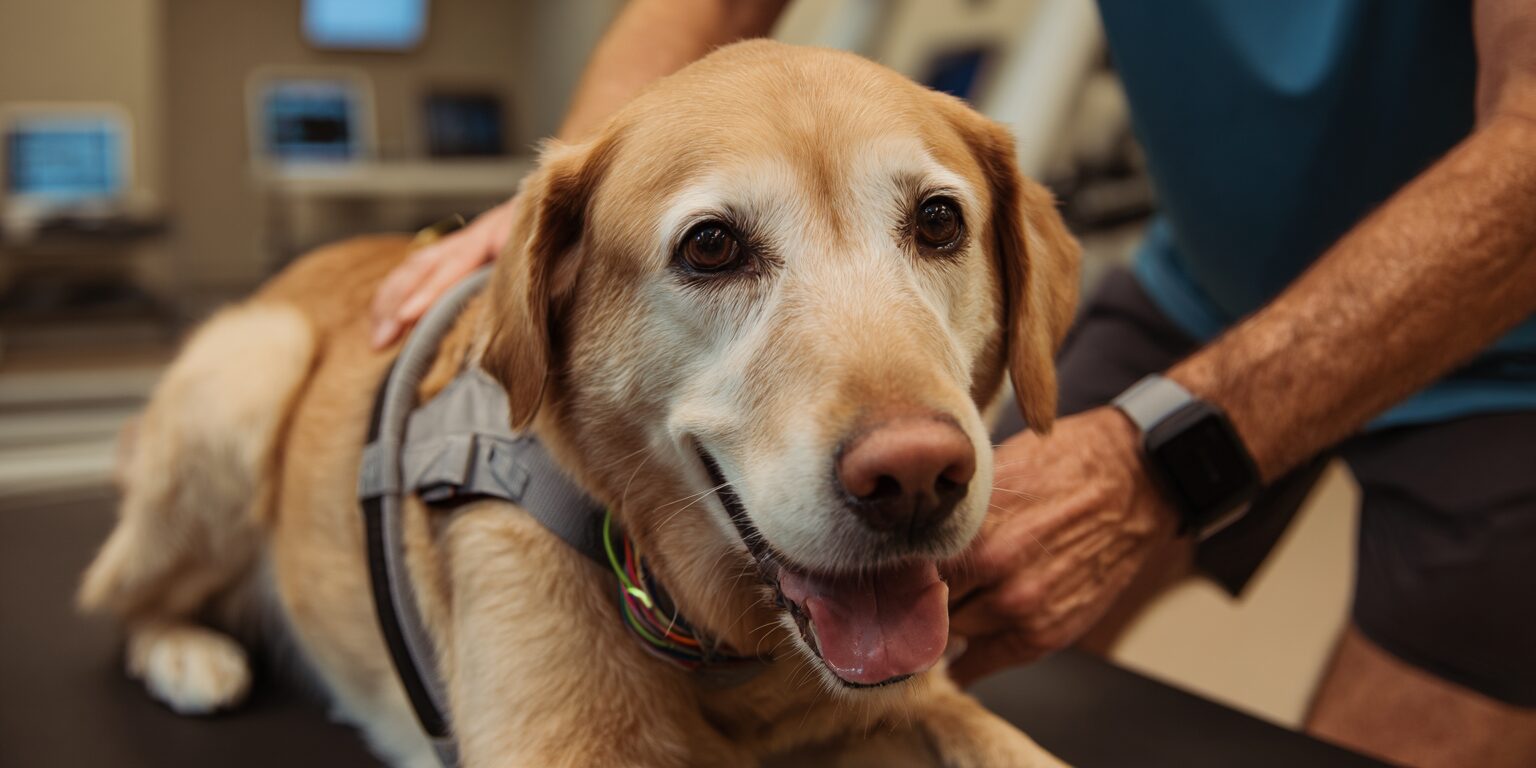
Dogs recovering from injury often need more than rest.
Rehab helps restore function after pain, surgery, weakness, or injury. Canine conditioning helps keep that progress moving forward.
This is especially important for dogs recovering from:
- ACL or CCL injury
- Knee surgery
- Hip or elbow dysplasia
- Arthritis
- IVDD
- Muscle strain
- Sprains
- Shoulder injuries
- Hind leg weakness
- Back pain
- Sport-related soreness
After an injury, dogs often compensate. They shift weight away from the sore area. They overuse the front legs. They avoid loading one hind leg. They move differently without meaning to.
That can create new problems.
Conditioning exercises help rebuild strength, improve symmetry, and teach the body how to move with better control again.
Canine conditioning for healthy dogs

Healthy dogs benefit too.
A dog does not need to be injured to need fitness. Conditioning supports regular exercise, daily walks, hiking, running, playing, stairs, getting in and out of the car, and moving safely on hard surfaces.
Dogs carry about 60% of their body weight through the front end. That means the front legs, shoulders, neck, and core work hard every day, even when the dog looks relaxed.
Canine conditioning helps support the whole body:
- Front legs
- Hind legs
- Rear end
- Core
- Shoulders
- Spine
- Paws
- Stabilizer muscles
- Balance system
A fitness program can also help dogs stay lean, which protects joints and supports long-term mobility.
Your dog deserves strength for more than sport.
Your dog deserves strength for daily life.
Canine conditioning for senior dogs
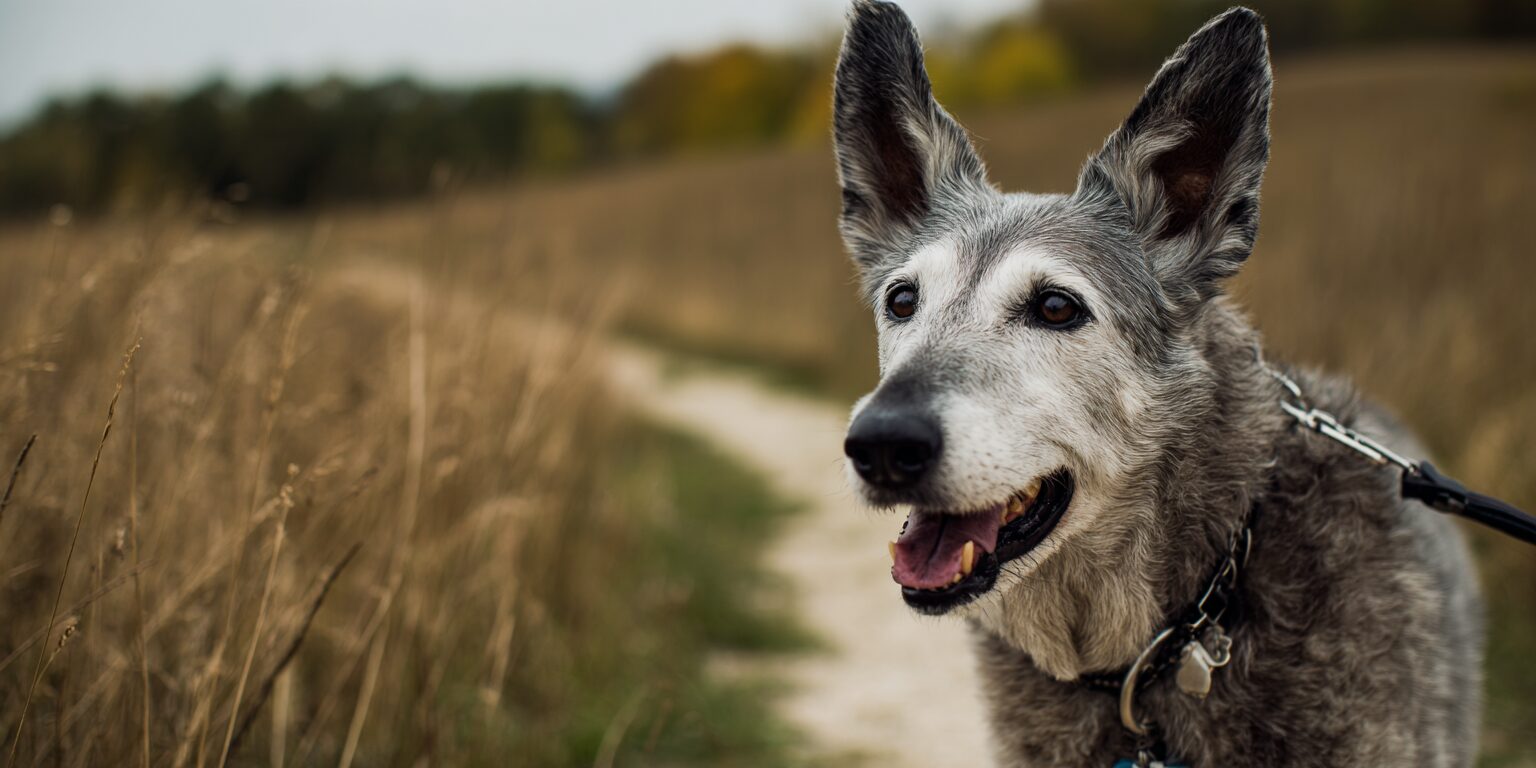
Senior dogs need gentle conditioning to maintain muscle mass, mobility, and confidence.
Older dogs often lose muscle gradually. Their rear end may weaken. Their hind feet may drag. Their body awareness may fade. They may still want to walk, but daily walks get shorter.
Canine fitness can help.
Regular fitness improves mobility in senior dogs, including senior dogs with arthritis. Controlled, low-impact exercise promotes joint circulation, supports range of motion, and helps slow the physical decline that comes with reduced movement.
Senior dogs may benefit from:
- Sit-to-stand transitions
- Weight shifts
- Cavaletti poles
- Slow leash walks
- Gentle dog stretching
- Body awareness exercises
- Balance work on stable surfaces
- Low-impact strength training
- Rest days between conditioning sessions
Regular conditioning can help slow arthritis progression in dogs by keeping joints moving, muscles active, and body weight under better control.
Start easy.
Senior dogs do not need hard workouts. They need consistent, thoughtful movement.
Canine conditioning for puppies

Puppies need low-impact conditioning until their bodies mature.
Depending on breed and size, puppies may need to avoid high-impact fitness training until 12 to 24 months old. Large breeds often take longer to finish growing.
Puppy classes with body awareness exercises can build fitness foundations without joint harm.
Good puppy conditioning includes:
- Walking over low objects
- Standing on different stable surfaces
- Gentle balance games
- Basic body awareness
- Target stick work
- Rear feet awareness
- Front paws on a low platform
- Sit-to-stand transitions
- Puppy pushups
- Short sessions
- Plenty of rest
Puppy pushups can strengthen dogs with low impact. A puppy pushup usually means asking the dog to move from sit to down to stand in a controlled way, using treats and positive reinforcement.
Keep it fun. Keep it short.
Puppies are building coordination, not chasing intensity.
How often should dogs do conditioning?
Adult dogs often benefit from 10 to 15 minutes of conditioning two to three sessions per week.
That is enough for many dogs.
A good schedule might look like this:
- Monday: conditioning session
- Tuesday: rest day or easy walk
- Wednesday: conditioning session
- Thursday: regular dog walks
- Friday: rest day
- Saturday: light conditioning or sport practice
- Sunday: easy recovery walk
The best plan depends on the dog’s current fitness level, age, injury history, breed, body structure, and goals.
Start with one exercise. Then gradually build.
Gradual progression keeps conditioning safe. Too much load too soon can create soreness, compensation, and setbacks.
Foundational canine conditioning exercises
Foundational exercises teach dogs how to use their body with control.
Start on a flat surface. Use stable surfaces before adding unstable equipment. Reward your dog with treats, praise, or a marker word when they perform the movement correctly.
A marker word, like “yes,” works like clicker training. It tells the dog the exact moment they did the correct behavior.
Sit-to-stand transitions
Sit-to-stand transitions strengthen the hindquarters and build controlled movement.
Ask your dog to sit, then stand. Reward the clean stand. Repeat slowly.
Watch the rear end. The hind legs should work evenly. The dog should not rock forward too much or twist.
This is one of the most effective exercises for hind leg strength.
Weight shifts
Weight shifts build core awareness in dogs.
Have your dog standing squarely on all four paws. Gently lure the head slightly left, right, forward, and back so the body shifts weight without stepping.
Small movement.
Big benefit.
Weight shifts help the dog’s core, front legs, hind legs, and stabilizer muscles work together.
Cavaletti poles
Cavaletti poles improve joint flexion, rhythm, limb muscle activation, and body awareness.
Set poles low and spaced appropriately for your dog’s size. Walk slowly. Reward calm, controlled steps. Your dog should be looking forward, not up to you.
Cavaletti can help dogs learn where their rear feet are. That rear end awareness matters for sport dogs, senior dogs, and dogs recovering from injury.
Front paws elevated
Place your dog’s front feet on a low, stable platform.
This can help build shoulder strength, core strength, and body awareness. It also teaches the dog to load the rear end in a controlled way.
Keep the platform low. Use a non-slip surface.
Rear feet awareness
Rear feet awareness exercises teach dogs to understand where their hind feet are.
Many dogs know what their front paws are doing. Their rear feet are another story.
Use a low platform, target stick, or small object to teach the dog to step, place, and adjust the hind feet with control.
Balance work
Balancing exercises strengthen stabilizer muscles effectively.
Start on stable surfaces first. Later, some dogs may progress to conditioning equipment such as balance discs, a wobble board, or another unstable surface.
Unstable equipment can be helpful, but it can also make an exercise too difficult.
Use it carefully. Ask a canine rehab professional if your dog has an injury history.
Conditioning equipment for dogs
You do not need a full gym to start canine conditioning.
Useful conditioning equipment can include:
- Non-slip mat
- Low platform
- Cavaletti poles
- Target stick
- Balance discs
- Wobble board
- Fit bone
- Cones
- Treats
- Clicker or marker word
- Harness
- Stable step
- Raised surface
Start with stable surfaces. Then gradually increase difficulty.
Unstable equipment should be used only when the dog has enough strength and control. A wobble board can be useful for one dog and too much for another.
The individual dog matters.
Dog stretching and range of motion
Dog stretching can support flexibility, but it should be gentle and appropriate.
Never force a stretch. Never pull a limb into position. Dogs should feel safe and comfortable.
Range of motion exercises may help dogs recovering from injury, older dogs, or dogs with stiffness. These exercises should be guided by a veterinarian, rehab professional, or trained clinician when pain or injury is involved.
Spinal flexibility, shoulder mobility, and hip range of motion can all influence how well a dog moves.
Pain changes everything.
If your dog resists, trembles, pulls away, or seems sore, stop.
Conditioning for canine athletes
Canine athletes need strength, cardio, balance, mobility, and recovery.
Agility dogs, dock diving dogs, flyball dogs, hunting dogs, scent work dogs, and hiking dogs all ask a lot from their bodies.
A conditioning program for canine athletes may include:
- Core strength
- Shoulder strength
- Hind leg strength
- Rear end awareness
- Balance work
- Cardio conditioning
- Body awareness exercises
- Sport-specific movements
- Rest days
- Recovery support
Fitness training helps prepare the dog’s body for the demands of sport. It also helps reduce the risk of injuries caused by fatigue, weakness, poor landing mechanics, or compensation.
For active dogs, conditioning and recovery belong together.
Read more about sport recovery here: Red Light Therapy for Agility Dogs.
Conditioning for pet dogs
Canine conditioning is also good for pet dogs.
Any dog who goes for walks, climbs stairs, plays in the yard, hikes in the woods, walks on sidewalks, jumps into the car, or moves across hard surfaces can benefit from better strength and balance.
Daily life asks dogs to use their body.
Conditioning helps them use it well.
A pet dog fitness program can be simple:
- Daily walks
- Two to three conditioning sessions per week
- Sit-to-stand transitions
- Weight shifts
- Cavaletti poles
- Body awareness games
- Gentle stretching
- Rest days
Most dogs do better when conditioning feels like new tricks, not a workout.
Make it fun.
A note on behavior conditioning
The word conditioning can also refer to behavior training.
That is different from canine conditioning for fitness.
In behavior training, classical conditioning modifies a dog’s emotional responses by associating emotions with specific triggers. Counter-conditioning pairs a negative trigger with positive rewards to change associations. Desensitization introduces triggers at low levels to prevent panic.
Operant conditioning uses rewards or consequences to teach behaviors. Positive reinforcement rewards desired behavior. Negative punishment removes a reward to decrease behavior. Shaping reinforces small steps leading to a final behavior. Clicker training uses a marker to indicate the correct behavior.
Modern dog training emphasizes clear communication, consistency, and positive reinforcement to build confidence and strengthen the owner-dog bond.
This page focuses on physical canine conditioning: strength, balance, proprioception, range of motion, stabilizer muscles, and injury prevention.
How red light therapy supports canine conditioning
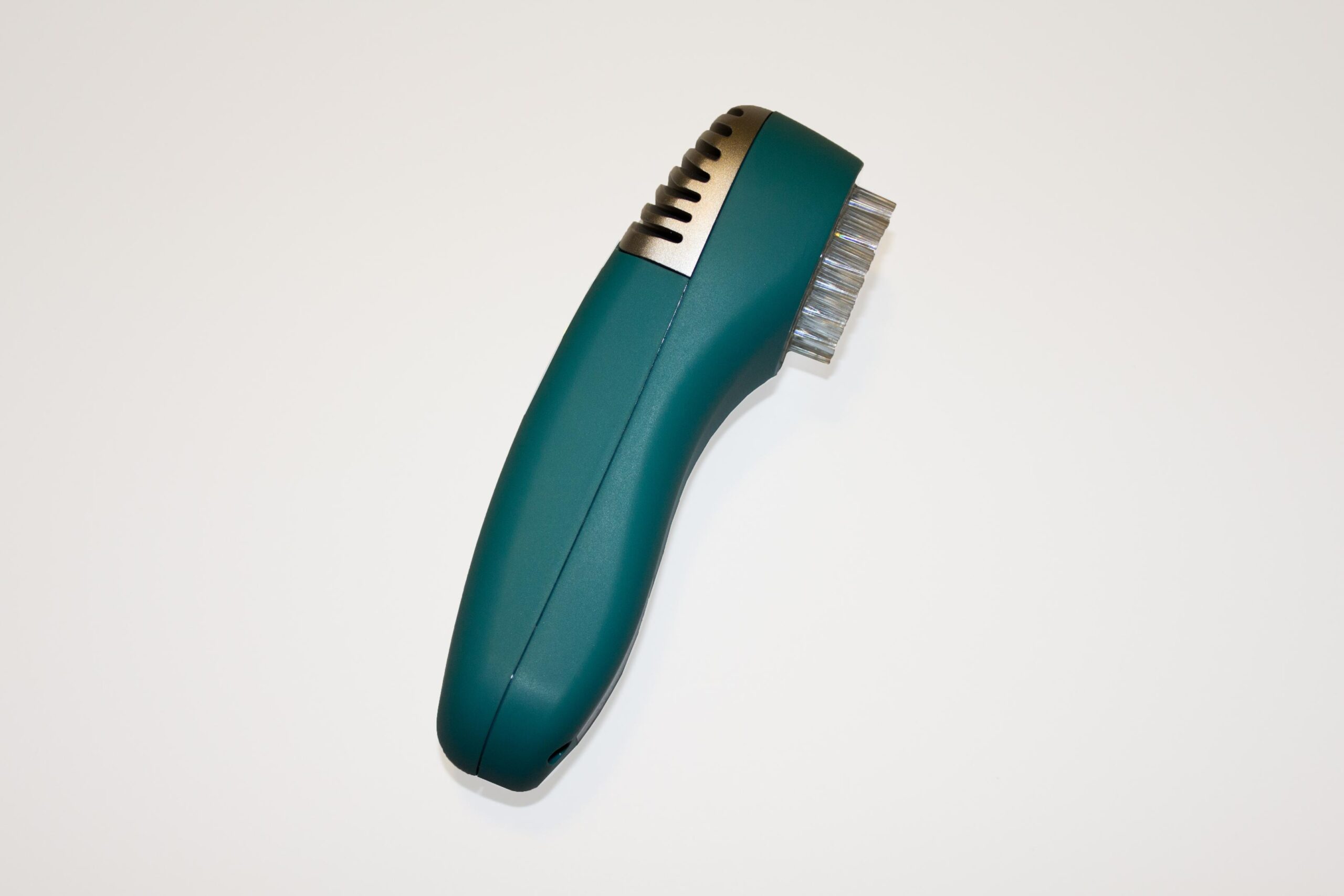
Photobiomodulation, or PBM, also called red light therapy, low-level laser therapy, LED therapy, cold laser, and near-infrared therapy, refers to the same therapeutic category using light energy to influence cellular biology.
Red light therapy can support canine conditioning by helping reduce inflammation, support circulation, ease discomfort, and support recovery after exercise.
Learn more here: Science of Red Light Therapy.
This is especially useful for dogs recovering from injury, senior dogs, canine athletes, and dogs building strength after rehab. Red light therapy can help support the tissues that are working harder during conditioning sessions.
It may support:
- Muscle recovery after conditioning exercises
- Joint comfort after strength training
- Circulation around working tissues
- Reduced soreness
- Physical therapy tolerance
- Mobility in senior dogs
- Recovery after sport practice
- Comfort during arthritis management
- Support after rehab
- Injury prevention plans
Red light therapy does not replace veterinary care, rehab, or strength training. It works best as part of a complete plan.
Why Luma is helpful for canine conditioning
The MedcoVet Luma gives dog owners a way to support recovery and mobility at home as part of a canine conditioning program.
Luma uses red and near-infrared light to support circulation, inflammation control, cellular activity, and comfort. It is non invasive, drug free, and designed for guided home use.
For dogs graduating from rehab, Luma can help support comfort while they rebuild strength. For canine athletes, Luma can support recovery between training sessions. For senior dogs, Luma can support mobility and comfort as they work to maintain muscle mass. For pet dogs, Luma can help support active daily life.
Luma may support:
- Recovery after conditioning sessions
- Comfort in older dogs
- Joint comfort after daily walks
- Muscle support after targeted exercises
- Mobility support for dogs recovering from injury
- Better tolerance for physical therapy exercises
- Support for canine athletes
- Comfort during strength training
- Long-term movement support
For broader guidance, visit Red Light Therapy for Dogs.
👉 Want to know if Luma fits your dog’s fitness and recovery plan?
Gideon
Real Dogs, Real Conditioning Support
Many dogs find conditioning after an injury.
They finish rehab. They rebuild strength. They learn how to move with more confidence again.
Luma gives pet parents a way to support comfort, recovery, and mobility at home as part of their dog’s conditioning routine.
Want help deciding if Luma fits your dog’s conditioning and recovery plan?
Ghillie
MedcoVet’s clinical view on canine conditioning
MedcoVet focuses on photobiomodulation protocols for dogs with pain, inflammation, mobility issues, arthritis, sport recovery, surgery recovery, and injury prevention support.
Our clinical approach considers the individual dog: age, breed, injury history, current fitness level, mobility, soreness patterns, sport schedule, weight, and recovery needs.
Canine conditioning helps dogs build strength, confidence, balance, and control. Red light therapy supports the recovery side of that work.
Conditioning builds the body.
Recovery helps the body keep going.
Questions dog owners ask about canine conditioning
Clinical summary
Mechanism:
Canine conditioning uses controlled exercises to improve strength, balance, proprioception, range of motion, body awareness, core stability, and muscular endurance. These exercises target stabilizer muscles and specific muscle groups that support joints, movement control, and injury prevention.
Evidence level:
Canine fitness and rehabilitation principles are widely used in veterinary rehabilitation and sports medicine. Evidence supports controlled exercise for improving strength, mobility, joint function, weight management, and recovery after selected injuries. Program design should account for age, health status, orthopedic history, and current fitness level.
When red light therapy works best:
Red light therapy works best when dogs need support for muscle recovery, joint comfort, inflammation control, physical therapy tolerance, arthritis-related stiffness, post-rehab conditioning, or sport recovery. It may be especially helpful for senior dogs, canine athletes, and dogs rebuilding strength after injury.
When not to use red light therapy:
Do not use red light therapy as a substitute for veterinary evaluation after acute injury, severe pain, sudden lameness, swelling, collapse, or unexplained weakness. Dogs with untreated infection, known or suspected tumors, or unexplained pain should be evaluated before use.
Build strength before the injury
Canine conditioning helps dogs move with more control, power, and confidence.
It helps senior dogs stay mobile. It helps pet dogs handle daily life. It helps canine athletes prepare for sport. It helps dogs recovering from injury rebuild safely.
Start small. Stay consistent. Respect rest days.
Then support the work with recovery.
Is red light therapy right for your dog?
Want help supporting your dog’s conditioning and recovery plan?
Dave
Evidence Citations

About the Author
Alon Landa is the CEO and co-founder of MedcoVet, a leader in at-home red light therapy for pets. With over 20 years of experience in medical technology and firsthand involvement in developing the Luma, Alon combines deep technical knowledge with a passion for improving pet health. He regularly collaborates with veterinarians and pet parents to advance photobiomodulation (PBM) care at home.
📍 Based in Boston, MA
📖Read more from Alon here

About the Medical Reviewer
Clinical Focus: Surgery, anesthesia, canine fitness, injury prevention, agility
Kristy Williams brings over 30 years of experience to the veterinary field. Her career began in the 1990s, working as a civilian for the Army Veterinary Corps at RAF Feltwell in England, where she first discovered her passion for animal care and supporting their families. Upon returning to the United States, Kristy pursued her education and graduated in 2005 as a certified veterinary technician after passing the national exam. She has since gained extensive experience in both general practice and emergency/referral practices.
Read More about Kristy here.