
Case Study · Canine Neurology
Neck IVDD Without Surgery: How At-Home Red Light Therapy Helped Winston Get His Zoomies Back
SUMMARY
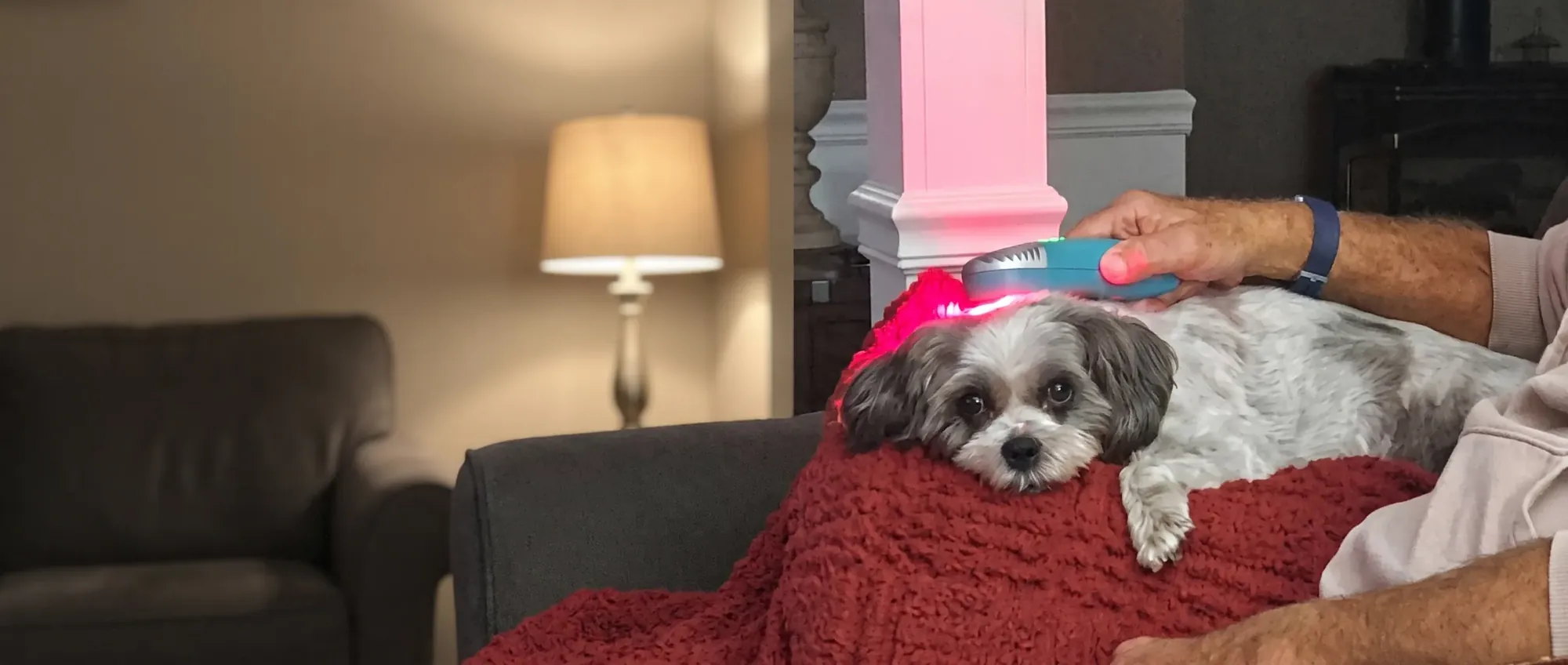
Winston is a 10-year-old Shih-Poo and Jack Russell mix who was diagnosed with IVDD in his neck and lower back after an MRI. His neurologist did not recommend surgery. Before I started working with him, Winston had tried several treatments, including gabapentin, two NSAIDs, four weeks of crate rest, pregabalin, and in-clinic laser therapy, but his symptoms kept returning. While the clinic treatments helped, they became too costly. I set up a MedcoVet Luma red light therapy plan that his pet parent could use at home every day. After 23 days, Winston scored 5 out of 5 on both of his status checks. These are two questions his pet parent rated in the MedcoVet app on a scale of 1 (worst) to 5 (best): how Winston’s pain and behavior were, and how well he was tolerating treatment. The goal was a 5 on both, meaning no signs of pain, normal behavior, and calm, comfortable sessions. By day 30, his neurologist found no pain and stopped his clinic laser sessions. Now, 18 months later, Winston still has occasional neck flare-ups, which is common with IVDD, but he usually recovers in a day or two. He also brings his ball to play every night again, something he had stopped doing years before his diagnosis.
1
MRI-confirmed diagnosis
23 days
To 5/5 on status checks
30 days
To a pain-free neuro recheck
1–2 days
Typical flare-up recovery on Luma
Case Snapshot
| Field | Detail |
|---|---|
| Patient | Winston, neutered male Shih-Poo x Jack Russell mix, 10 years at consult (now 11) |
| Condition | Intervertebral disc disease: mild to moderate cervical (neck), mild lumbar (lower back), confirmed by MRI |
| Prior treatment | Gabapentin and carprofen (spring 2024); gabapentin, meloxicam, and 4 weeks of strict crate rest (Sep 2024); pregabalin from Nov 2024 (ongoing); in-clinic laser therapy to the neck (early 2025 to May 5, 2025) |
| Surgery | Not recommended by his veterinary neurologist |
| Care goal | Eliminate pain, avoid surgery, and get his normal behavior back (“do zoomies again!”) |
| Protocol length | Daily loading phase from April 5, 2025; ongoing maintenance |
| Outcome | Pain-free at neuro recheck on day 30; flare-ups since then are short and resolve in about 1–2 days |
| Clinician | Christine Cranston, MPT, CCRP |
Disclosure. MedcoVet Luma is a red light therapy device made by MedcoVet. I work with MedcoVet. Luma delivers light at 635 nm and 850 nm. Winston’s pet parent bought his Luma through MedcoVet’s rent-to-own plan and joined MedcoVet’s affiliate referral program in January 2026, after the results described here.
Owner consent. Winston’s pet parent gave permission for this case study and the accompanying photos and videos to be published.
Veterinary note. This case study is for education only and is not a substitute for veterinary diagnosis or treatment. IVDD can become an emergency quickly; see the signs of an IVDD emergency.
Baseline vs. Outcome
Winston arrived at MedcoVet as a 10-year-old small-breed mix, weighing 27 pounds with a goal of 26 pounds. His MRI showed mild to moderate IVDD in his neck and mild IVDD in his lower back. He was no longer crying out in pain, but his family noticed changes in his behavior that concerned them.
Before Luma (April 2025)
- Repeated IVDD flare-ups despite medication and 4 weeks of strict crate rest
- Backing away when his family reached for him
- Avoiding his favorite spot on the furniture
- Stopped fetching his nightly ball 2–3 years earlier
- Paying for repeated in-clinic laser sessions his pet parent couldn’t attend
- Goal: no pain, no surgery, zoomies again
After Luma (2025–2026)
- Pain-free at neurologist recheck on day 30
- 5/5 on both status checks by day 23
- In-clinic laser therapy discontinued
- Fetching his ball every night again
- Home treatment, now 2–3 times a week
- Flare-ups resolve in about 1–2 days with Luma and rest
Based on clinician assessment, pet-parent status checks, and neurologist rechecks for one patient, not a controlled study. Winston also takes pregabalin and receives carprofen during flares; see Case Limitations.
What Is Cervical IVDD in Dogs?
Intervertebral disc disease happens when the cushioning discs between the vertebrae degenerate and then bulge or rupture, pressing on the spinal cord or nerve roots. Signs range from pain alone to paralysis (Brisson, 2010). Our IVDD and red light therapy guide covers the condition, its stages, and the warning signs in detail.
When IVDD affects the neck, it often looks different than the usual picture of back legs giving out. In small dogs with cervical disc disease, neck pain is the most common sign, and the disc between the second and third neck vertebrae is usually the one affected (Cherrone et al., 2004). In my experience, owners of dogs with cervical IVDD often notice:
- Holding the head low, close to the ground
- Reluctance or refusal to turn the head to one side
- Yelping when touched or picked up
- Backing away from people who reach for them
- Avoiding jumping onto furniture
- Losing interest in play they used to love
- Loss of appetite
- Disengagement, which can be very subtle, such as hiding
- Trembling and shaking, especially when touched
Winston showed almost every one of these over the course of his care.
The Challenge
IVDD is rarely cured and often comes back. In a study of 88 dogs with cervical disc herniation treated without surgery, about 49% did well with medical management, while 33% had their symptoms return (Levine et al., 2007). Surgery is usually recommended for severe or worsening cases (Brisson, 2010), but the cost, risks, and aftercare can be a lot to handle. For dogs like Winston, whose MRI did not show a need for surgery, the typical plan is medication and strict crate rest, followed by waiting and hoping for improvement.
Winston’s family wanted to avoid surgery and help him live without pain. They also needed a plan they could stick with, since IVDD was likely to be a long-term condition.
First signs. Winston’s first episode of pain came in spring 2024. His primary veterinarian prescribed gabapentin and carprofen, an NSAID, without crate rest.
A second flare and a diagnosis. Winston experienced another episode in September 2024 and was evaluated by a veterinary neurologist. MRI results confirmed IVDD in both his neck and lower back. Before the MRI, his family was asked about a do-not-resuscitate order, which made the gravity of Winston’s condition clear to them.
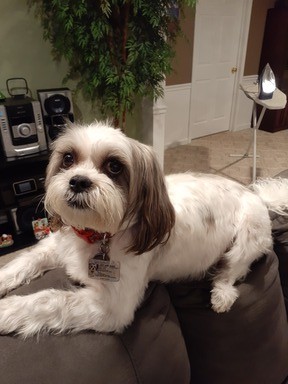
Crate rest, then pregabalin. Surgery was ruled out. Winston initially received gabapentin and meloxicam along with four weeks of strict crate rest. During his November 2024 follow-up, his neurologist transitioned him to pregabalin and discontinued the other medications. Winston’s pet parent describes pregabalin as “a game changer,” and Winston continues this medication today.
Another flare and in-clinic laser. About six months after his crate rest, in early 2025, Winston’s IVDD flared again, and his clinic began laser therapy to his neck, three times a week at first and then tapering. He was still having clinic laser sessions three days a week when he started Luma at home.
Why the clinic plan couldn’t last. Winston’s pet parent realized red light therapy would probably be needed long term. The cost of each appointment was adding up. He also wasn’t allowed in the room during Winston’s treatments, and Winston, who his pet parent describes as very hyper, would get anxious on clinic trips, which could make things worse. After seeing a MedcoVet Luma brochure at the clinic, he scheduled a consult with me.
Looking back, Winston’s symptoms started earlier than anyone realized. For years, he fetched the same ball every night and brought it to his family. About two or three years before his diagnosis, he quietly stopped doing this. At the time, no one thought much of it. Now, his family believes his IVDD had been developing for years.
Diagnosis First
Winston’s pet parent chose to get an MRI, which is a state-of-the-art imaging method that veterinary neurologists use to confirm IVDD and find the affected discs (da Costa et al., 2020). This was important because I knew exactly which discs were involved and how serious the problem was, so I could create a targeted plan for his neck and lower back. It also kept his neurologist involved, which is the right way to manage a home red light therapy plan.
Why Red Light Therapy Works So Well for IVDD
In IVDD, much of the pain and lost function comes from what happens around the damaged disc: inflammation, swelling, and pressure on the spinal cord and nerve roots (Brisson, 2010). Red light therapy, also called photobiomodulation (PBM), acts on those processes. Red and near-infrared light is absorbed mainly by cytochrome c oxidase in the cell’s mitochondria. This raises cellular energy (ATP) and shifts nitric oxide, reactive oxygen species, and inflammatory signaling (Hamblin, 2017). The science of red light therapy explains the mechanism in depth.
- It calms inflammation. PBM lowers inflammatory markers in already-activated immune cells and reduces oxidative stress in stressed tissue. Anti-inflammatory effects have been reported in animal models of spinal cord injury (Hamblin, 2017).
- It alleviates pain. A meta-analysis of 16 randomized controlled trials found that low-level laser therapy provided immediate pain relief in people with acute neck pain and sustained benefits for up to 22 weeks in cases of chronic neck pain, with side effects comparable to a placebo (Chow et al., 2009). Similarly, a 2025 review of 211 studies in both humans and animals found positive effects for musculoskeletal and nerve-related pain (Previti et al., 2025). In my clinical experience, this often enables dogs to decrease their reliance on pain medications over time, under their veterinarian’s supervision.
- It promotes nerve healing. Studies in rats with spinal cord injuries found that applying 810 nm light through the skin enhanced axon regrowth, improved certain functions, and reduced immune cell activity (Byrnes et al., 2005).
- It fits crate rest. Treatment is non-invasive, needs no sedation, and can be done in or beside the crate, when a trip to the clinic is the last thing a dog with a sore spine needs.
- It can start at the first sign of a flare. With a device at home, treatment begins within hours. In my experience, that can mean avoiding an emergency visit with a fragile dog, fewer medications, and less time in the crate.
- It has been studied in dogs with IVDD. In a 24-dog study of recovery after thoracolumbar disc surgery, dogs that received perilesional PBM with rehabilitation showed better neurological status than dogs given rehabilitation alone. They also tended to walk again sooner (an average of 14.2 vs. 24 days), though that difference was not statistically significant (Bruno et al., 2020). Our IVDD guide covers more of the research.
In my experience, at-home red light therapy often helps reduce the neurological signs of IVDD, including pain, and helps dogs regain their abilities. It also seems to make flare-ups less frequent, and when they do happen, they are usually shorter and milder. This was the case for Winston. The research above supports using PBM as part of IVDD care, but not as a replacement. Red light therapy does not take the place of surgery when surgery is needed, or emergency care for a dog that cannot walk or has lost deep pain sensation (the ability to consciously feel a firm pinch to the toes, which veterinarians test to judge how severely the spinal cord is injured).
Why I Chose the MedcoVet Luma for Winston
Winston had already responded to in-clinic laser therapy. The challenge was keeping it going for life without the cost, the drive, and the stress of clinic visits. Not every home device can do the job the clinic laser was doing, so the choice of device mattered. Our guide to red light therapy for dogs covers how to judge a device and what to expect from treatment.
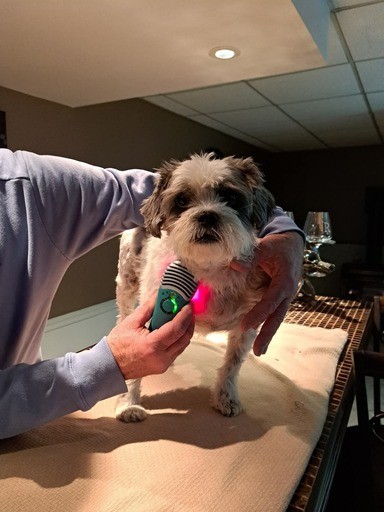
- Two wavelengths, including deep-reaching near-infrared. Luma combines 635 nm red light with 850 nm near-infrared light. Longer wavelengths penetrate deeper into tissue (Ash et al., 2017), so the 850 nm light reaches further than the red. That mattered for discs in Winston’s neck beneath muscle and extra body weight.
- Sufficient power for effective treatment. Luma’s manufacturer reports an average output of 1010 mW. Research in 47 dogs showed that higher power allows more light to penetrate the skin (Hochman-Elam et al., 2020). The correct dose is critical: photobiomodulation (PBM) works best within a specific range—too little has minimal impact, while too much can reduce effectiveness (Huang et al., 2009). With Luma, treating each spot for 30 seconds to 1 minute kept the sessions manageable for busy families. According to Winston’s pet parent, Luma felt “equivalent to the vet’s laser.”
- Built for a fluffy coat. Fur and pigment block light. In the same canine study, darker coats let less light through and shaving significantly increased transmission (Hochman-Elam et al., 2020). Luma’s comb prongs part the fur so the light reaches the skin without shaving, important for a Shih-Poo x Jack Russell mix’s dense coat.
- Eye-safe in a two-dog household. Luma is designed to be eye-safe (manufacturer specification), so no goggles are needed. “Winston lives with another dog, and knowing the MedcoVet Luma is 100% tissue safe always puts me at ease when there are multiple pets and people in a household. The risk of eye damage is eliminated.” When using any red light therapy device at home, it is still important to follow the manufacturer’s safety instructions. Always supervise sessions, especially around children or curious pets, to avoid accidental misuse or exposure. Store the device safely when not in use and keep it out of reach of children. Following general safety precautions helps ensure a positive and worry-free experience for every member of the household.
- A clinician in his pocket. Luma comes with a clinician-designed protocol and the MedcoVet app. Winston’s status checks and about 140 messages between his pet parent and me let me modify his plan in real time, including through every flare.
- His neurologist backed it. Winston’s family first saw the Luma in a brochure at his veterinary clinic. At his May 2025 recheck, his neurologist was glad to hear they were using it and recommended continuing Luma at home in place of clinic laser.
- Calm sessions at home. Winston’s pet parent works from home and was able to treat him when he was relaxed, instead of after a stressful car ride.
Treatment Protocol: How It Evolved
I used the MedcoVet Luma protocol as recommended by the World Association for Laser Therapy (WALT), but made one modification. Even though Winston is a small dog, I increased the treatment time to 1 minute per spot on his lower back and the back of his neck, rather than the standard 30 seconds, due to the deeper location of the target tissue and his extra weight. For the front of his neck, I kept the treatment at 30 seconds per spot because the tissue there is more superficial.
Starting protocol (April 5, 2025), daily
| Treatment area | Spots | Time per spot |
|---|---|---|
| Neck, underside (ventral cervical), right and left | 3 per side | 30 sec |
| Neck, top, skull to shoulder blade (dorsal cervical), right and left | 4 per side | 1 min |
| Lower back (lumbar), right and left | 3 per side | 1 min |
| Lymph nodes (optional): prescapular, popliteal, axillary, inguinal | Both sides | 30 sec |
The lymph nodes were optional. In animal research, PBM has stimulated lymphatic drainage and clearance (Semyachkina-Glushkovskaya et al., 2020), and in my practice I include nearby nodes to support clearance from the treated area.
How I taught Winston’s pet parent to use Luma
- Work the comb down through the fur to the skin, then hold it still. Don’t brush or move it once it’s in place.
- Over fleshy areas, gentle to moderate pressure helps the light reach deeper, as tolerated. Compressing soft tissue reduces how much it scatters light, which increases penetration (Chan et al., 1996).
- Start with fewer spots and 30 seconds per spot, and build up to the full protocol as the dog gets used to it.
- Treat daily for 10 to 14 days. If the dog responds, step down to every other day, then 3 times a week, then twice a week for maintenance.
- If signs return with less frequent treatment, step back up. If the dog isn’t responding, add 30 seconds per spot for about 7 days, up to 1:30 per spot along the back of the spine and 1:00 at the front of the neck.
- Don’t treat more than once a day. More light is not always better, because PBM follows a biphasic dose response (Huang et al., 2009). In my experience, the effects of a session last 48 to 72 hours.
- Make every session positive with a high-value reward.
On clinic days. For the first month, Winston was still getting laser therapy on his neck at the clinic three days a week. On those days his pet parent skipped Luma on the neck and treated only his lower back.
How the protocol changed over time
| Date | Luma protocol | Reason for change |
|---|---|---|
| Apr 5, 2025 | Full protocol, daily (lower back only on clinic laser days) | Loading phase |
| Apr 6–7, 2025 | Shorter sessions with treats or a lick mat; groin (inguinal) nodes dropped | Winston was fidgety; he was cooperating by Apr 10 |
| May 5, 2025 | Every other day, eased in gradually | Pain-free at neuro recheck; clinic laser stopped; more time out of the crate |
| May 29, 2025 | 2 times a week | Still 5/5 with more freedom |
| Jul 20, 2025 | Daily, plus crate rest | Sore after a bath and zoomies |
| Aug 6, 2025 | Every other day | Back to 100% |
| Aug 31, 2025 | Daily for 1 week, plus crate rest | Flare: head held low, skipped breakfast |
| Oct 2, 2025 | Daily, same protocol on both sides of the neck | Flare: wouldn’t turn his head to the right |
| Jan 2026 | Daily, plus carprofen for 7–10 days | Worst flare since starting Luma (2/5) |
| Jul 22, 2026 | Neck 2–3 times a week; lower back weekly as needed; hard-to-reach lymph nodes removed, four others optional | Every flare had been in the neck |
Additional care. Winston has been on pregabalin since November 2024 and continues to take it. His pet parent requested carprofen, an NSAID, from the veterinarian to use only during flare-ups. I advised permanent activity restrictions: no jumping, climbing stairs, tug-of-war, or rough play with his housemate, people, or toys—including the “kill shake” with his favorite toy, Baby Blue, to protect his neck. In October 2025, both his neurologist and I discussed adding a PEMF device (the Assisi Loop), but since Winston was doing well with Luma, the neurologist did not recommend it and the family chose not to add it.
Current Maintenance Protocol
Winston’s pet parent treats the top and underside of his neck two to three times a week. Lower back treatment is optional and done about once a week if needed, and treating four lymph node areas is also optional. At the first sign of a flare, such as holding his head low, not wanting to turn his head, or skipping breakfast, he puts Winston in his crate, starts daily Luma sessions, and gives carprofen. I recommend starting Luma right away instead of waiting, since Luma targets inflammation and pain directly at the neck, while the NSAID works throughout the body.
Case Timeline
Eighteen months of care, documented through about 140 messages between Winston’s pet parent and me in the MedcoVet app, roughly half from each of us.
| Date | What happened | Flare recovery |
|---|---|---|
| Spring 2024 | First episode of pain; primary vet prescribes gabapentin and carprofen, no crate rest | |
| Sep – Nov 2024 | Second flare; MRI confirms cervical and lumbar IVDD; gabapentin, meloxicam, 4 weeks of strict crate rest. Nov recheck: switched to pregabalin, other drugs stopped | |
| Early 2025 | Flare about 6 months after crate rest; in-clinic laser therapy to the neck begins | |
| Apr 1, 2025 | MedcoVet consult | |
| Apr 5, 2025 | Daily Luma begins, alongside clinic laser 3 days a week | |
| Apr 10, 2025 | Winston cooperating well with sessions | |
| Apr 28, 2025 | 5/5 on both status checks | |
| May 5, 2025 | Neuro recheck: no pain; clinic laser stopped; crate restrictions start to lift | |
| May 29, 2025 | Luma reduced to 2 times a week | |
| Jun 2025 | Pet parent sends videos of a relaxed Winston during treatment | |
| Jul 20, 2025 | Sore after a bath and zoomies; daily Luma | Next day |
| Aug 31, 2025 | Flare: head held low, skipped breakfast; crate rest + daily Luma | Next day |
| Oct 1–2, 2025 | Flare: head low, wouldn’t turn to the right; crate rest + daily Luma | ~1 day |
| Oct 23, 2025 | Neuro recheck: flares are expected with IVDD; continue current plan | |
| Dec 21, 2025 | Rent-to-own complete; the family now owns its Luma | |
| Late Jan 2026 | Worst flare since starting Luma (2/5), after ~4 months without a flare; carprofen + crate rest + daily Luma | ~2 days |
| Apr 2026 | Flare: carprofen for 2 days, crate rest, Luma | ~2 days |
| Jun 2026 | “A good stretch with no flare ups” | |
| Early Jul 2026 | Short flare, morning only; extra Luma and rest | Same day |
| Jul 22, 2026 | Protocol focused on the neck | |
| Sep 2026 | 5/5 on status checks; no flare-ups |
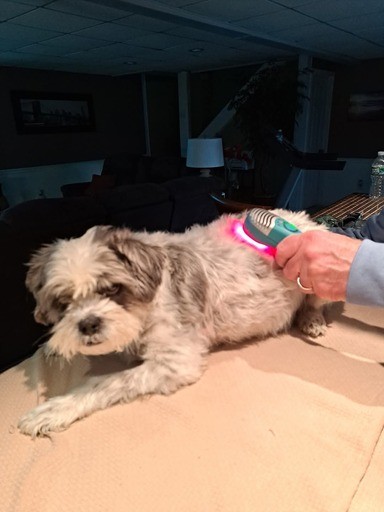
Photo and Video Documentation
Photos and videos from Winston’s pet parent, consent on file.
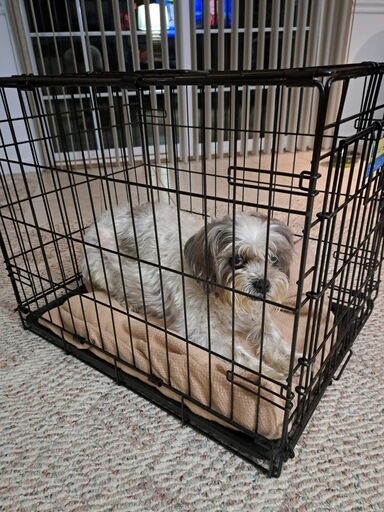
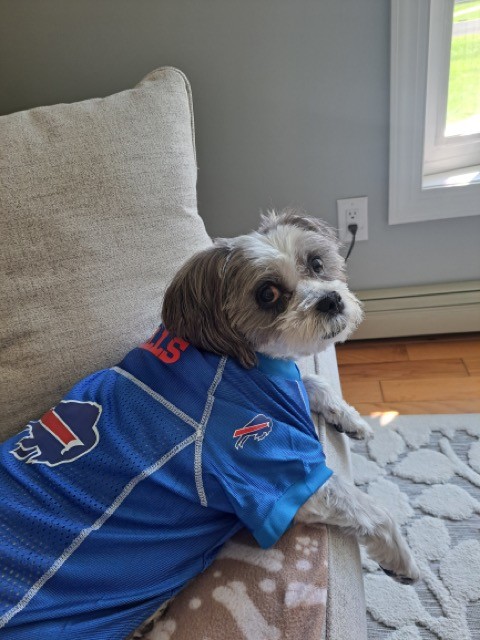
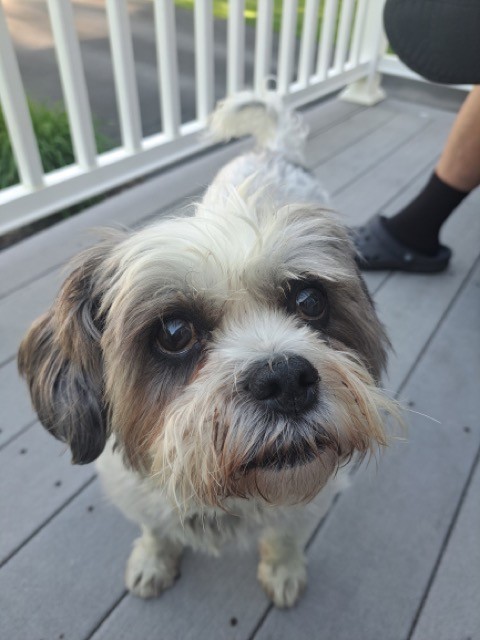
Outcome
By day 23, Winston scored 5 out of 5 on both status checks. On day 30, his neurologist found no signs of pain, stopped his in-clinic laser therapy, and agreed to continue Luma at home. After that, Winston’s activity restrictions were gradually lifted.
Winston’s pet parent logged both status checks regularly in the MedcoVet app throughout his care. His pain and behavior score dipped to 4 out of 5 during several flares and returned to 5 as each one resolved. His lowest score, 2 out of 5, came during the January 2026 flare. His second status check, “How is your pet tolerating treatment?”, rose from 3 to 5 between April 4 and April 8, 2025, as he got used to his sessions.
Since starting Luma, Winston has continued to experience flare-ups, which his neurologist confirmed is normal for IVDD during his October 2025 recheck. What has changed is how quickly these flares resolve. Most now improve by the next day. His most severe flare, in January 2026, occurred after about four months without issues and caused his score to drop to 2 out of 5, but he recovered within two days. Instead of rushing to the emergency clinic, Winston’s family now begins treatment at home at the first sign of a flare. By September 2026, he was back to a perfect score of 5 out of 5, with no recent flare-ups.
Winston’s attitude toward treatment changed as well. He used to fidget during his first sessions, but now he lies calmly for them. His pet parent thinks, “I think he likes it because he gets a couple green beans when we finish. He has me trained well!”
The change Winston’s family talks about most isn’t even on the timeline. He now brings them his ball every night again, something he hadn’t done in years.
Case Status at Last Follow-Up
| Field | Status |
|---|---|
| Last documented follow-up | September 2026 (5/5 status checks) |
| Clinical status | Well controlled; occasional short neck flares |
| Typical flare recovery | 1–2 days with Luma, crate rest, and as-needed carprofen |
| In-clinic laser therapy | Discontinued May 5, 2025 |
| Surgery | Not needed |
| Medication | Pregabalin, ongoing since Nov 2024; carprofen only during flares |
| MedcoVet Luma | Neck 2–3 times a week, increased to daily during flares; owned outright since Dec 2025 |
| Long-term goal | Comfort, fewer and milder flares, and a long life |
In His Pet Parent’s Words
“Luma has changed Winston’s life!”
“I am a firm believer in red light therapy. It is a great tool to help with IVDD.”
“This was a game changer for Winston. His quality of life is so much better. When we see him having a flare up we immediately start treating him with the Luma and the next day he is right back to being himself.”
“I’ve told so many how well the Luma has worked for Winston.”
— Randy, Winston’s pet parent
When we spoke in August 2026, Randy told me that without the Luma, he isn’t sure where Winston would be: possibly in chronic pain, re-injured, or facing surgery. He said he loved the rent-to-own option. When other pet parents tell him Luma costs more than other devices, he points them to rent-to-own, which is how his family made it work.
Randy is a member of MedcoVet’s affiliate referral program, which he joined in January 2026.
Looking Back
This case went well, and much of the credit goes to Winston’s pet parent. He followed every recommendation, sent updates on time, and informed me right away when Winston showed signs of a flare and what those signs were. He asked meaningful questions. Over time, he learned exactly what Winston needs when a flare starts: daily Luma, rest, and his NSAID.
As a physical therapist for pets, I have worked with many dogs with IVDD, some managed without surgery and some after surgery. If every pet parent in this situation could use a Luma at home, I believe many outcomes would be much better: less pain, fewer daily medications and side effects, more dogs avoiding surgery, faster return to normal activity, and quicker recovery for those who do need surgery. Home treatment takes commitment, but I think most families would choose it, when appropriate, to spare their dog the emotional and physical stress of spinal surgery and themselves the pain of seeing their pet suffer.
Clinical Takeaways From Winston’s Case
MRI imaging allowed for a highly targeted treatment plan. By pinpointing the exact locations of Winston’s disc disease, I was able to focus therapy on his neck and lower back from the outset, and later concentrate only on the neck when it became clear each flare was cervical.
Adjust the dose for tissue depth and body type, not just overall size. I treated the back of Winston’s neck and lower back for 1 minute per spot instead of 30 seconds, since the affected tissue was deeper and he was overweight.
Adapt early for comfort and cooperation. Winston was restless at first, but shorter sessions, positive reinforcement, offering him something to lick during treatment, and skipping the difficult groin lymph nodes helped him settle within five days. In my experience, dogs often learn to associate the Luma with feeling better.
Reduce the frequency of treatments gradually, then increase quickly if symptoms return. Over about eight weeks, Winston’s sessions went from daily to twice a week, with only one or two changes made at a time as clinic laser and crate rest were phased out. When a flare occurred, his pet parent promptly resumed daily therapy, and most flare-ups resolved within a day.
Treat the whole neck, not just the sore side. When Winston wouldn’t turn his head to the right, his pet parent asked whether to focus on the right side. Not turning one way doesn’t mean the problem is on that side, and the neck muscles spasm across the whole cervical region to splint it. Covering more area is better, and treating healthy tissue is fine.
Start Luma at the first sign. If the dog isn’t too painful to tolerate a session, start Luma right away. It targets the inflammation directly, while an NSAID works throughout the body.
Flares are part of IVDD. Winston’s neurologist confirmed that flare-ups are expected, and about a third of medically managed dogs with cervical disc herniation have their signs return (Levine et al., 2007). The useful measure is how long flares last and how bad they get, not whether they happen.
Changes in behavior signal clinical issues. Early signs of pain included Winston backing away from people, avoiding his favorite perch, and no longer playing his nightly game of fetch. According to veterinary pain guidelines, shifts in behavior and activity are important indicators of pain in dogs (Monteiro et al., 2023). The return of these behaviors marked a positive part of Winston’s recovery.
Communication drove the result. About 140 messages through the MedcoVet app let me change Winston’s plan in real time.
Concurrent Treatment and Case Limitations
This is a single-patient case report, not a controlled study.
- Winston began taking pregabalin in November 2024, roughly five months before starting Luma, and he continues on this medication. His pet parent describes pregabalin as “a game changer.” It’s not possible to distinguish the results of red light therapy from those of pregabalin, or from the use of carprofen during flare-ups. NSAIDs themselves have been linked with positive outcomes in the medical management of cervical disc herniation (Levine et al., 2007).
- For the first month, Winston was also getting in-clinic laser therapy to his neck three days a week. The 5/5 status checks and the pain-free recheck happened while both were in use.
- Outcomes are based on clinician and pet-parent observation, app status checks, and neurologist rechecks, not standardized neurological scoring.
- Activity restrictions and crate rest during flares likely contributed to recovery.
- Much of the PBM research cited here comes from people, rodents, or dogs after surgery, not dogs with cervical IVDD managed at home. The canine IVDD study is small (24 dogs) and its time-to-walking difference was not statistically significant (Bruno et al., 2020).
- Winston’s IVDD was mild to moderate and not surgical. Dogs that lose deep pain sensation have a much more guarded outlook and need emergency veterinary care (Olby et al., 2003), and their response to red light therapy may differ.
Frequently Asked Questions
Can a dog with IVDD recover without surgery?
Many can. In one study of dogs with cervical disc herniation, medical management produced an acceptable outcome in many dogs, with about 49% treated successfully (Levine et al., 2007). Winston’s neurologist did not recommend surgery based on his MRI. Your veterinarian is the right person to decide, and loss of deep pain sensation or the ability to walk is an emergency (Olby et al., 2003).
What are the signs of IVDD in a dog’s neck?
Neck pain is the most common sign in small dogs with cervical disc disease (Cherrone et al., 2004). Owners may see the head held low, reluctance to turn the head, yelping when touched or lifted, backing away from people, and avoiding jumping. Winston showed all of these at different times.
How long does an IVDD flare-up last?
It varies. Before Luma, Winston needed weeks of crate rest. With home red light therapy started at the first sign, most of his flares resolved by the next day, and his worst resolved in about two days.
How often should red light therapy be used for IVDD?
Winston started daily, tapered to twice a week over about eight weeks, and returns to daily during flares. More is not always better, because PBM has a biphasic dose response (Huang et al., 2009). Protocols vary by dog, so a clinician should set the plan. See how IVDD red light therapy is typically used.
Is at-home red light therapy as good as laser therapy at the vet?
For Winston, home Luma sessions replaced his in-clinic laser therapy with his neurologist’s agreement. The device and protocol both matter: dose depends on wavelength, power, and time per spot.
Can red light therapy be used with IVDD medications?
Yes. Winston continued pregabalin and used carprofen during flares alongside Luma. Luma works directly at the site of inflammation, while medication works throughout the body. Always involve your veterinarian in medication decisions.
Is Your Dog Living With IVDD?
If your dog has been diagnosed with IVDD, or you are seeing signs like a stiff neck, a low-held head, or reluctance to jump, talk to your veterinarian first. Then book a free consult with a MedcoVet clinician to see if at-home red light therapy fits your dog’s plan.
Ella
Evidence Citations
Case study prepared from clinician-submitted case documentation (Case #4039), MedcoVet. Published with pet parent consent.


