Dog Agility Equipment
What to use, how to set it up safely, and how to support your dog’s body after practice
Medically reviewed by: Kristy Williams, CVT, CCFT (Specialties: Pet rehabilitation, pain management, photobiomodulation)
Reviewed: July 2026
Updated: July 2026
What dog agility equipment do beginners need?
Beginner dog agility equipment usually includes jumps, a tunnel, weave poles, and a pause table or low platform. These agility obstacles help dogs learn the basics of focus, handling, body-language cues, confidence, and safe movement before they practice a full agility course. Start slowly, keep the equipment low, use positive reinforcement, and choose sturdy, durable equipment with non-slip surfaces to protect your dog.
If your dog is active, training, or recovering after practice:
Want help supporting your dog’s body through agility training?
Sprite
Why dog agility equipment matters
Dog agility is a sport built on communication.
The dog runs. The handler guides. The agility equipment gives the team a course to learn together.
Good dog agility equipment helps improve coordination, confidence, communication, strength, balance, weight management, and fitness in dogs. It also gives dogs mental stimulation, which can reduce boredom and anxiety.
A tired brain can be just as helpful as tired legs.
The right agility equipment also helps you practice safely. A sturdy, secure, tunnel, adjustable jumps, secure weave poles, and stable contact obstacles let your dog learn without slipping, tangling, or landing awkwardly.
Safety comes first. Fun follows fast.
The basic dog agility equipment list
Most beginners do not need to purchase every obstacle right away. Start with a few easy pieces and build from there.
Essential dog agility equipment includes:
- Jumps
- Tunnel
- Weave poles
- Pause table or raised platform
- A frame, when your dog is ready
- Dog walk, when your dog is ready
- Teeter, also called a teeter totter or seesaw, when your dog is ready
Common agility equipment includes jumps, weave poles, and tunnels because they teach the basics of speed, focus, cues, and obstacle confidence.
If you are building a backyard course on a budget, keep it simple. A tunnel, a set of jumps, and beginner weave poles can give your dog plenty to learn.
Jumps
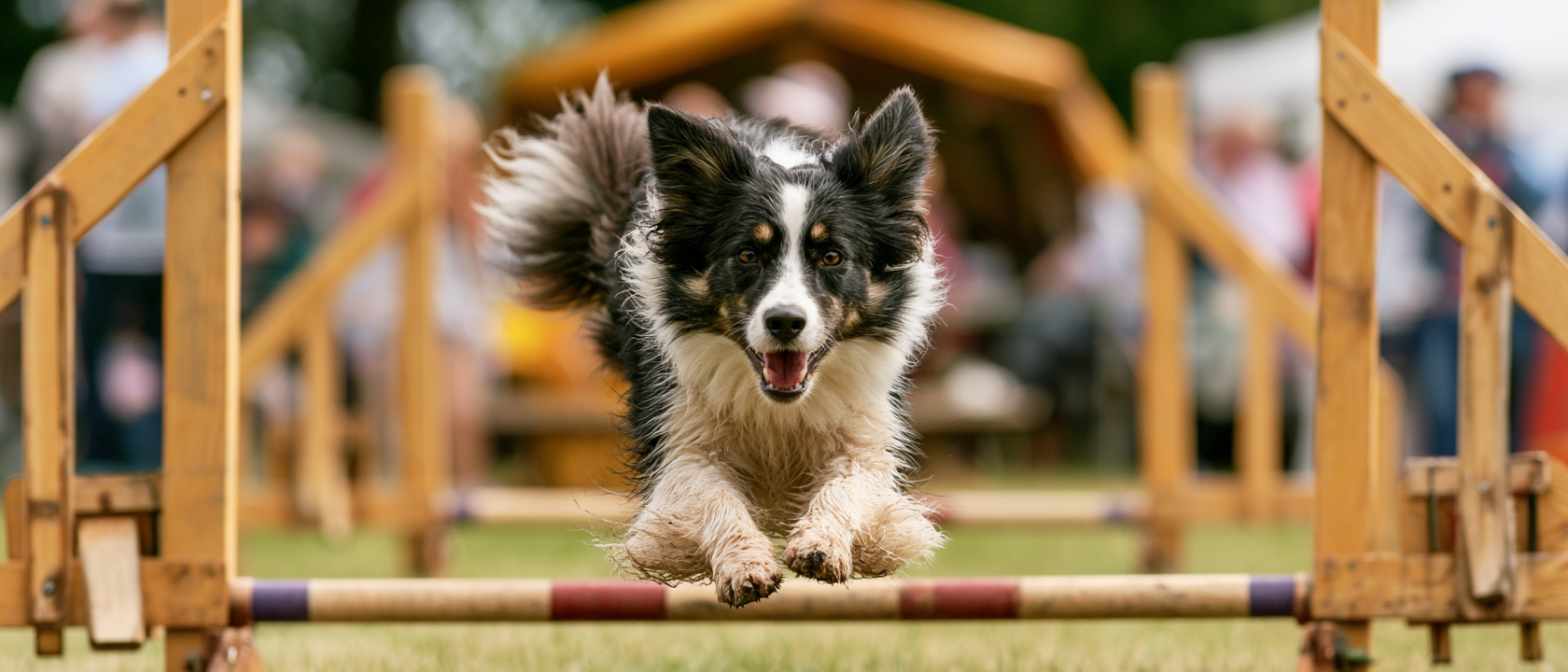
Jumps are a foundational part of agility courses.
They teach dogs to move forward, collect their body, respond to cues, and follow the handler’s path. Agility jumps can include bar jumps, panel jumps, spread jumps, and tire jumps.
Choose adjustable jumps so you can customize hurdle height for your dog’s size, age, and skill level. Low jumps are ideal for beginners, senior dogs, small dogs, and dogs still learning body awareness.
Young puppies should avoid high-impact jumps until their growth plates mature. For many dogs, full jump height should wait until about 12 to 18 months, depending on breed, body structure, and veterinary advice.
Practice one jump first.
Then two.
Then short sequences.
Speed comes later.
Tunnel
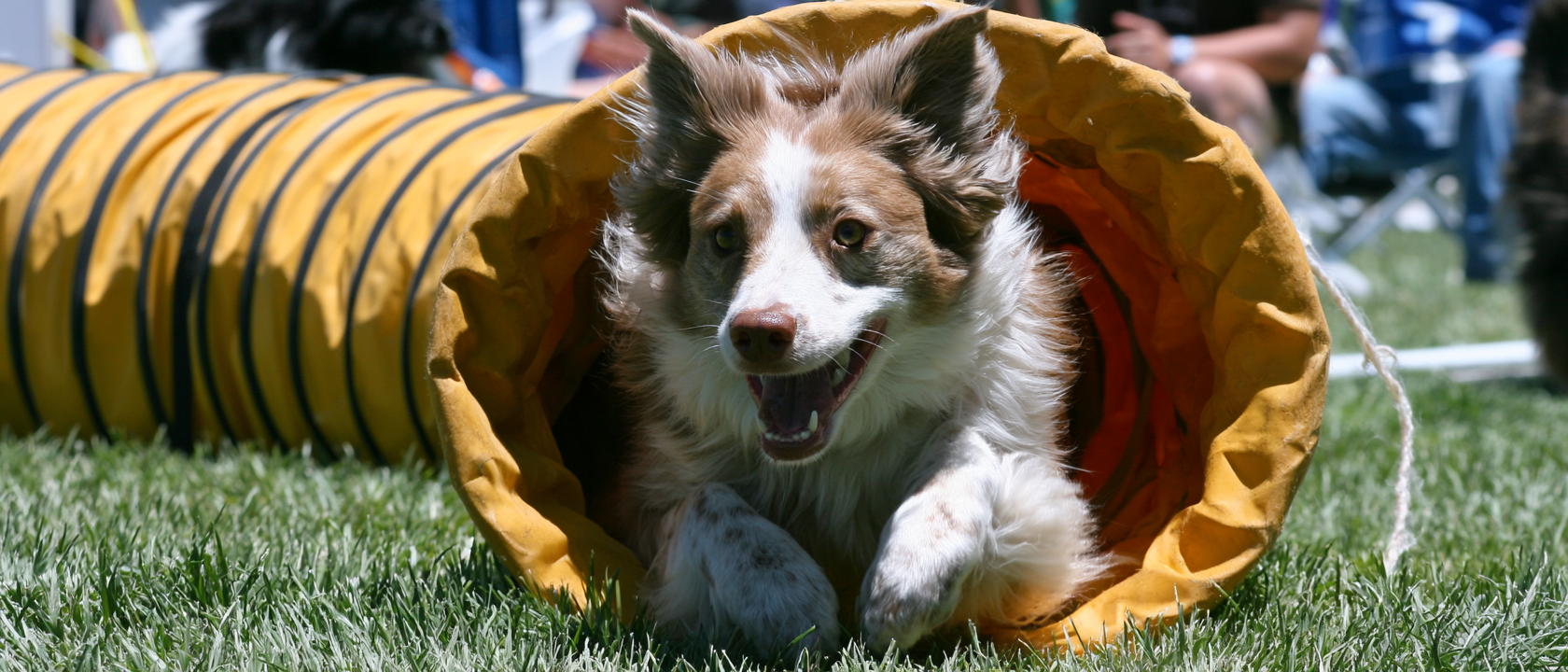
A tunnel is one of the easiest obstacles for beginners.
Many dogs enjoy it quickly because it feels like a game. Start with a short, open tunnel and encourage your dog through with treats, toys, praise, or a helper waiting at the other end.
A standard agility tunnel is often 18 feet long with 24-inch openings, though tunnels can vary in length from about 3 feet to 20 feet. For beginners, shorter tunnels are easier.
Choose a sturdy tunnel that will not collapse, twist, or tangle during use. A tunnel that rolls or shifts can scare a dog and create a safety issue.
Use tunnel bags to secure outdoor tunnels on grass.
Keep it stable. Keep it fun.
Weave poles
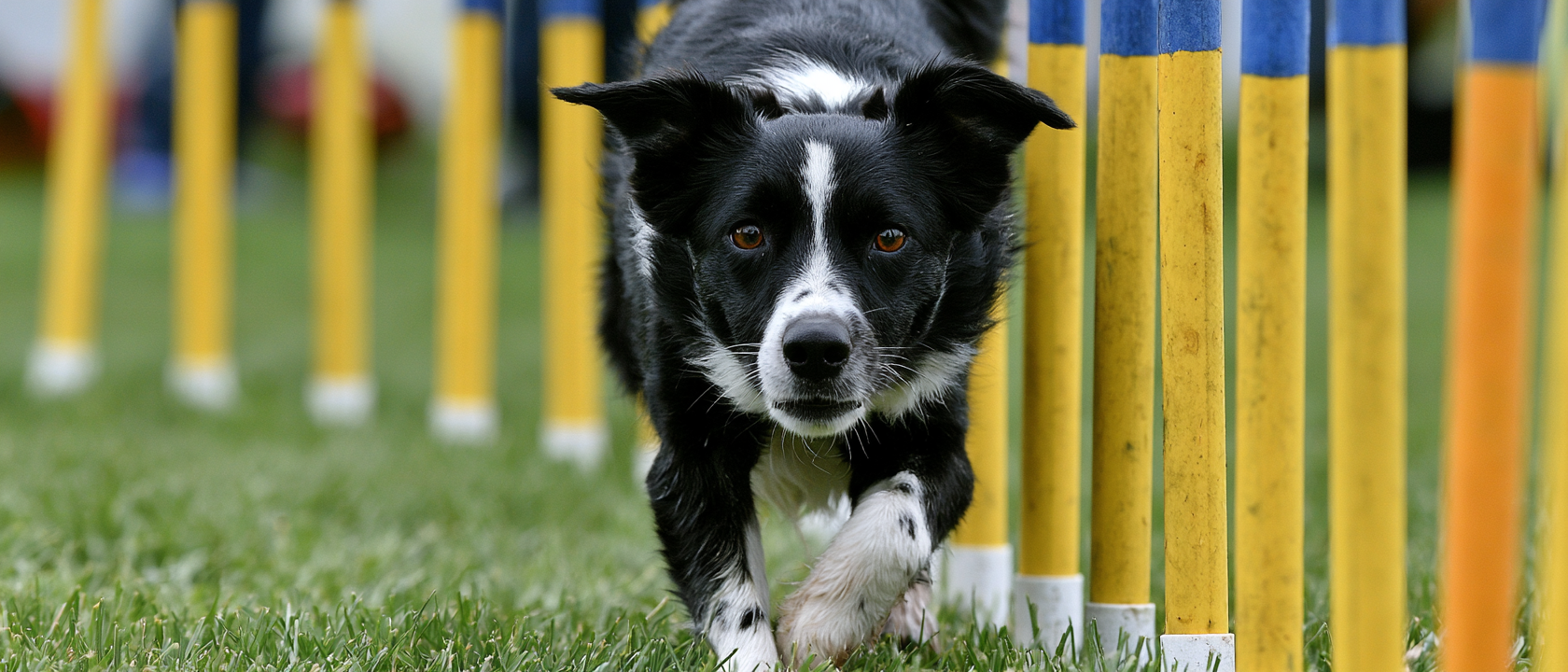
Weave poles are one of the more technically challenging dog agility equipment pieces.
They usually come in sets of twelve for training and competition practice. Some beginner sets allow you to angle or space the poles to make learning easier.
Weave poles teach rhythm, flexibility, coordination, focus, and body awareness. They also require careful progression because repeated weaving can place strain on the dog’s spine and shoulders.
Start with easier setups:
- Open channel weaves
- Angled poles
- Wider spacing
- Short sets
- Slow speed
- Lots of reward
- Guide wires
Then gradually increase the challenge.
Weaves take time. That is normal.
Pause table or raised platform
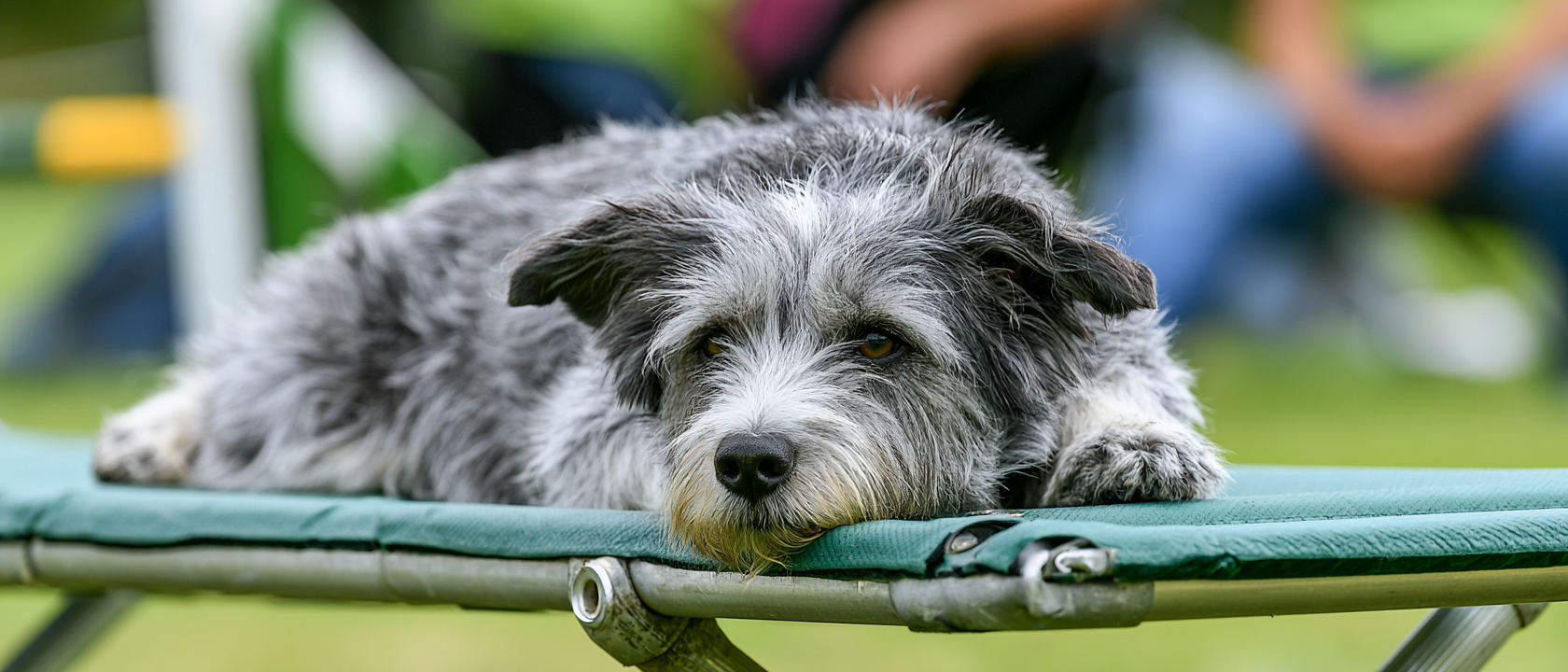
A pause table is used to reinforce impulse control.
The dog runs, jumps, turns, and then has to stop. That skill is useful in agility and daily life.
A pause table or raised platform can teach:
- Sit
- Down
- Stay
- Body control
- Calm focus
- Confidence on raised surfaces
For beginners, use a low, sturdy platform with a non-slip top. Avoid anything wobbly or slick.
The pause table is a great first obstacle for anxious dogs because it gives them a clear place to go and a clear job to do.
A frame
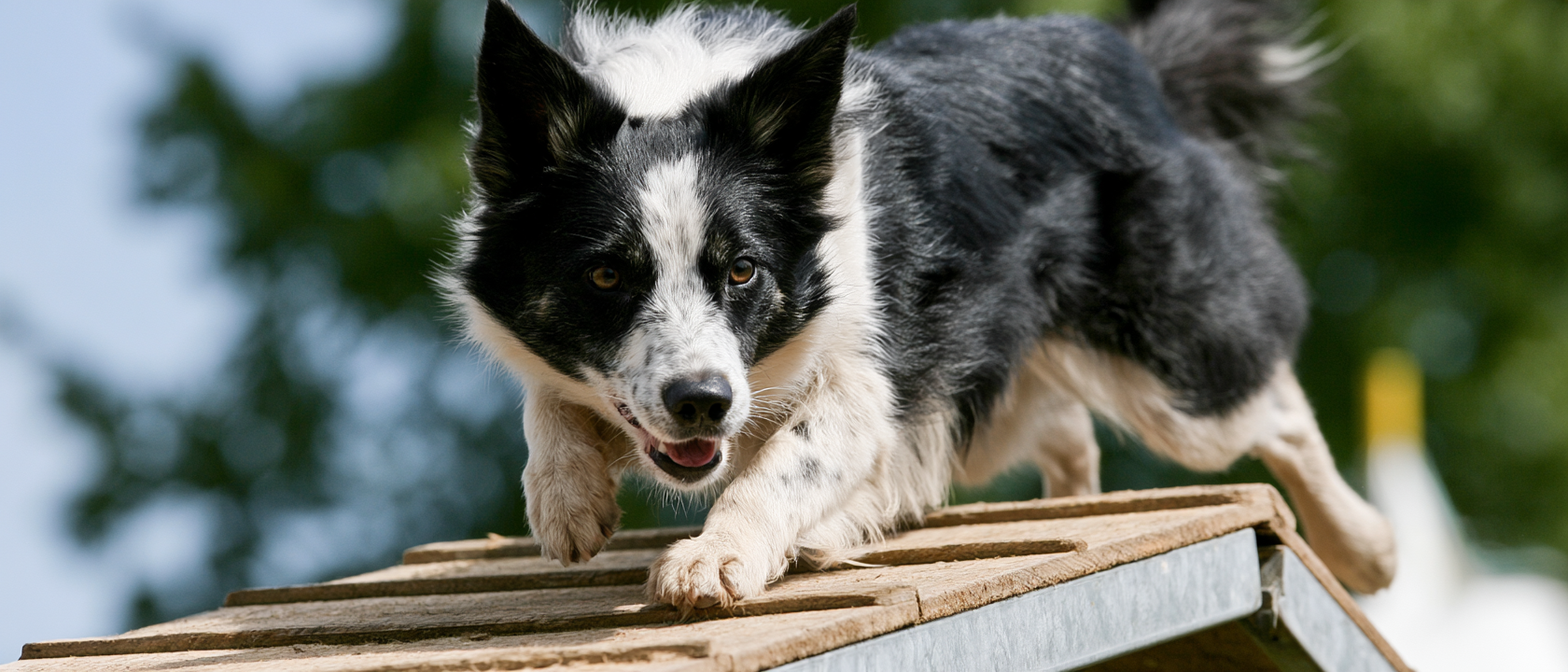
The A-frame is a contact obstacle in dog agility.
It looks like two wide ramps joined at the top. The dog climbs up one side and down the other. Contact equipment requires dogs to place their paws in defined zones, usually painted areas near the bottom of the obstacle; that painted area is the portion the dog must touch with a paw.
Those contact zones matter for safety and competition rules.
A frame obstacles help develop a dog’s climbing ability, balance, strength, and confidence. They should be introduced carefully, with the height adjusted for training progression.
Start low. Use a non-slip surface, keeping the dog in contact with it as they learn the obstacle. Keep the session short.
Contact equipment should meet national organization standards for safety if your dog will train seriously or compete.
Dog walk
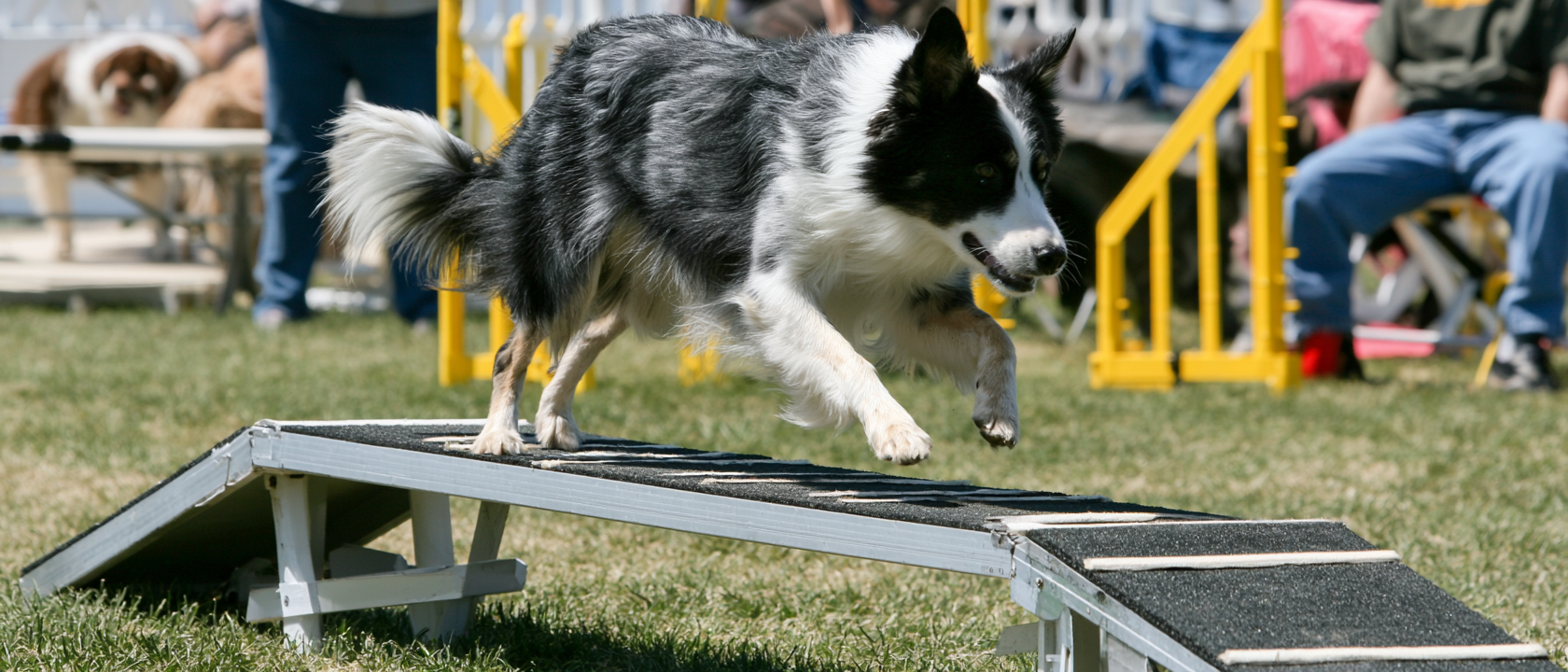
The dog walk is another contact obstacle.
It includes an up ramp, a narrow elevated board, and a down ramp. The dog must cross the board safely and hit the contact zone.
The dog walk builds balance, focus, and trust between dog and handler. It also requires body control and confidence.
This is not a first-day obstacle for most dogs.
Introduce it slowly with a low board before increasing height. Use a leash or harness only if your instructor suggests it, and avoid pulling the dog across so the dog can learn the board while keeping confidence and balance. The dog should learn to move with confidence, not fear.
Teeter, teeter totter, or seesaw
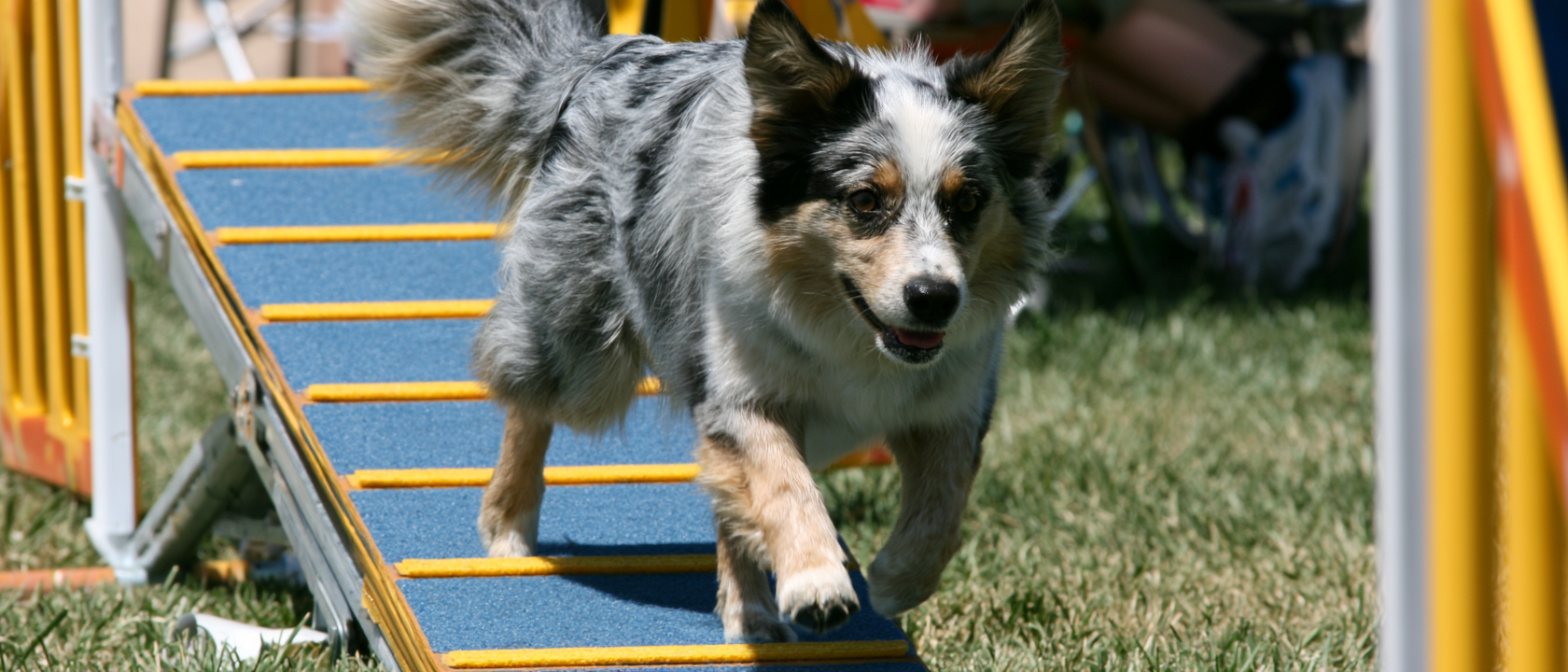
The teeter, also called a teeter totter or seesaw, is one of the trickiest agility obstacles.
It moves under the dog.
That movement can surprise a dog, especially if they are shy, anxious, or not accustomed to unstable surfaces.
Teach the teeter slowly. Start with confidence games, low movement, and sound desensitization. Reward calm feet and brave choices.
Do not rush this obstacle. A bad first experience can stick.
Do not introduce the teeter while training the dog walk, the dog can mistake one for the other and injuries can occur.
Backyard dog agility equipment
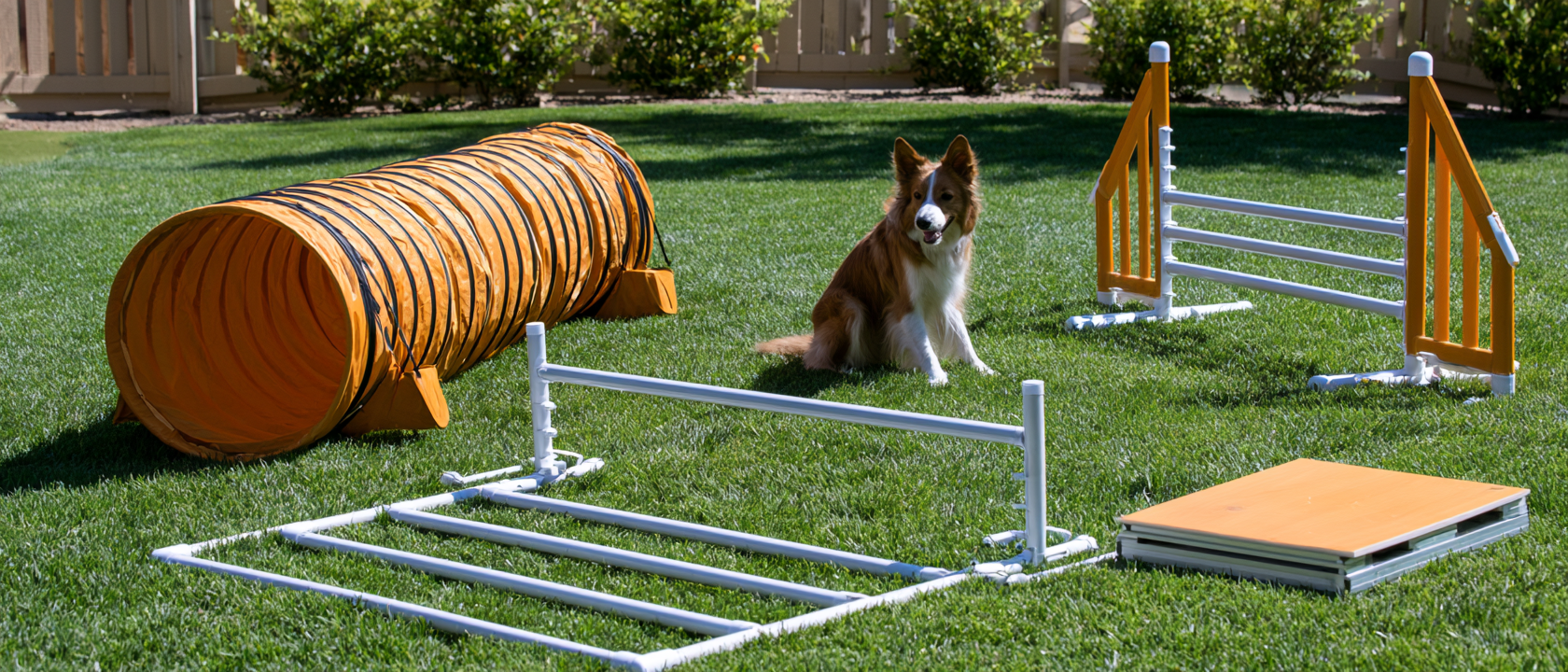
Backyard dog agility equipment can be a great way to practice between classes.
You do not need a full competition course. You need safe space, good footing, and a smart plan.
Grass can work well if it is flat, dry, and not slippery. Avoid holes, mud, ice, loose gravel, and uneven ground. Indoor agility can also work if you have enough space and non-slip flooring.
For a simple backyard setup, use:
- One tunnel
- Two adjustable jumps
- Beginner weave poles
- A pause table or low platform
- A simple practice plan
Do not leave lightweight agility equipment out in bad weather. Wind, rain, sun, and cold can affect durability.
Store equipment properly so it lasts longer. You can sometimes find used pieces on local resale sites before buying new.
Portable equipment vs permanent equipment
Portable agility equipment is lightweight, easy to set up, and usually more budget friendly. It is ideal for beginners, backyard practice, indoor agility, and short sessions.
Permanent or competition-style equipment is sturdier, heavier, and often more expensive. It may be better for serious training, local clubs, or dogs preparing to compete in the USA.
When choosing equipment, consider:
- Your dog’s size
- Your dog’s age
- Your training goals
- Your budget
- Your available space
- Indoor or outdoor use
- Durability
- Storage
- Safety
- Whether you plan to compete
The cheapest option is not always the safest option.
The most expensive option is not always necessary.
Choose equipment that fits the dog in front of you.
DIY dog agility equipment
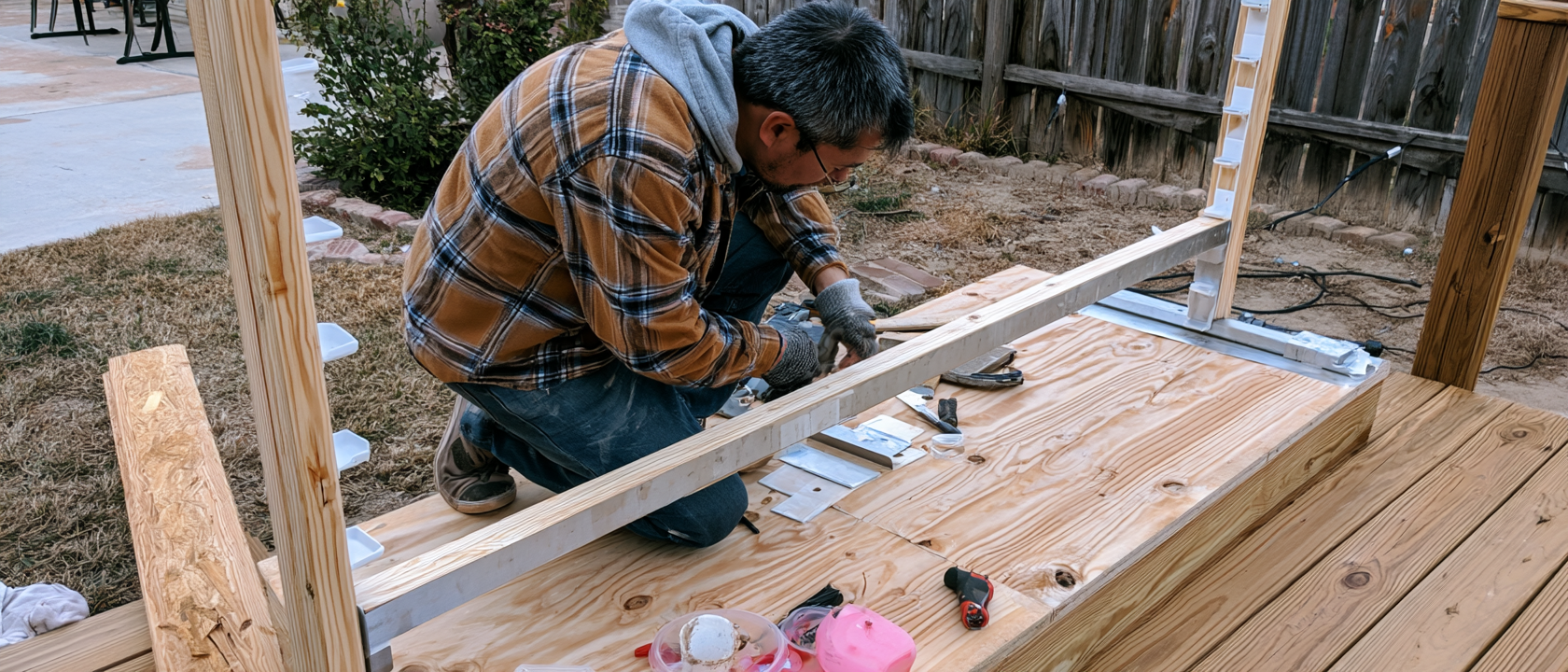
Some dog owners build simple agility equipment at home using PVC pipes, boards, rope, posts, cones, and other materials.
DIY can save money, but safety still matters. I suggest checking build plans carefully before making any homemade obstacle.
Use strong materials. Avoid sharp edges. Keep surfaces non-slip. Make sure jumps fall away if hit. Do not build contact equipment like an A-frame, dog walk, or teeter unless you understand the safety requirements and use a trusted website for plans or guidance.
A homemade jump from PVC pipes can be useful.
A wobbly, slick, homemade A-frame can injure a dog.
Start with low-risk equipment first.
How to introduce agility equipment safely
Practice cues for one obstacle before combining them.
Your dog should understand what one obstacle means before you add speed, turns, distance work, or several obstacles in a row.
A safe progression might look like this:
- Introduce the equipment
- Reward curiosity
- Practice one obstacle
- Add a cue
- Add light movement
- Build confidence
- Add a second obstacle
- Practice short sequences
- Gradually increase speed
- Add handling skills
Dogs learn to respond to verbal cues and body-language cues during agility training. Your shoulders, feet, hands, voice, and timing all give your dog information.
Clear handling helps your dog feel secure.
Confused handling can make the course harder than the obstacle.
Agility equipment safety checklist
Before every practice session, check the equipment and the ground.
Use this quick safety list:
- Equipment is sturdy
- Surfaces are non-slip
- Jumps are set low enough
- Bar height fits the dog
- Tunnel is secured
- Weave poles are stable
- Contact zones are clear
- Grass is flat and dry
- Indoor flooring is not slippery
- Dog is not limping
- Dog is not tired before starting
- Weather is safe
- Session is short
- Water is available
Stop if your dog looks injured, sore, worried, or unusually slow.
Your dog should enjoy the sport.
How agility equipment supports the dog and handler bond
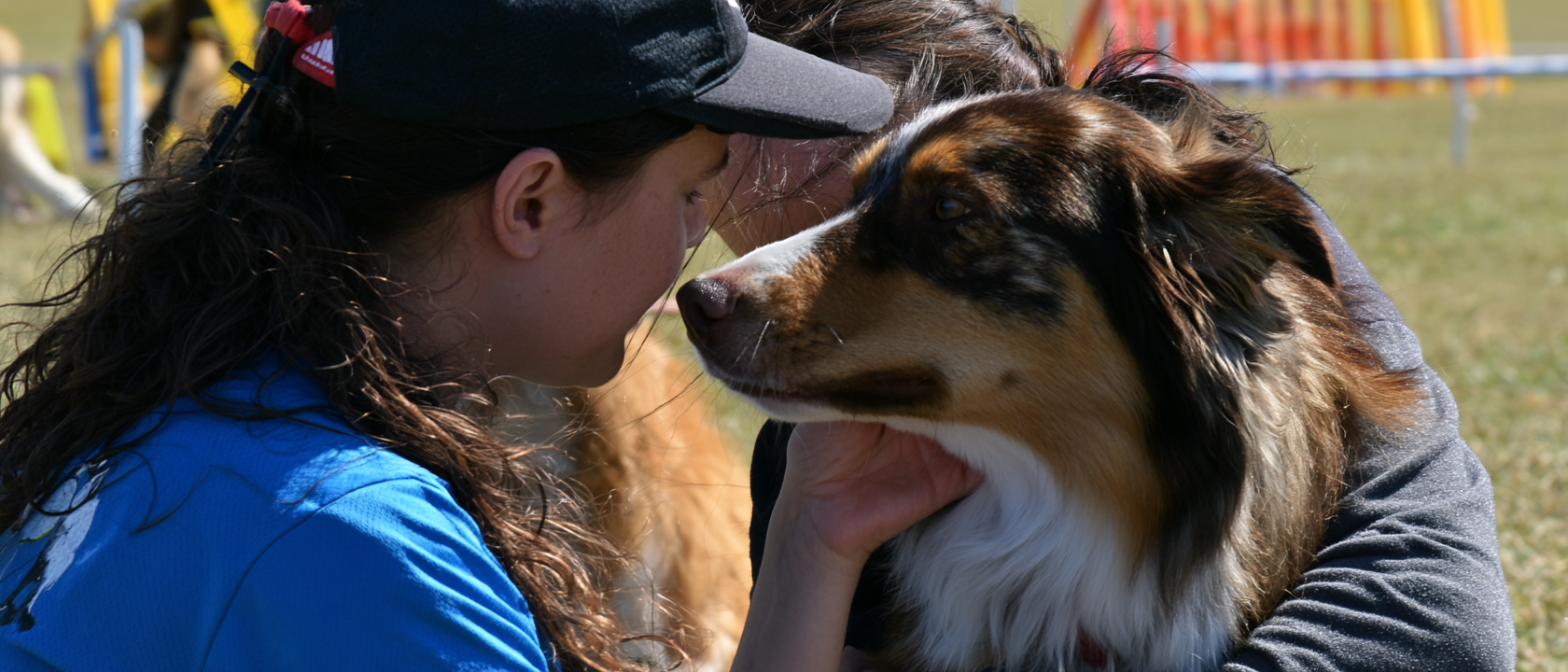
Dog agility builds a bond because the dog and handler have to work together.
The dog learns to trust the handler’s cues. The handler learns to read the dog’s body language. Both of you learn timing, patience, and teamwork.
This is one of the best parts of the sport.
Agility gives you a shared language.
A jump means go. A pause table means settle. A tunnel means forward. A weave means rhythm.
Every practice session is a conversation.
How red light therapy supports dogs using agility equipment
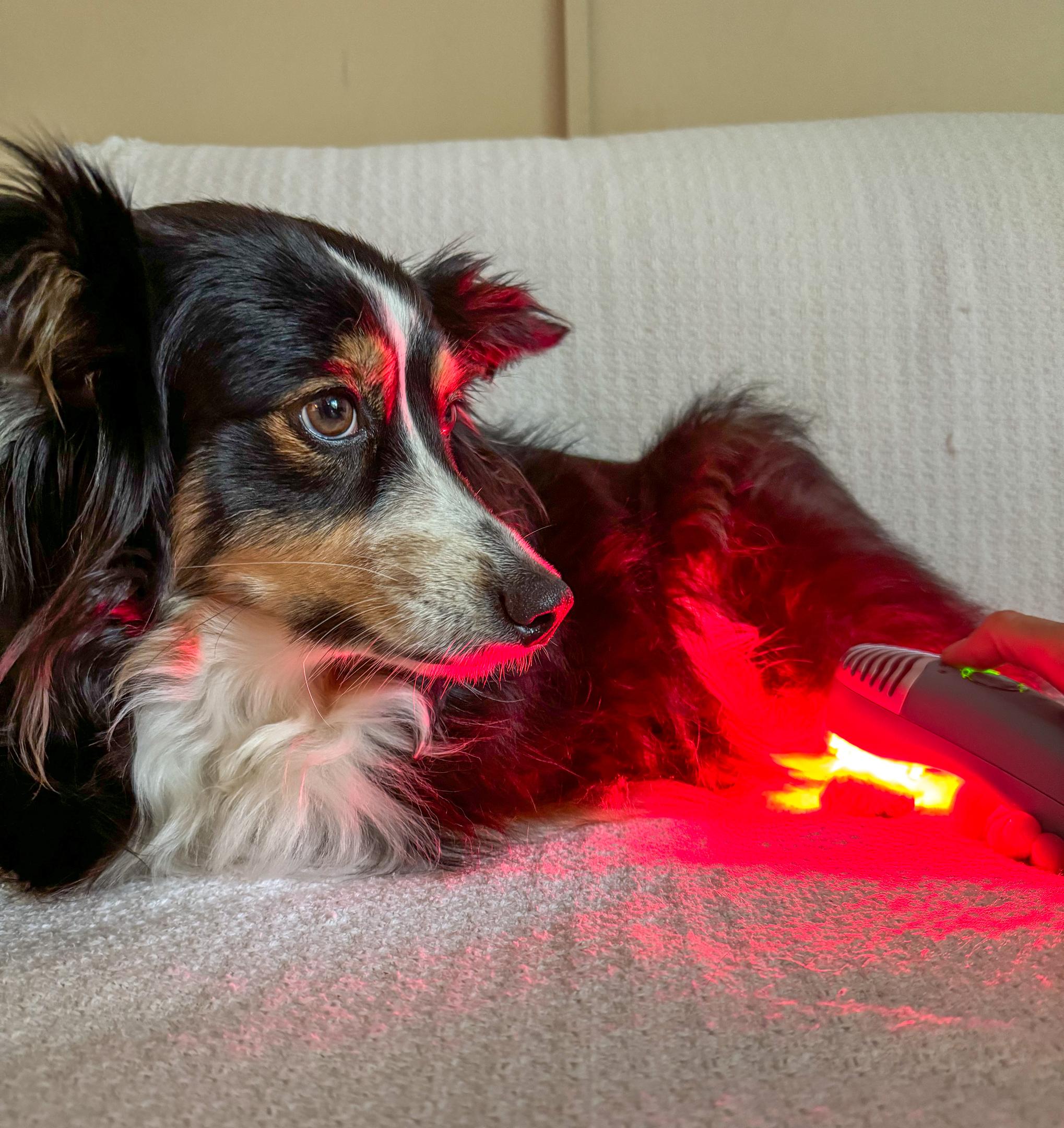
Photobiomodulation, or PBM, also called red light therapy, low-level laser therapy, LED therapy, cold laser, and near-infrared therapy, refers to the same therapeutic category using light energy to influence cellular biology.
Red light therapy can support dogs who use agility equipment by helping reduce inflammation, support circulation, ease discomfort, and support recovery after physical activity.
Learn more here: Science of Red Light Therapy.
Agility training enhances strength, balance, coordination, and weight management in dogs. It also uses the shoulders, spine, hips, knees, paws, and core. Even fun backyard practice can leave muscles and joints working hard.
Red light therapy may help support:
- Muscle recovery after practice
- Joint comfort
- Comfort after running and jumping
- Recovery after competition
- Support after physical exercises
- Mobility in senior dogs
- Comfort for dogs with old injuries
- Physical therapy tolerance
- Long-term activity support
Red light therapy should not be used to cover up an injury. If your dog is limping, painful, swollen, or refusing an obstacle, stop training and contact your veterinarian.
Why Luma is helpful for dogs doing agility
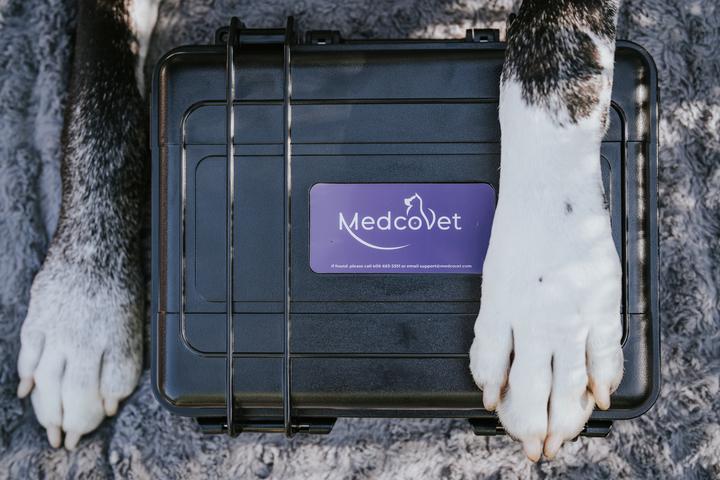
The MedcoVet Luma gives dog owners a simple way to support recovery at home after agility practice, classes, backyard exercises, or competition weekends.
Luma uses red and near-infrared light to support circulation, inflammation control, and comfort. It is non invasive, drug free, and designed for guided home use.
For dogs doing agility, recovery is part of the plan.
Luma may support:
- Comfort after jump practice
- Recovery after weave pole work
- Muscle support after running
- Joint comfort after contact obstacles
- Recovery after dog agility competitions
- Support for senior dogs doing modified agility
- Comfort for dogs returning after injury
- Better tolerance for conditioning work
Read more here: Red Light Therapy for Agility Dogs.
For broader guidance, visit Red Light Therapy for Dogs.
Want to know if Luma fits your dog’s training and recovery routine?
Mizzy
Real Dogs, Real Agility Recovery Support
Agility dogs work hard because they love it.
They run the tunnel. They hit the contact zone. They fly over jumps. They learn the weave poles one careful step at a time.
Luma gives pet parents a way to support comfort, recovery, and mobility at home as part of their dog’s agility routine.
Want help deciding if Luma fits your dog’s agility recovery plan?
Hazel Moon
MedcoVet’s clinical view on agility equipment and recovery
MedcoVet focuses on photobiomodulation protocols for dogs with pain, inflammation, sports recovery, mobility issues, arthritis, surgery recovery, and soft tissue strain.
Our clinical approach considers the individual dog: age, breed, weight, training load, jump height, injury history, soreness patterns, and recovery needs.
Dog agility equipment can help dogs build strength, confidence, and focus. Safe equipment protects that progress. Recovery support helps dogs keep enjoying the sport.
Training and recovery belong together.
Questions dog owners ask about agility equipment
Clinical summary
Mechanism:
Dog agility equipment supports training through controlled obstacle work that challenges coordination, balance, strength, focus, communication, and body awareness. Jumps, tunnels, weave poles, contact obstacles, and pause tables each train different movement patterns and handler responses.
Evidence level:
Agility training is widely used as canine sport, enrichment, and conditioning. Safety depends on appropriate equipment design, non-slip surfaces, secure setup, gradual progression, age-appropriate impact, and monitoring for pain or fatigue.
When red light therapy works best:
Red light therapy works best when agility dogs need support for muscle recovery, joint comfort, inflammation control, stiffness, physical therapy tolerance, or recovery after training and competition. It may also help active dogs with chronic soreness or old injuries when cleared by a veterinarian.
When not to use red light therapy:
Do not use red light therapy as a substitute for veterinary evaluation after acute injury, lameness, swelling, severe pain, collapse, or sudden refusal to bear weight. Dogs with unexplained pain, untreated infection, or known or suspected tumors should be evaluated before use.
Build the course. Protect the dog.
Dog agility equipment can turn a backyard, class, or practice space into something your dog loves.
Start simple. Keep it safe. Train slowly. Watch your dog’s body.
The goal is confidence, not chaos.
Want help supporting your dog’s agility recovery plan?
Dave
Evidence Citations

About the Author
Alon Landa is the CEO and co-founder of MedcoVet, a leader in at-home red light therapy for pets. With over 20 years of experience in medical technology and firsthand involvement in developing the Luma, Alon combines deep technical knowledge with a passion for improving pet health. He regularly collaborates with veterinarians and pet parents to advance photobiomodulation (PBM) care at home.
📍 Based in Boston, MA
📖Read more from Alon here

About the Medical Reviewer
Clinical Focus: Surgery, anesthesia, canine fitness, injury prevention, agility
Kristy Williams brings over 30 years of experience to the veterinary field. Her career began in the 1990s, working as a civilian for the Army Veterinary Corps at RAF Feltwell in England, where she first discovered her passion for animal care and supporting their families. Upon returning to the United States, Kristy pursued her education and graduated in 2005 as a certified veterinary technician after passing the national exam. She has since gained extensive experience in both general practice and emergency/referral practices.
Read More about Kristy here.