Canine Tethered Cord Syndrome
When Back Pain, Tail Pain, and Strange Gait Point to a Neurologic Cause
Medically reviewed by: Christine Cranston MPT, CCRP (Specialties: Pet rehabilitation, pain management, photobiomodulation)
Reviewed: July 2026
Updated: July 2026
When a dog has low back pain, trouble climbing stairs, sudden soreness, or an odd “skipping” gait, many pet parents first think of an orthopedic problem. That makes sense. Hip pain, knee issues, muscle strains, IVDD, and lumbosacral disease can all cause similar signs.
In some dogs, though, the problem may come from abnormal tension on the spinal cord. This condition is called canine tethered cord syndrome, or TCS.
Tethered cord syndrome in dogs is still under recognized. It can be hard to diagnose and look like other conditions, resulting in many dogs going through months or years of unclear pain before the right test is considered. Recent veterinary research is helping specialists better understand the clinical signs, imaging findings, and surgical outcomes in affected dogs.
What Is Canine Tethered Cord Syndrome?
Canine tethered cord syndrome is a neurologic condition where the spinal cord is under abnormal tension and cannot move normally inside the spinal canal.
The spinal cord naturally narrows near its end into a cone-shaped structure called the conus medullaris. A thin band of connective tissue called the filum terminale helps anchor this area. In a dog with tethered cord syndrome, the filum terminale or nearby tissue may be too tight, too stiff, or attached in a way that limits normal motion.
As the dog moves, bends, sits, runs, climbs stairs, or lifts its tail, tension can pull on the lower spinal cord and nerve roots. This can lead to chronic pain, abnormal sensations, gait changes, weakness, urinary or bowel issues, and behavior changes.
Some dogs have tethered cord syndrome along with congenital malformations such as spina bifida. Others have occult tethered cord syndrome, meaning the dog shows signs of TCS even without obvious structural abnormalities on a standard MRI.
Why TCS Can Be So Hard to Spot
Tethered cord syndrome can mimic many more common problems, including:
- Hip dysplasia
- Knee injuries
- Iliopsoas strain
- Lumbosacral disease
- IVDD
- Arthritis
- Soft tissue injury
- Inflammatory pain
- Behavioral problems linked to chronic discomfort
A dog may limp one day and seem better the next. They may act anxious, avoid stairs, suddenly sit during walks, or chew at their hind legs. A standard MRI may also look normal, especially in occult tethered cord syndrome.
That is why a careful neurologic work-up matters. TCS should be considered when a dog has persistent or worsening lower back, tail, pelvic limb, or perineal pain that does not fit the usual pattern or does not respond as expected to standard treatment.
Symptoms of Tethered Cord Syndrome in Dogs

The signs of canine tethered cord syndrome can vary, but they often fall into three groups: pain, mobility changes, and behavior changes.
Pain and Sensitivity
Dogs with TCS may show:
- Low back pain
- Pain near the lumbosacral region
- Pain when the tail is lifted, extended, or bent upward
- Sensitivity around the tail base
- Perineal discomfort – the area around the anus and genitals
- Discomfort when urinating or defecating
- Sudden yelping, grunting, or guarding when touched
- Chewing, licking, or biting at the hind legs, paws, tail, or hindquarters
In one 12-dog surgical case series, all dogs had lumbar pain and transient paresthesia-like behaviors, such as biting at the hindquarters, looking suddenly at the hind end, or sitting urgently during walks.
Gait and Mobility Changes
TCS can also affect how a dog moves. Pet parents may notice:
- Trouble climbing stairs
- Reluctance to jump
- Poor rear-end power
- Stiff pelvic limb gait
- Intermittent lameness
- A skipping gait
- Bunny-hopping
- Reduced exercise tolerance
- Difficulty sitting normally
- Sitting with the pelvis tucked under
- Needing to be carried after activity
In a 30-dog study of occult tethered cord syndrome, pain or abnormal sensation was the most common presenting complaint, followed by pelvic limb gait abnormalities, behavior changes, reduced physical activity, and urinary or fecal incontinence.
Behavior and Quality of Life Changes
Chronic nerve pain can change how a dog acts. Some dogs with suspected or confirmed TCS show:
- Anxiety
- Restlessness
- Irritability
- Defensive behavior when touched
- Sudden reactivity
- Less interest in play
- Less willingness to move
- Repetitive licking or chewing
- A generally unhappy or uncomfortable demeanor
These behavior changes are easy to misunderstand. A dog may be labeled anxious, stubborn, sensitive, or reactive when pain is a major driver.
Who Gets Tethered Cord Syndrome?

TCS has been reported in young dogs, adult dogs, and dogs with signs that began very early in life.
In one 30-dog occult tethered cord syndrome study, the median age of clinical onset was 11 months, with signs beginning as early as 2 months. In another 12-dog surgical case series, the median age at presentation was 52 months, but the signs were often subtle, progressive, and present for years before diagnosis.
This means TCS can show up early, but it may not be diagnosed early.
Any dog with unexplained chronic lumbosacral pain, tail sensitivity, rear-end discomfort, or abnormal hind limb sensation should be evaluated by a veterinarian. When signs persist or seem neurologic, referral to a veterinary neurologist may be appropriate.
How Veterinarians Diagnose Tethered Cord Syndrome
Diagnosis usually starts with a full exam and work-up to rule out other causes.
A veterinarian or specialist may assess:
- Pain on lower back palpation
- Pain with tail movement
- Hip and pelvic limb range of motion
- Gait
- Reflexes
- Paw placement
- Muscle tone and muscle loss
- Urinary or bowel signs
- Pain behaviors such as licking, chewing, or sudden sitting
Because TCS can look like orthopedic disease, it is important to rule out joint injuries, hip disease, knee disease, soft tissue injuries, spinal disease, and other neurologic conditions.
Dynamic MRI
Dynamic MRI is one of the most important diagnostic tools for canine tethered cord syndrome.
A standard MRI looks at the spine in one position. A dynamic MRI compares how the conus medullaris and dural sac move when the dog’s pelvic limbs and lower spine are positioned differently, often in flexion and extension.
In a dog without tethering, the lower spinal cord structures should move within the canal. In a dog with TCS, the conus medullaris or dural sac may show little to no movement, suggesting restricted motion from abnormal tension.
One 12-dog study found that all dogs had less than 3 mm of movement of the conus medullaris and dural sac on dynamic imaging, while previously reported normal conus medullaris movement in healthy dogs was at least 5.5 mm. The authors concluded that dogs with chronic lumbar pain, poor exercise tolerance, and transient paresthesias should be evaluated with dynamic MRI.
Treatment for Canine Tethered Cord Syndrome
The main treatment for confirmed tethered cord syndrome is surgery.
The procedure is called detethering. The goal is to release abnormal tension on the lower spinal cord by cutting the tight or abnormal filum terminale and/or releasing adhesions.
There are two main areas surgeons may address:
- Filum terminale externum, the extradural portion outside the dural sac
- Filum terminale internum, the intradural portion inside the dural sac
Surgical approach can vary based on the dog, imaging findings, surgeon preference, and what is found during surgery. In recent veterinary studies, dogs underwent lumbosacral dorsal laminectomy, evaluation for tethering structures, and transection of tight or abnormal tissue when identified.
Outcomes After Surgery
Surgery can be very helpful for the right dog, but outcomes are not identical for every patient.
In a 30-dog study, short-term full recovery occurred in 9 of 11 surgically managed dogs. At last follow-up, 7 of 11 dogs had full recovery, which is 64%. Three dogs had partial relapse, and two of those improved after a second surgery.
In a separate 12-dog surgical case series, all dogs improved at both short-term and long-term follow-up. Owners reported substantial improvement in back pain, reluctance to jump or climb stairs, and transient paresthesia-like signs. Gait changes were less likely to fully resolve than pain-related signs.
The key point: dogs with suspected TCS need specialist evaluation. Surgery may be the treatment that addresses the underlying tension, while medications and rehab may help manage symptoms but may not resolve the tether itself.
How Red Light Therapy and Luma May Support Dogs With Tethered Cord Syndrome
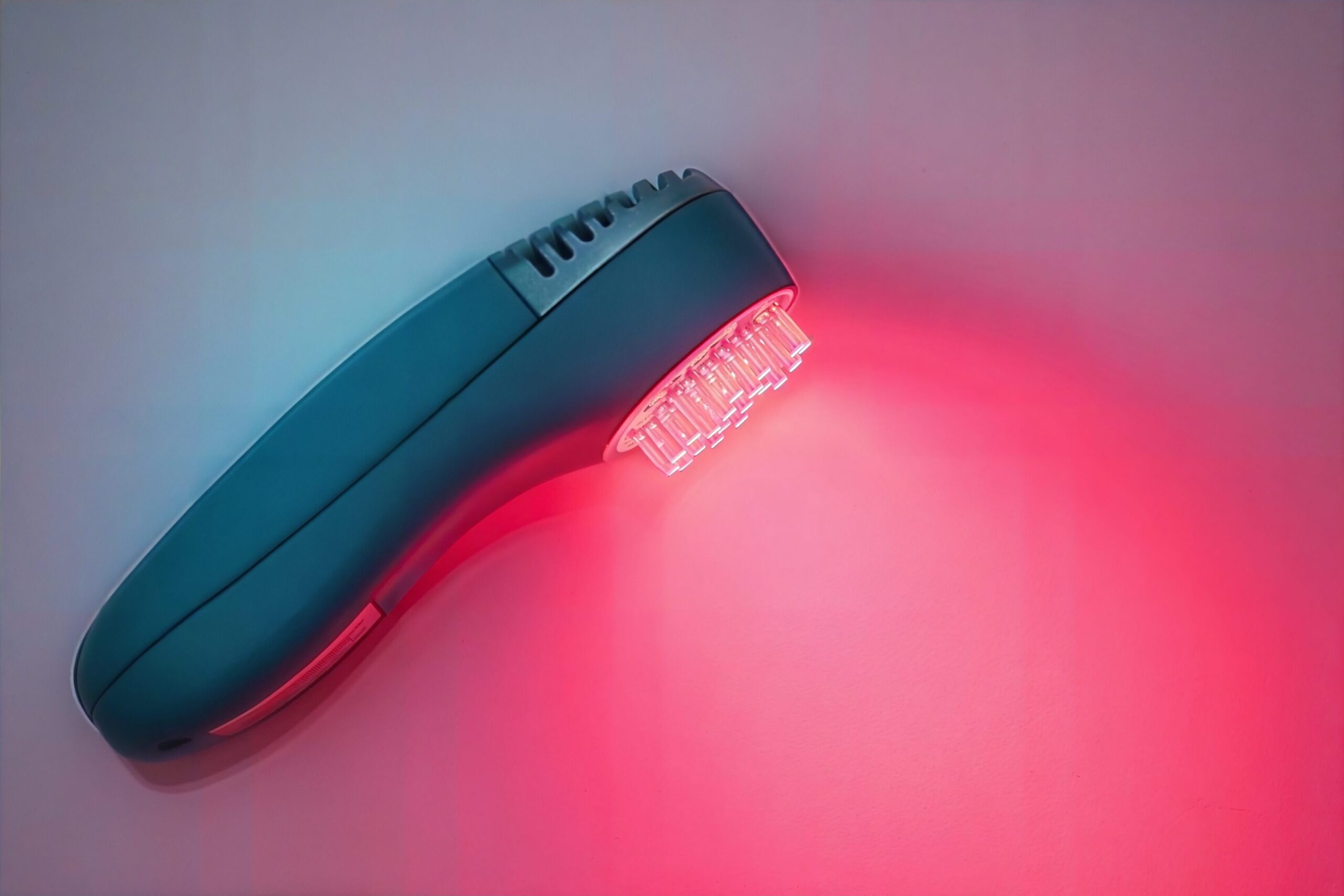
Red light therapy does not release a tethered spinal cord. It does not replace a neurologic evaluation, dynamic MRI, or surgery when surgery is needed. Its role is supportive: helping manage pain, inflammation, tissue stress, and recovery needs that may occur alongside TCS or after detethering surgery.
Photobiomodulation, also called PBM or red light therapy, uses red and near-infrared light to influence cellular activity. Luma uses 635 nm red light and 850 nm near-infrared light, paired with clinician-guided protocols, to support at-home care for pets. PBM is thought to act in part through mitochondrial chromophores such as cytochrome c oxidase, which can influence cellular energy production, nitric oxide signaling, oxidative stress, and inflammatory pathways.
This matters for dogs with TCS because chronic spinal cord tension can contribute to pain, nerve irritation, muscle guarding, altered movement, and reduced activity. Much of the PBM research in spinal neurologic care comes from traumatic spinal cord injury models, not tethered cord syndrome specifically. Still, those studies offer useful insight into how red and near-infrared light may support nervous system tissue under stress.
In spinal cord injury research, red light therapy has been shown to reduce mechanical hypersensitivity, neuronal cell death, astrocyte activation, and iNOS expression after injury in rats. Other research on neuropathic pain after spinal cord injury found that PBM reduced pain-related behaviors and inhibited activation of microglia and astrocytes, two glial cell types involved in neuroinflammation and chronic pain signaling.
PBM may also support cellular energy production. One spinal cord injury study found that PBM helped restore mitochondrial bioenergetics through the AMPK/PGC-1α/TFAM pathway, increased ATP production, reduced neuronal apoptosis, and improved motor recovery in the study model.
For a dog with suspected or confirmed TCS, Luma may fit into the care plan in several ways:
- Comfort support for chronic low back, tail base, or hind-end pain
- Support for inflammation and muscle guarding caused by altered movement
- Post-surgical recovery support, once cleared by the neurologist or surgeon
- At-home care between veterinary visits
- Ongoing support for dogs with residual soreness, stiffness, or mobility challenges
The evidence should be interpreted carefully. PBM research supports anti-inflammatory, neuroprotective, pain-modulating, and mitochondrial effects in spinal cord injury models, but there is limited direct research on PBM for canine tethered cord syndrome itself. Luma should be viewed as a supportive therapy, not a correction for the tether. For dogs with worsening neurologic signs, urinary issues, severe pain, or unexplained hind-end chewing, the next step should be veterinary or neurology evaluation, not at-home treatment alone.
Luma may help support comfort, inflammation control, and recovery in dogs with TCS, but it does not replace the diagnostic work-up or surgical care needed to address the tether itself.
For broader guidance, visit Red Light Therapy for Dogs.`
Think your dog might have tethered cord syndrome?
Get a licensed clinician’s take on your dog’s symptoms, free, so you know your options before deciding what’s next.
Ella
When to Ask About TCS
Ask your veterinarian or neurologist about tethered cord syndrome if your dog has:
- Ongoing low back pain without a clear cause
- Pain when the tail is lifted or extended
- Repeated hind-end licking, chewing, or sudden looking back
- Trouble with stairs despite normal orthopedic testing
- A skipping gait or intermittent hind limb lameness
- Poor rear-end push or reduced exercise tolerance
- Pain during urination or defecation
- Urinary incontinence
- Anxiety or behavior changes that seem linked to touch or movement
- Symptoms that have not improved with usual pain medication, steroids, or rehab
You can also ask:
“Could this be coming from the lumbosacral spine, cauda equina, or conus medullaris?”
“Would a dynamic MRI be useful?”
“Should we see a board-certified veterinary neurologist?”
What Pet Parents Should Do Next
If your dog has sudden severe pain, rapid weakness, loss of bladder control, inability to urinate, collapse, or major neurologic decline, seek urgent/emergency veterinary care.
If your dog has chronic, confusing, or recurring low back and hind-end symptoms, start with your veterinarian. Bring videos of your dog walking, climbing stairs, sitting, jumping, licking, or reacting when touched. These videos can help your veterinary team see patterns that may not appear during a short exam.
If TCS is suspected, a veterinary neurologist can help decide whether dynamic MRI, surgery, medical management, or rehab support makes sense.
Final Thoughts
Canine tethered cord syndrome is still new to many pet parents and many veterinary teams. The signs can be subtle, the diagnosis can take time, and standard tests may not give the full answer.
For the right dog, identifying TCS can change the care plan completely. A dog once treated for recurring soreness, anxiety, lameness, or vague back pain may actually need a neurologic work-up including dynamic MRI, and possibly surgical intervention.
At MedcoVet, we believe pain deserves a real explanation whenever possible. If your dog is showing chronic back pain, tail pain, strange hind-end behaviors, or mobility changes that do not add up, keep asking questions. The right diagnosis can open the door to better comfort, better movement, and a better quality of life.
FAQ
Evidence Citations

About the Author
Alon Landa is the CEO and co-founder of MedcoVet, a leader in at-home red light therapy for pets. With over 20 years of experience in medical technology and firsthand involvement in developing the Luma, Alon combines deep technical knowledge with a passion for improving pet health. He regularly collaborates with veterinarians and pet parents to advance photobiomodulation (PBM) care at home.
📍 Based in Boston, MA
📖Read more from Alon here

About the Medical Reviewer
Chris Cranston has over 20 years of hands-on experience in small animal physical rehabilitation and is a trusted voice in pet mobility and recovery. She is co-host of the PetAbility Podcast and was among the first 100 professionals worldwide to earn her Certified Canine Rehabilitation Practitioner credential through the University of Tennessee. Chris founded FlowDog in Massachusetts and continues her work through concierge rehab, consulting, and teaching.
Read More about Chris here.