
How to Help a Dog with Arthritis at Home (Step-by-Step Plan)
Get Your Dog’s Arthritis Plan
Personalized guidance based on your dog’s joints, symptoms, and stage
Medically reviewed by: Christine Cranston MPT, CCRP (Specialties: Pet rehabilitation, pain management, photobiomodulation)
Reviewed: October 2026
Updated: October 2026
How can you help a dog with arthritis at home?
Helping a dog with arthritis at home starts with reducing the physical strain placed on painful joints every day.
For many dogs, that means keeping them at a healthy weight, adjusting exercise, adding traction to slippery floors, making beds and favorite resting areas easier to reach, and building a routine that supports comfortable movement without overdoing activity (CARE, 2024; CARE, 2025; Gruen et al., 2022).
These changes may seem small, but osteoarthritis commonly shows up as slowness to rise after rest, difficulty with stairs, and limited jumping or playing (Epstein, 2025). Improving those everyday moments can make a meaningful difference in comfort and mobility.
Medical care still matters. Osteoarthritis is one of the most common chronic, painful conditions in dogs and cats, and many dogs need veterinary treatment alongside home care (Epstein, 2025). For example, NSAIDs and anti-nerve-growth-factor antibodies act on different pain pathways, and some dogs benefit from both (Epstein, 2025). This page focuses on the parts of arthritis management you can control at home. For medications, injections, supplements, and other treatments, see our dog arthritis treatment guide.
What arthritis looks like at home
Arthritis often shows up as changes in movement or behavior, including stiffness after rest, hesitation on stairs, difficulty standing, limping, reduced activity, or reluctance to jump (Epstein, 2025). Lameness can be less apparent than expected, even in advanced disease, so a dog does not have to limp to have arthritis (Epstein, 2025).
For a fuller explanation of what to watch for and when to have your dog examined, see our guide to dog arthritis symptoms.
Start with the daily factors that put stress on your dog’s joints
A useful home arthritis plan focuses on four areas:
- Reduce unnecessary load on painful joints.
- Keep your dog moving at a level they can comfortably tolerate.
- Make food portions and treats support a healthy body weight.
- Change the home so everyday movement requires less effort.
You do not need to change everything in one day. Start with the changes that address your dog’s biggest problems. If your dog slips on the kitchen floor several times a day, traction may be the best first change. If your dog is carrying extra weight, measured meals may matter most. If getting into the car has become difficult, a ramp may solve a recurring source of joint strain.
Week-one arthritis home-care checklist
|
Change |
What it can help with |
Effort or cost |
Source |
|
Add non-slip runners, rugs, or mats to your dog’s main walking paths |
Slick floors (tile, hardwood, vinyl) and confidence when walking |
Low |
|
|
Measure every meal instead of estimating portions |
Weight control and consistent calorie intake |
Low |
|
|
Keep treats and extras to 10% or less of daily calories |
Weight management without eliminating rewards |
Low |
|
|
Spread exercise across most days instead of one big outing |
Overexertion and flare-ups after “weekend warrior” days |
Low |
(CARE, 2024); (AAHA, n.d.) |
|
Add a ramp or steps where your dog regularly jumps |
Repeated jumping down from cars, porches, couches, or beds |
Medium |
|
|
Raise food and water bowls (large and giant breeds: check with your vet first) |
Front-limb weight-bearing while eating and drinking |
Low |
|
|
Provide a supportive bed in a warm, draft-free spot with non-slip flooring under it |
Resting comfort and getting up after sleep |
Low to medium |
|
|
Start a weekly mobility score or short video |
Tracking changes that are hard to notice day to day |
Low |
|
|
Ask your veterinarian about persistent pain or a sudden decline |
Pain that home changes alone may not control |
Varies |
Pick two or three changes you can maintain consistently, then build from there.
Not sure which changes to start with?
In a free 30-minute call, a MedcoVet clinician looks at your dog’s joints, symptoms and routine and helps you pick the 2–3 changes that will matter most.
Ella
1. Keep your dog at a healthy weight
Weight management is one of the most useful things you can control at home. The MSD Veterinary Manual describes weight optimization as the primary preventive method for slowing osteoarthritis and notes that even very modest weight loss improves function in overweight dogs that already have it (Epstein, 2025). Higher body weight was also associated with an osteoarthritis diagnosis in a large UK primary-care study (Anderson et al., 2018), and the AAHA pain management guidelines note that long-term studies strongly support keeping dogs lean to slow osteoarthritis progression (Gruen et al., 2022).
In a 16-week study of 14 obese dogs with osteoarthritis fed a calorie-restricted diet, subjective lameness scores improved significantly once dogs had lost about 6.1% of their body weight, and objective gait analysis showed improvement from about 8.85% (Marshall et al., 2010). It was a small, open (unblinded) study, so treat the numbers as encouraging rather than definitive.
You do not need to put your dog on a drastic diet. Start by making intake measurable.
Measure meals
The size of the bowl or scoop influences how much owners feed (Cline et al., 2021), so use a measuring cup or kitchen scale instead of filling the bowl by eye. If several people feed your dog, agree on the total daily amount so meals are not accidentally doubled.
If your veterinarian recommends weight loss, ask for a daily calorie target. AAHA guidelines base feeding calculations on ideal body weight for overweight dogs (Cline et al., 2021).
Count treats as food
AAHA guidelines advise keeping treats and other extras to 10% or less of a dog’s daily calories (Cline et al., 2021). Try:
- Breaking larger treats into smaller pieces
- Using part of your dog’s regular food as training rewards
- Choosing lower-calorie treats
- Reducing extras from the table
- Keeping a small daily treat container so everyone in the house can see how much has already been given
If you use peanut butter, cheese, dental chews, stuffed toys, or other calorie-dense foods, include those in the day’s total.
Check progress regularly
For a dog who needs to lose weight, regular weigh-ins show whether the plan is working. AAHA guidelines describe follow-up visits about 4 to 8 weeks apart during a weight-management program (Cline et al., 2021). Avoid major calorie restrictions without veterinary guidance, especially if your dog has other health conditions.
Where supplements fit
Supplements may be part of an arthritis plan, but the evidence differs by ingredient. The MSD Veterinary Manual notes that a systematic review found no evidence supporting glucosamine and chondroitin, while EPA (an omega-3 fatty acid) has been associated with improved gait and mobility (Epstein, 2025). Rather than adding several products at once, discuss them with your veterinarian and keep a record of what your dog takes. Our dog arthritis treatment guide covers supplements and medical options in more detail.
2. Keep your dog moving without overloading painful joints
Dogs with arthritis still need movement. The MSD Veterinary Manual notes that exercise has pain-relieving effects and may help strengthen joint structures (Epstein, 2025). In dogs with hip dysplasia, daily walking has been associated with less severe lameness (Gruen et al., 2022). AAHA guidance suggests moderate exercise daily in early osteoarthritis and short sessions of moderate exercise several times a day in later stages, which can help fend off the muscle loss that often comes with advanced disease (AAHA, n.d.).
The amount and type of exercise matter. A common pattern is doing very little during the week, then taking a long walk or allowing intense play because the dog seems energetic that day. CARE recommends regular exercise on most days rather than one big activity at the end of the week (CARE, 2024).
“As pets age or recover from an injury, I recommend shorter, more frequent leash walks. If a young dog has historically walked for an hour every morning, for example, they might transition to 30-minute walks in the morning and evening as they age. In their senior years, that could become three or four 10- to 15-minute walks throughout the day. The goal is to avoid pushing vulnerable, weight-bearing joints into a state of inflammation.” — Christine Cranston, MPT, CCRP
Avoid high-impact activity
CARE advises that dogs with osteoarthritis ideally avoid running, jumping down, and rough play, and lists jogging, flyball, agility, and frisbee as activities that are not recommended (CARE, 2024). Your veterinary or rehabilitation team can help set activity limits if arthritis is advanced or several joints are affected.
Watch what happens after exercise
How your dog behaves later can tell you as much as what happens during the walk. Look for the same signs that point to arthritis in the first place, such as slowness to rise, increased limping, or less interest in play (Epstein, 2025). If a particular activity repeatedly causes a setback, shorten it or replace it with something easier.
3. Make your home easier to move through
Dogs with arthritis can struggle inside a home that was easy to use when they were younger. Walk through your home from your dog’s point of view and look at the routes they use every day.
“Seemingly small changes around the home can have a significant impact on the quality of life of a pet with arthritis. Supportive beds, ramps or stairs, improved traction through rugs, runners, foam tiles, stair treads, and raised food and water bowls are just a few examples of simple accommodations that can make their everyday life easier.” — Christine Cranston, MPT, CCRP
Improve traction first
CARE recommends covering slick surfaces such as tile, hardwood, and vinyl with rugs, yoga mats, or gym floor tiles, with a non-skid pad under any rug (CARE, 2025). AAHA pain management guidelines likewise recommend secure footing, such as carpet runners, for arthritic pets (Gruen et al., 2022). You do not need to cover every floor. Focus on the paths your dog uses most:
- Bed to the door
- Bed to food and water
- Hallways
- The area where your dog stands before going outside
- The route from the door to the yard
- The space beside their bed where they stand up
Secure mats and runners so they do not slide or bunch.
Reduce unnecessary stairs
CARE suggests carpeting or adding treads to stairs, and using a harness with a handle on top, or a sling, to support and slow a dog’s descent (CARE, 2025). If stairs are difficult, consider moving your dog’s bed, food, and water to the level where they spend most of their time. A gate can prevent an unsteady dog from attempting stairs unsupervised. Sudden difficulty using stairs deserves veterinary attention.
Replace repeated jumping with ramps
CARE advises that dogs with osteoarthritis ideally not jump down, and that dogs who sleep on a high bed use stairs or a ramp instead (CARE, 2024; CARE, 2025). AAHA pain management guidelines also recommend ramps or steps to areas that would otherwise be inaccessible to arthritic pets (Gruen et al., 2022). A ramp can be useful for:
- Getting into and out of a vehicle
- Reaching a porch or deck
- Accessing a favorite couch
- Reaching a bed, if furniture access is still allowed
Choose a ramp with good traction and a gradual incline, and give your dog time to learn how to use it rather than forcing them up or down.
Make resting areas supportive and accessible
CARE recommends supportive bedding, such as memory foam, placed in a warm, draft-free area with non-slip flooring underneath (CARE, 2025). Because dogs with arthritis may find it hard to get up, put a bed where your dog already spends time, and consider several resting spots so your dog does not have to cross the house repeatedly.
Raise food and water bowls
We recommend raised food and water bowls for dogs with arthritis. CARE suggests raising bowls to about shoulder height to reduce the weight carried on the front limbs while eating and drinking (CARE, 2025).
One caution: in a large study of large and giant breeds, a raised food bowl was associated with gastric dilatation-volvulus (bloat), accounting for an estimated 20% of cases in large breeds and 52% in giant breeds (Glickman et al., 2000). If your dog is a large or giant breed, ask your veterinarian whether a raised food bowl is right for them.
Check your dog’s feet and nails
CARE recommends keeping toenails trimmed short and regularly trimming the hair between the paw pads to improve traction (CARE, 2024). The evidence that nail trimming changes movement is limited, though: a small 2026 study of seven healthy dogs found no differences in gait parameters before and after trimming (Häusler & Söhnel, 2026). Treat nail and paw-fur care as part of routine grooming rather than a treatment.
How red light therapy helps at home

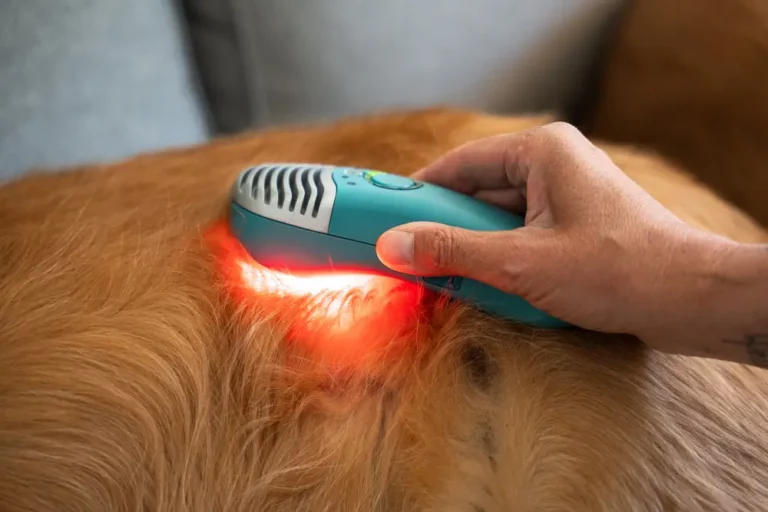
Photobiomodulation, often called red light therapy, uses red and near-infrared light and may be included in a broader arthritis management plan. The MSD Veterinary Manual lists therapeutic laser among the non-drug options for osteoarthritis (Epstein, 2025). In one randomized trial of dogs with hip osteoarthritis, clinic-based Class IV laser therapy reduced pain and improved function compared with the NSAID meloxicam alone (Alves et al., 2022). That trial used a clinic laser rather than a home device.
Home use can make treatment easier to fit into an established routine, but the right treatment area and protocol depend on the dog, the condition, and the device.
For the evidence, safety information, and protocol guidance, see red light therapy for arthritis in pets.
For general information about photobiomodulation in dogs, see red light therapy for dogs.
For an even deeper breakdown, see the science of red light therapy.
Not sure if it fits your dog? Take the 2-minute quiz.
👉 Want to Use Red Light Therapy the Right Way?
Get dosing, frequency, and placement tailored to your dog
Spock
Common mistakes when helping a dog with arthritis
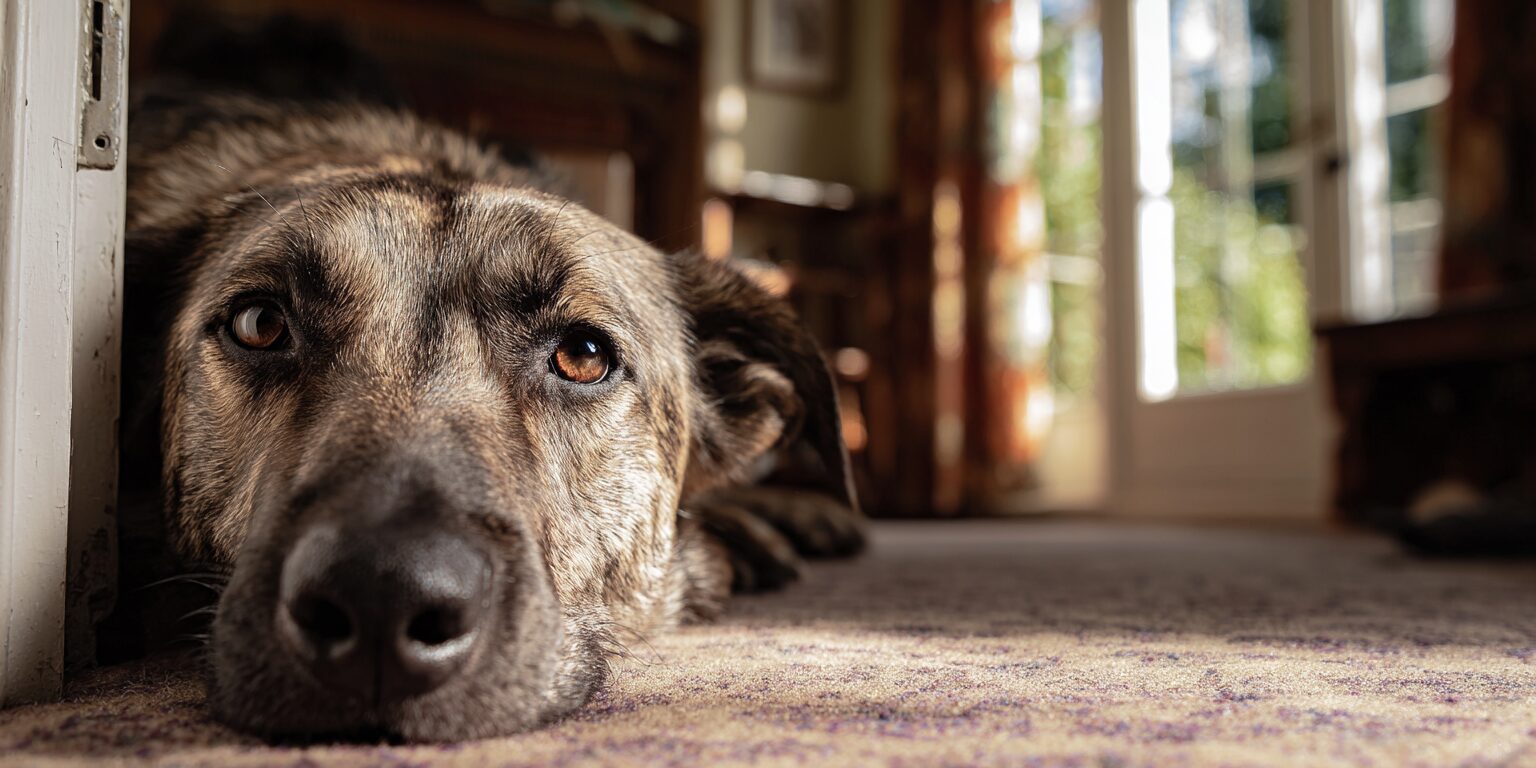
Good intentions can still lead to routines that make arthritis harder to manage.
Doing too much on a good day
A dog who wakes up feeling energetic may run, jump, or play harder than their joints can handle. Keep activity reasonably consistent, rather than alternating rest days with intense days (CARE, 2024).
Stopping movement completely
Too little movement can allow muscle loss, which is a common finding in dogs with osteoarthritis (Epstein, 2025; AAHA, n.d.). Unless your veterinarian has prescribed rest, aim for comfortable, controlled daily activity.
Ignoring slippery floors
Covering slick flooring is a standard recommendation for arthritic dogs (CARE, 2025; Gruen et al., 2022). Treat traction as part of arthritis care, not a household convenience.
Letting treats undermine weight control
A carefully measured meal plan can be offset by chews, table scraps, training treats, and food-filled toys. Track the full day rather than the food bowl alone, and keep extras to 10% or less of daily calories (Cline et al., 2021).
Changing several things without tracking the result
If you add a supplement, change exercise, start a therapy, switch food, and modify medication at the same time, it is hard to tell what is helping. When possible, keep a simple record of important changes and how your dog responds.
Relying on one form of support
Arthritis affects several parts of daily life at once, so a dog may need better traction, weight control, controlled exercise, prescribed pain management, and rehabilitation together (Epstein, 2025; Gruen et al., 2022).
What to do during an arthritis flare-up
Some dogs have days when stiffness or pain suddenly seems worse. When that happens:
- Reduce demanding activity. Skip long walks, running, jumping, and rough play (CARE, 2024).
- Keep necessary movement controlled. Short bathroom walks on secure footing may be easier than complete inactivity unless your veterinarian has instructed strict rest.
- Improve traction. Make sure your dog can reach food, water, the door, and their bed without crossing slippery flooring (CARE, 2025).
- Make rest easy. Keep a supportive bed in an accessible area (CARE, 2025).
- Use prescribed treatments as directed. Do not increase doses or add human medication on your own (FDA, 2022).
- Watch for a pattern. Note what your dog did before the flare, how long it lasts, and whether the same activity has caused problems before.
- Call your veterinarian if the change is significant, severe, or persistent.
A sudden major decline should not automatically be assumed to be arthritis. Spinal disease, for example, can also cause pain and reluctance to move (Thomas, 2025).
A simple way to track progress at home
Arthritis often changes gradually, which makes improvement or decline hard to see when you are with your dog every day. Veterinarians use owner-completed questionnaires for this reason. The Canine Brief Pain Inventory and the Liverpool Osteoarthritis in Dogs (LOAD) questionnaire are the most widely used (Gruen et al., 2022), and LOAD scores have been shown to correlate with objective measurements of limb function (Walton et al., 2013). The table below is a simple home version, not a validated tool.
Pick three to five activities that matter to your dog and score them once a week:
Activity | Easy | Some difficulty | Significant difficulty |
Getting up after sleeping | □ | □ | □ |
Walking across the house | □ | □ | □ |
Going outside | □ | □ | □ |
Completing a normal walk | □ | □ | □ |
Using steps or a ramp | □ | □ | □ |
Getting comfortable at night | □ | □ | □ |
Use the same activities each week. A short video of your dog standing up and walking, recorded from the same angle every few weeks, can also help you and your veterinary team see changes that are hard to judge from memory. Also note changes in appetite, sleep, limping, reluctance to move, mood, and any activities that trigger a flare. Bring this information to veterinary appointments.
What to do this week
Today: Look at the flooring between your dog’s bed, food, water, and outside door. Add traction anywhere your dog slips or hesitates.
At the next meal: Measure the food and decide how treats will fit into the day’s total.
During the next walk: Watch your dog’s pace at the beginning, middle, and end, and notice whether stiffness increases afterward.
This week: Reduce one activity that repeatedly causes strain, such as jumping out of the car or racing down stairs.
Once this week: Record a short video of your dog standing up and walking, and repeat it regularly so you have something to compare.
Before changing medication or supplements: Talk with your veterinarian about the full treatment plan. If red light therapy is part of that plan, follow the protocol designed for your dog and device.
When home care is not enough
Home changes can reduce joint stress and support comfort, but they do not replace diagnosis or medical pain management. The AAHA pain management guidelines include environmental modification, weight management, and exercise among the approaches for arthritic pets, alongside veterinary care (Gruen et al., 2022).
Never give human pain medication without veterinary direction
Do not give your dog ibuprofen, naproxen, aspirin, acetaminophen, or another human pain reliever unless your veterinarian has specifically told you to. The FDA warns that an NSAID made for people may not be safe in dogs, and that NSAIDs can cause stomach and intestinal ulcers, reduce blood flow to the kidneys, and cause liver damage (FDA, 2022). Ibuprofen, naproxen, and aspirin can cause gastric ulceration and bleeding in dogs, and acetaminophen can cause liver injury at higher doses (Hovda & Brutlag, 2025).
When to call your veterinarian
Contact your veterinarian if your dog has:
- A sudden or major decline in mobility
- New or severe limping, or an inability to stand or walk
- Joint swelling (Epstein, 2025)
- Pain that continues despite the current plan
- Repeated falls or loss of balance
- Pain after a fall, jump, or other possible injury
- Back or neck pain, or reluctance to move (Thomas, 2025)
- New weakness or wobbliness in the legs, or loss of bladder or bowel control (Thomas, 2025)
- A change in behavior that may indicate pain (AAHA, n.d.)
These signs can mean arthritis has progressed, or that another problem is involved. Disk disease in the spine, for example, can cause back pain and reluctance to move, and in more serious cases neurologic deficits ranging from wobbliness to paralysis and incontinence (Thomas, 2025). If your dog is already being treated for arthritis but daily activities are getting harder, that is also a good reason to revisit the plan.
Not sure what your dog needs?
Talk with a MedcoVet clinician about your dog’s joints, symptoms, and daily routine
Hazel Moon
Clinical summary
Mechanism:
At-home arthritis care reduces joint load, supports muscle stability, and controls inflammation. Photobiomodulation enhances mitochondrial activity, improves circulation, and modulates inflammatory pathways in affected joints.
Evidence level:
Strong for weight management and anti inflammatory medications. Moderate for joint supplements and photobiomodulation. Best outcomes occur when therapies are combined.
When it works best:
Early to moderate arthritis, consistent routines, and dogs receiving a multimodal treatment plan.
When not to use:
Severe structural joint damage, untreated instability, or when pain is unrelated to joint inflammation. Veterinary guidance is required.
Clinical questions about helping a dog with arthritis at home
Final take
Helping a dog with arthritis at home is not about one solution. It is about consistency.
Reduce inflammation. Support joint health. Maintain movement. Manage pain.
When these pieces work together, many dogs regain comfort, improve mobility, and enjoy a better quality of life for years.
Ready to build a plan for your dog?
If your dog is slowing down, struggling with arthritis, or you are unsure how red light therapy could fit into their current care, speak with a MedcoVet clinician. Get guidance based on your dog’s joints, symptoms, current treatments, and daily routine.
Evidence Citations
🐾 Ready to Take the Next Step?
Whether you’re just learning or ready to act — we’ve got you.
👉 Book a Free Consult
Talk to a licensed clinician about your pet’s condition and get a personalized plan. No pressure, just real help.
👉Learn More About the Luma
Explore how our at-home red light therapy device works, why it’s different, and what it can do for your pet.

About the Author
Alon Landa is the CEO and co-founder of MedcoVet, a leader in at-home red light therapy for pets. With over 20 years of experience in medical technology and firsthand involvement in developing the Luma, Alon combines deep technical knowledge with a passion for improving pet health. He regularly collaborates with veterinarians and pet parents to advance photobiomodulation (PBM) care at home.
📍 Based in Boston, MA
📖Read more from Alon here

About the Medical Reviewer
Chris Cranston has over 20 years of hands-on experience in small animal physical rehabilitation and is a trusted voice in pet mobility and recovery. She is co-host of the PetAbility Podcast and was among the first 100 professionals worldwide to earn her Certified Canine Rehabilitation Practitioner credential through the University of Tennessee. Chris founded FlowDog in Massachusetts and continues her work through concierge rehab, consulting, and teaching.
Read More about Chris here.





This post really highlights the importance of proactive, home-based care for dogs with arthritis. I especially appreciated the emphasis on creating a comfortable environment and using non-invasive methods to support joint health. It’s a gentle reminder that small changes can make a big difference in our pets’ quality of life.