Dog Recovery After TPLO Surgery


What to expect after tibial plateau leveling osteotomy, how to protect the healing joint, and how red light therapy can support recovery


Find out if red light therapy is a good fit for your dog’s recovery stage, pain level, and surgery plan.

Written by: Alon Landa
Medically reviewed by: Kristy Williams, CVT, CCFT (Specialties: Pet rehabilitation, pain management, photobiomodulation)

Reviewed: [May 2026]
Updated: [May 2026]

How long does dog recovery after TPLO surgery take?

Dog recovery after TPLO surgery usually takes about twelve weeks for basic bone healing, with full recovery often taking several months. Most dogs can begin short leash walks and controlled indoor movement early in the recovery process, but off leash activity, rough play, running, and normal activity must wait until your veterinary surgeon clears your dog. When the ligament is torn, it creates instability in the knee joint, causing pain and mobility issues. A strong TPLO surgery recovery plan includes pain management, often with prescribed pain medication to ensure comfort during the initial recovery phase—wound care, restricted activity, physical therapy, follow up visits, and close monitoring of the surgical site.

If your dog recently had TPLO surgery and you are unsure what support they need, start here:

Lucy

What is TPLO surgery?

TPLO surgery stands for tibial plateau leveling osteotomy. It is a surgery in dogs used to treat a cranial cruciate ligament tear, also called a CCL injury or torn CCL.

The cranial cruciate ligament helps stabilize the knee joint. When a dog tears this ligament, the knee joint becomes unstable. That instability causes pain, inflammation, limping, and reduced use of the affected leg.

During TPLO surgery, the veterinary surgeon changes the angle of the tibial plateau, which is the top part of the dog’s tibia (shin bone). The thigh bone (femur) and the dog’s tibia meet at the knee joint, and together they form the joint that is affected by a CCL injury. TPLO surgery changes the angle of the tibia to stabilize the joint after a CCL injury, making the knee joint more stable without relying on the torn cranial cruciate ligament to do the work.

The surgeon cuts and rotates part of the dog’s tibia, then secures the bone with a bone plate. That means TPLO recovery depends heavily on bone healing, careful movement, and a calm post surgery environment.

Simple version: your dog’s knee needs time, support, and control.

Why TPLO surgery recovery matters so much

Why TPLO surgery recovery matters so much

TPLO surgery can help a dog return to better comfort and increased mobility, but the recovery process matters.

A dog that moves too much too soon can irritate the surgery site, delay bone healing, damage the operated leg, or increase the risk of needing a second surgery. A dog that does too little for too long can lose muscle mass, joint flexibility, and confidence using the surgical limb.

Balance matters.

Dog owners need to protect the surgical site, support controlled movement, follow the veterinary team’s instructions, and gradually increase activity based on healing progress.

We know that sounds like a lot. It is. But with a clear recovery plan, pet owners can help their dog recover with less stress and better long term joint health.

The TPLO surgery recovery timeline

The TPLO surgery recovery timeline

Every dog is different. Dog’s size, age, health conditions, weight management, pain level, and surgical details all affect recovery time. Large dogs may need more time than smaller dogs. Active dogs may need extra help staying calm.

Here is a common TPLO surgery recovery timeline.

Days 1 to 7: the initial healing phase

The first week is about protection.

Your dog may be sleepy, sore, and confused after surgery. Pain medications help reduce pain and keep your dog comfortable, but your dog still needs strict activity restrictions.

During the first week:

  • Keep your dog calm
  • Use a small room, crate, or pen
  • Use an elizabethan collar (e-collar), surgical suit, inflatable donut, or something similar to prevent your dog from licking/chewing incision
  • Allow bathroom breaks only on a short leash
  • Avoid stairs, furniture, dog runs, and slippery surfaces
  • Keep other pets away from your dog
  • Check the surgical site daily
  • Watch the incision site for redness, swelling, bleeding, odor, or discharge
  • Follow your vet’s instructions for pain management and wound care

Short leash bathroom breaks are enough at this stage. Your dog should walk slowly. No rough play. No jumping. No off leash activity.

Some veterinary teams may recommend ice packs during the first few days to help with swelling. A bag of frozen peas wrapped in a towel can work as a soft cold pack, but use it only if your veterinary team approves it.

Call your vet immediately if your dog will not bear weight, seems suddenly worse, chews at the incision site, has discharge from the surgery site, or appears very painful.

Weeks 2 to 4: controlled leash walks begin

At two weeks post surgery, many dogs have a follow up visit to check the incision site and assess early healing progress. If the surgical site looks good, the veterinary team may allow a gradual increase in leash activity.

This phase often includes:

  • Controlled leash walks
  • Very short leash walks on flat surfaces
  • Continued restricted activity indoors
  • Gentle range of motion if recommended
  • No off leash activity
  • No rough play
  • No dog parks
  • No slippery floors
  • No stairs unless approved

Your dog may start to feel better before the bone is healed.

That is the tricky part.

When pain decreases, dogs often want to do more. They may try to jump, twist, run, or play with other pets. Stay boring on purpose. Controlled indoor movement protects the healing joint.

If your dog is walking slowly and using the operated leg more confidently, that is good progress. Keep the pace steady.

Want a clinician to help you think through your dog’s recovery plan?

Weeks 4 to 8: strength and mobility work

At this stage, the recovery process may include longer leash walks, gentle physical therapy, and more structured movement. Your veterinary surgeon or rehab clinician may add simple exercises to improve range of motion, muscle mass, and joint health.

Common exercises may include:

  • Passive range of motion
  • Weight shifting
  • Controlled sit to stand
  • Slow leash walks
  • Gentle hill walking if approved
  • Careful walking on flat surfaces
  • Basic balance work if cleared

Do not add advanced physical therapy exercises unless your veterinary team approves them. Too much too soon can increase pain, stress the surgical limb, or slow bone healing.

The goal is simple: help the dog regain strength while protecting the knee joint.

Small wins count. A calmer walk. Better use of one leg. Less hesitation. More steady standing. These signs can mean your dog is building strength.

Weeks 8 to 12: the final phase of early recovery

By eight to twelve weeks, many dogs are moving better. Some will have follow up X-rays to assess bone healing around the dog’s tibia and bone plate.

If healing progress looks good, your veterinary surgeon may allow a gradual increase in activity.

This may include:

  • Longer leash walks
  • More structured physical therapy
  • Increased leash activity
  • More normal indoor movement
  • Low impact exercises
  • Continued weight management

Even if your dog looks great, off leash activity still needs approval. A dog runs because they feel good, not because the bone is fully healed.

Do not guess here. Ask your veterinary team.

After twelve weeks: return to normal activity

After twelve weeks, many dogs begin returning to normal activity. Full recovery can still take several more months, especially for large dogs, active dogs, or dogs with other health conditions.

Your dog may still need:

  • Ongoing physical therapy
  • Joint support
  • Controlled exercise
  • Weight management
  • Regular follow up visits
  • Continued monitoring for pain or stiffness

Some dogs also need extra support for the other leg. Dogs with one cranial cruciate ligament tear have a higher risk of injuring the other knee over time. Preventive care matters.

A strong recovery plan protects both hind legs.

How to keep your dog calm after TPLO surgery

How to keep your dog calm after TPLO surgery

Keeping a dog calm after TPLO surgery can feel harder than the surgery recovery itself.

Try this:

  • Use a small room instead of the full house
  • Block slippery surfaces with rugs or yoga mats
  • Keep your dog on a short leash for every bathroom break
  • Use food puzzles that do not require standing or twisting
  • Give calm enrichment like licking mats
  • Separate your dog from other pets
  • Prevent window barking if it causes jumping
  • Keep furniture access blocked
  • Ask your vet about safe calming support if needed

Your dog does not understand the risk of too much movement. You do.

How red light therapy supports TPLO surgery recovery

How red light therapy supports TPLO surgery recovery

Photobiomodulation (PBM), also called red light therapy, low-level laser therapy, LED therapy, cold laser, and near-infrared therapy, refers to the same therapeutic category using light energy to influence cellular biology.

Red light therapy can be a powerful support tool used during recovery of TPLO surgery because it targets the problems that make recovery hard: pain, inflammation, swelling, slow tissue repair, and reduced comfort around the surgery site.

Red light therapy may help:

  • Reduce pain around the knee joint
  • Support blood flow near the surgical site
  • Support bone healing and tissue repair
  • Calm inflammation after surgery
  • Improve comfort during leash walks
  • Support range of motion
  • Help protect long term joint health
  • Make physical therapy easier to tolerate

For a deeper science review, see MedcoVet’s guide to the science of red light therapy.

Why MedcoVet Luma is so helpful after TPLO surgery

The MedcoVet Luma was built for pet owners who want to support recovery at home with clinician guidance.

That matters after TPLO surgery.

Your dog’s recovery process happens every day, not only at follow up visits. The Luma gives dog owners a way to support the healing joint between veterinary appointments, physical therapy sessions, and controlled leash walks.

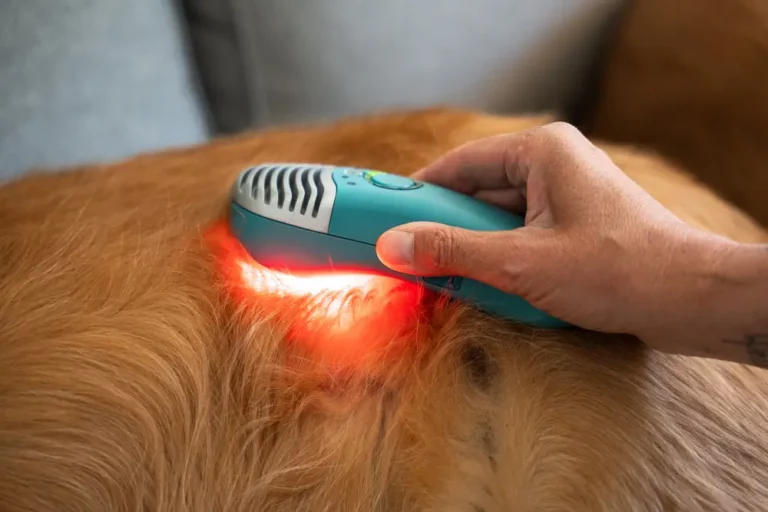
Luma uses red and near infrared light to support cellular repair, reduce inflammation, and improve comfort around the surgical site. It is non invasive, drug free, and designed for home use.

The biggest benefit is consistency.

A dog recovering from TPLO surgery often needs daily support. Luma helps pet owners provide that support in a calm, easy way without packing the dog into the car for every treatment.

Used correctly, Luma can support:

  • Post surgery pain management
  • Healing progress at the incision site
  • Reduced inflammation around the knee joint
  • Improved comfort in the operated leg
  • Better tolerance for physical therapy
  • Recovery after a torn CCL repair
  • Long term joint health

Read more about red light therapy for surgery recovery here: Red Light Therapy for Post-Surgical Healing in Pets.

Want to know if Luma makes sense for your dog’s TPLO recovery?

Anderson

How to use Luma during TPLO recovery

Always follow your vet’s instructions first. The timing for red light therapy after surgery should match your dog’s healing stage and your veterinary team’s guidance.

In general, a clinician may consider:

  • Where to treat around the surgery site
  • Whether or not to avoid direct contact with the incision site early on
  • How often to treat
  • How long each session should be
  • How to adjust as swelling, pain, and mobility change
  • How to combine Luma with physical therapy and leash walks

The Luma is helpful because it can be used as part of a full recovery plan. It does not replace post surgery care, pain medications, wound care, or follow up visits.

It supports the body’s repair process.

For more general guidance, see Red Light Therapy for Dogs.

When to call your veterinary team

Call your veterinary team or vet immediately if you notice:

  • Your dog suddenly stops using the operated leg
  • Increased swelling at the surgical site
  • Bleeding or discharge from the incision site
  • Bad smell from the surgery site
  • Heat, redness, or opening at the incision site
  • Severe pain
  • Your dog chews or licks the surgical site
  • Your dog falls, jumps, slips, or runs
  • Loss of appetite, vomiting, or unusual tiredness
  • A sudden change in behavior
  • Swelling above or below the surgical site

Trust your gut. If something feels off, call.

Common mistakes during TPLO recovery

Letting your dog do too much too soon

This is the big one.

Most dogs start feeling better before the bone is fully healed. They may want to jump, run, play, or chase other pets. That does not mean the surgical limb is ready.

Skipping leash walks completely

Restricted activity does not mean zero movement forever. Controlled leash walks and approved physical therapy help maintain muscle mass, range of motion, and joint flexibility.

Ignoring slippery surfaces

Slippery floors can cause the operated leg to slide. That can hurt. Use rugs, runners, yoga mats, or baby gates to create safe paths.

Missing follow up visits

Follow up visits help your veterinary surgeon check healing progress and decide when to gradually increase activity.

Letting weight creep up

Weight management matters after TPLO surgery. Extra weight places more stress on the knee joint, the surgical limb, and the other leg.

MedcoVet’s clinical view on TPLO recovery

MedcoVet focuses on photobiomodulation protocols for dogs across surgery recovery, pain, arthritis, and joint health. Our clinical approach looks at wavelength selection, treatment timing, tissue depth, comfort level, and consistency of use.

TPLO recovery is a strong fit for this kind of support because the dog needs controlled healing, reduced inflammation, pain management, and gradual return to movement.

The best recovery plan combines veterinary care, restricted activity, physical therapy, weight management, follow up visits, and smart home support.

Luma fits into that plan.

Clinical summary

Mechanism:
TPLO surgery stabilizes the knee joint after a cranial cruciate ligament tear by changing the angle of the tibial plateau. Bone healing occurs around the rotated section of the dog’s tibia, which is secured with a bone plate. Red light therapy, also called photobiomodulation, supports cellular activity, local blood flow, inflammation control, and tissue repair around the surgical site.

Evidence level:
TPLO surgery is a well established procedure in veterinary medicine for cranial cruciate ligament injury. Physical therapy, controlled leash walks, weight management, and restricted activity are standard components of post surgery care. Red light therapy has moderate clinical support for pain reduction, inflammation control, and wound healing in surgical and musculoskeletal recovery.

When it works best:
Red light therapy works best during the initial healing phase and the mid-recovery phase when pain, inflammation, tissue repair, and controlled movement are central concerns. It can be especially useful for dogs with swelling, stiffness, delayed comfort, reduced willingness to bear weight, or difficulty tolerating physical therapy.

When not to use:
Do not use red light therapy over an untreated infection, an open surgical site without veterinary approval, or a known malignant tumor unless directed by a veterinarian. Always follow your veterinary surgeon’s instructions after TPLO surgery.

Help your dog recover with the right support

Dog recovery after TPLO surgery takes time. Your dog needs rest, careful movement, strong post surgery care, and a recovery plan that changes as healing progress improves.

If you want to know whether red light therapy fits your dog’s TPLO recovery

If you want a clinician to walk you through your dog’s surgery recovery, timing, and treatment options:

Lucy

Questions dog owners ask about TPLO surgery recovery

TPLO surgery has a high success rate, with more than 90% of dogs regaining strong function after recovery. The best outcomes usually happen when dog owners follow the recovery plan closely, keep activity controlled, attend follow up visits, and support physical therapy.

During the first week, your dog should rest in a crate, pen, or small room. Activity should be limited to short, slow leash walks for bathroom breaks only. No running, jumping, stairs, furniture, off leash movement, rough play, or play with other pets.

Recovery after tibial plateau leveling osteotomy, or TPLO surgery, typically takes 12 to 16 weeks. Full muscle mass and unrestricted movement may take up to six months to return, especially in large dogs, active dogs, or dogs that had muscle loss before surgery.

In the second week post surgery, some dogs may be allowed one slow leash walk per day, starting around 5 minutes and gradually increasing to 10 minutes if your veterinary team approves. Your dog still needs strict confinement and should avoid stairs, jumping, running, rough play, and slippery surfaces.

From weeks 3 to 4, many dogs can begin leash walks of about 10 to 15 minutes, up to three times per day, if cleared by the veterinary team. These walks should stay slow and controlled. No off leash activity, jumping, dog parks, rough play, or play with other dogs.

Leash walks usually increase gradually throughout recovery. By around week 8, many dogs may work up to 20 to 30 minute leash walks if healing is progressing well and the veterinary team approves. The pace should stay controlled, with no running or sudden turns.

By weeks 11 to 12, some dogs may begin a gradual return to normal activities if bone healing is confirmed and the veterinary surgeon clears them. Off leash play should still be introduced carefully, with close monitoring for limping, stiffness, soreness, or overexertion.

A follow up radiograph is commonly performed around weeks 8 to 10 to assess bone healing. If the bone is healing well, your veterinary surgeon may approve a gradual increase in activity.

TPLO surgery has a high success rate, with more than 90% of dogs regaining strong function after recovery. The best outcomes usually happen when dog owners follow the recovery plan closely, keep activity controlled, attend follow up visits, and support physical therapy.

Strict crate rest or confinement protects the surgical site while the bone heals. A dog that jumps, slips, runs, or twists too early can delay recovery, cause pain, or damage the repair. A crate, pen, or small room helps keep movement predictable and safe.

Passive Range of Motion, or PROM exercises, usually begin after the incision heals and your veterinary team clears them. PROM exercises help prevent joint stiffness, maintain range of motion, and support comfort in the operated leg.

Physical therapy helps retrain normal movement patterns, rebuild muscle mass, restore strength, and improve coordination in the operated limb. Recovery involves the nervous system learning how to use the repaired leg again, and structured physical therapy supports that process.

Physical therapy may include controlled leash walks, passive range of motion, weight shifting, sit to stand exercises, balance work, and later, more advanced physical therapy exercises. The plan should gradually restore strength and coordination without overloading the healing joint.

Yes. Low-Level Laser Therapy, also called cold laser therapy, and red light therapy are non invasive tools used to support cellular repair, reduce inflammation, and manage post operative discomfort. The MedcoVet Luma uses red and near infrared light to support healing at home as part of a full TPLO recovery plan.

No. Use prescribed pain medications exactly as directed by your veterinary team. Luma can support pain management by helping reduce inflammation and discomfort, but it should not replace pain medications unless your veterinarian changes the plan.

Check the incision site daily. Mild redness, swelling, and bruising can be normal after surgery. Contact your veterinarian if you see persistent swelling, excessive redness, heat, foul odor, discharge, bleeding, opening of the incision, or if your dog is licking or chewing at the area.

Create a safe recovery space with non-slip surfaces, rugs, runners, or yoga mats. Block stairs and furniture. Keep your dog away from other pets. Use a short leash for every bathroom break. A safe home environment helps prevent slipping, re-injury, and unnecessary pain.

A balanced diet with nutrients that support joint health can help the recovery process. Weight management matters too. Because activity is restricted, your veterinary team may recommend reducing food intake by about 30% to help prevent weight gain and extra strain on the knee joint.

It can. Full muscle recovery after TPLO surgery can take up to six months, and the surgical leg may look smaller than the other leg during that time. Physical therapy, controlled movement, and gradual strength work help rebuild muscle mass.

Call your vet immediately if your dog suddenly refuses to use the operated leg, has worsening pain, persistent swelling, discharge, heat, foul odor, incision opening, bleeding, fever, vomiting, loss of appetite, or a sudden setback after running, jumping, slipping, or playing.

Good signs include steady weight bearing, improving comfort, reduced swelling, clean incision healing, better use of the operated leg, and gradual increased mobility. Follow up visits and radiographs give the clearest view of healing progress.

Evidence Citations

  • Effects of a therapeutic laser on the ultrastructural morphology of repairing medial collateral ligament in a rat model

    By Fung et al.

    • 2003

    • Journal: Lasers Surg Med

    Abstract: “Single application of low energy laser therapy increases the collagen fibril size of healing MCLs in rats.”

    One Sentence Outcome:In a rat MCL model, low-energy laser increased collagen fibril size during ligament repair, supporting collagen/tissue-repair claims.

    Study Parameters:

    Device Parameters:

    Evidence Level:Level 5 (preclinical animal study)

    Study Type: Rat

    Outcome Direction: Positive / collagen fibril effect

  • Low-level laser therapy prevents degenerative morphological changes in an experimental model of anterior cruciate ligament transection in rats

    By Bublitz et al.

    • 2014

    • Journal: Lasers Med Sci

    Abstract: “Initial signs of tissue degradation were observed in CG. Interestingly, laser-treated animals presented a better tissue organization, especially at the fluence of 10 J/cm(2). Furthermore, laser phototherapy was able of modulating some of the aspects related to the degenerative process, such as the prevention of proteoglycans loss and the increase in cartilage area. However, LLLT was not able of modulating chondrocytes proliferation and the immunoexpression of markers related to inflammatory process (IL-1 and MMP-13). This study showed that 808 nm laser, at both fluences, prevented features related to the articular degenerative process in the knees of rats after ACLT.”

    One Sentence Outcome:In a rat ACL-transection model, PBM helped preserve tissue organization and cartilage-related structure, supporting a biological rationale for ligament-related recovery support.

    Study Parameters:Ligament transection; ; Biphasic dose response

    Device Parameters: wavelength: 808; fluence: 10 50; sessions: 15

    Evidence Level:Level 5 (preclinical animal study)

    Study Type: Rat

    Outcome Direction: Positive / dose-dependent preclinical signal

  • Comparison of light-emitting diode wavelength on activity and migration of rabbit ACL cells

    By Seo et al.

    • 2014

    • Journal: Lasers Med Sci

    Abstract: “This study revealed that irradiation with a wavelength of 460 nm (blue LED) is cytotoxic to ACL cells, but irradiation with nontoxic fluencies of 530 (green LED) and 630 nm (red LED) wavelengths induced cell growth in cultured ACL cells.”

    One Sentence Outcome:In rabbit ACL cells, LED wavelength influenced cell activity and migration, supporting wavelength-specific effects on ligament-cell behavior.

    Study Parameters:Rabbit ACL cells; ; Blue light ; Green light ; ; LED phototherapy

    Device Parameters: wavelength: 460 530 630; fluence: 27 9.8 9.5

    Evidence Level:Level 5 (in vitro ligament-cell study)

    Study Type: In vitro

    Outcome Direction: Positive / wavelength-dependent cellular effects

  • Low-level laser therapy improves early healing of medial collateral ligament injuries in rats

    By Bayat et al.

    • 2005

    • Journal: Photomed Laser Surg

    Abstract: “The ultimate tensile strength (UTS) of group 2 on day 12 was significantly higher than that of groups 1 and 3.” Comment: The dose of 0.01J/cm2 was ineffective, while 1.20J/cm2 was effective. Too small dose does often have no effect.

    One Sentence Outcome:In rats with medial collateral ligament injury, LLLT improved early ultimate tensile strength, supporting ligament-healing and tissue-strength claims.

    Study Parameters:Dose response

    Device Parameters: wavelength: 633; power: 10; fluence: 0.01 1.20; sessions: 21

    Evidence Level:Level 5 (preclinical animal study)

    Study Type: Rat

    Outcome Direction: Positive / early ligament strength

  • Comparison of single and multiple applications of GaAlAs laser on rat medial collateral ligament repair

    By Ng et al.

    • 2004

    • Journal: Lasers Surg Med

    Abstract: “Multiple laser therapy improves the normalized strength and stiffness of repairing rat MCLs at 3 weeks after injury. The multiple treatments seem to be superior to a single treatment when the cumulative dosages are comparable between the two modes of application.”

    One Sentence Outcome:In rat MCL repair, multiple GaAlAs laser applications improved normalized strength and stiffness more than a single treatment, supporting treatment-frequency relevance.

    Study Parameters:Single vs multiple treatments (dose response)

    Device Parameters: wavelength: 660; power: 2016-08-08 00:00:00; fluence: 31.6; sessions: 1 9

    Evidence Level:Level 5 (preclinical animal study)

    Study Type: Rat

    Outcome Direction: Positive / multiple treatments superior

  • Laser Therapy for Incision Healing in 9 Dogs

    By Wardlaw et al.

    • 2019

    • Journal: Front Vet Sci

    Abstract: This randomized canine study evaluated daily postoperative laser therapy after thoracolumbar hemilaminectomy in Dachshunds and found faster incision healing and better cosmetic outcomes than untreated controls.

    One Sentence Outcome:Daily postoperative laser therapy was associated with faster and more cosmetic incision healing in a small canine surgical-incision study.

    Study Parameters:Nine dogs after thoracolumbar hemilaminectomy were followed for incision healing and cosmetic outcome.

    Device Parameters: Postoperative laser therapy protocol used for thoracolumbar hemilaminectomy incision healing; exact dosimetry should be verified from full text.

    Evidence Level:Level 2b/4 (small veterinary randomized clinical study)

    Study Type: Randomized controlled veterinary clinical study

    Outcome Direction: Positive / supportive PBM outcome

  • Effects of low-level laser therapy on bone healing and signs of pain in dogs following tibial plateau leveling osteotomy

    By Kennedy et al.

    • 2018

    • Journal: American Journal of Veterinary Research

    Abstract: Objective: assess LLLT on synovial inflammation, pain, function, bone healing, and osteoarthritis after TPLO in dogs with CCLR. Dogs were randomized to LLLT or a red-light control treatment. Results suggested that the LLLT protocol used had no beneficial effects on signs of pain or pelvic limb function following TPLO.Objective: assess LLLT on synovial inflammation, pain, function, bone healing, and osteoarthritis after TPLO in dogs with CCLR. Dogs were randomized to LLLT or a red-light control treatment. Results suggested that the LLLT protocol used had no beneficial effects on signs of pain or pelvic limb function following TPLO.

    One Sentence Outcome:In dogs after TPLO, the tested LLLT protocol did not improve pain, limb function, or bone healing compared with the control protocol, making it useful for dose/protocol nuance.

    Study Parameters:Dogs were treated immediately before TPLO and at predetermined times for 8 weeks after surgery, with follow-up at 2, 4, and 8 weeks.

    Device Parameters: LLLT; radiant exposure 1.5-2.25 J/cm² in the treatment group; control received red-light treatment. Exact therapeutic wavelength was not reported in the PubMed abstract.

    Evidence Level:Level 1b (veterinary randomized controlled trial)

    Study Type: RCT

    Outcome Direction: Null/negative compared with LED control

  • Influence of class IV laser therapy on the outcomes of tibial plateau leveling osteotomy in dogs

    By Renwick et al.

    • 2018

    • Journal: Veterinary Surgery

    Abstract: Randomized, placebo-controlled clinical trial in 95 dogs undergoing TPLO. Laser-group dogs received 660, 800, 905, and 970 nm treatment during the perioperative period. The protocol was associated with greater improvement in adjusted Canine Orthopedic Index gait, but not in the other metrology scores or bone healing outcomes.Randomized, placebo-controlled clinical trial in 95 dogs undergoing TPLO. Laser-group dogs received 660, 800, 905, and 970 nm treatment during the perioperative period. The protocol was associated with greater improvement in adjusted Canine Orthopedic Index gait, but not in the other metrology scores or bone healing outcomes.

    One Sentence Outcome:Class IV laser therapy after TPLO was associated with greater improvement in kinetic gait assessment, but not broad improvement across all outcome measures.

    Study Parameters:Three perioperative treatments within 4 days; a fourth treatment was recommended and accepted in some dogs.

    Device Parameters: Class IV laser administered simultaneously at 660 nm red (100 mW) and 800, 905, and 970 nm infrared (maximum 15 W continuous wave, 20 W peak pulsed wave).

    Evidence Level:Level 1b (veterinary randomized controlled trial)

    Study Type: RCT

    Outcome Direction: Mixed / gait improvement

  • Preoperative low level laser therapy in dogs undergoing tibial plateau levelling osteotomy: A blinded, prospective, randomized clinical trial

    By Rogatko et al.

    • 2017

    • Journal: Veterinary and Comparative Orthopaedics and Traumatology

    Abstract: Healthy dogs undergoing TPLO were randomized to one preoperative LLLT treatment or sham. At eight weeks postoperatively, peak vertical force was significantly better in the LLLT group, but no significant differences were found for most other parameters.Healthy dogs undergoing TPLO were randomized to one preoperative LLLT treatment or sham. At eight weeks postoperatively, peak vertical force was significantly better in the LLLT group, but no significant differences were found for most other parameters.

    One Sentence Outcome:In dogs undergoing TPLO, preoperative PBM showed a significant improvement in peak vertical force at 8 weeks, although other measures were not significantly different.

    Study Parameters:Single preoperative treatment before TPLO; outcomes assessed pre-op, 24 h, 2 weeks, and 8 weeks post-op.

    Device Parameters: Dual-wavelength LLLT at 800-900 nm, 6 W, 3.5 J/cm² over a 100 cm² area.

    Evidence Level:Level 1b (veterinary randomized controlled trial)

    Study Type: RCT

    Outcome Direction: Mixed / supportive functional signal

  • Assessment of wound area reduction on chronic wounds in dogs with photobiomodulation therapy: A randomized controlled clinical trial

    By Hoisang et al.

    • 2021

    • Journal: Veterinary World

    Abstract: The reviewed abstract reports 21 dogs with chronic wounds randomized to control, 830 nm PBMT, or simultaneous multiwavelength PBMT, with significantly greater wound area reduction in PBMT groups.The reviewed abstract reports 21 dogs with chronic wounds randomized to control, 830 nm PBMT, or simultaneous multiwavelength PBMT, with significantly greater wound area reduction in PBMT groups.

    One Sentence Outcome:PBMT significantly improved wound-area reduction in dogs with chronic wounds, supporting tissue repair and wound-healing claims.

    Study Parameters:21 client-owned dogs with chronic wounds divided into control, 830 nm PBMT, and simultaneous multiwavelength PBMT groups; wound area monitored every 2 days for 15 days.

    Device Parameters: 830 nm PBMT or simultaneous superpulsed multiple wavelengths (660, 875, and 905 nm).

    Evidence Level:Level 1b (veterinary randomized controlled trial)

    Study Type: Randomized controlled clinical trial

    Outcome Direction: Positive

About the Author
Alon Landa is the CEO and co-founder of MedcoVet, a leader in at-home red light therapy for pets. With over 20 years of experience in medical technology and firsthand involvement in developing the Luma, Alon combines deep technical knowledge with a passion for improving pet health. He regularly collaborates with veterinarians and pet parents to advance photobiomodulation (PBM) care at home.
 📍 Based in Boston, MA
📖Read more from Alon here

Kristy Williams Medical Reviewer Headshot

About the Medical Reviewer
Clinical Focus: Surgery, anesthesia, canine fitness, injury prevention, agility
Kristy Williams brings over 30 years of experience to the veterinary field. Her career began in the 1990s, working as a civilian for the Army Veterinary Corps at RAF Feltwell in England, where she first discovered her passion for animal care and supporting their families. Upon returning to the United States, Kristy pursued her education and graduated in 2005 as a certified veterinary technician after passing the national exam. She has since gained extensive experience in both general practice and emergency/referral practices.
Read More about Kristy here.

🐾 Ready to Take the Next Step?
Whether you’re just learning or ready to act — we’ve got you.

👉 Book a Free Consult
 Talk to a licensed clinician about your pet’s condition and get a personalized plan. No pressure, just real help.

👉Learn More About the Luma
 Explore how our at-home red light therapy device works, why it’s different, and what it can do for your pet.

Similar Posts

Leave a Reply

Your email address will not be published. Required fields are marked *