Yugo Pets Review
We ran it through the WAIT Test™
See how it measures up against other home devices.
Want help understanding which device is right for your pet?
Talk to one of our clinicians.
Written by: Alon Landa
Reviewed: November 2026
Updated: November 2026
Disclosure: MedcoVet makes the Luma, a competing device, and has no affiliation with Yugo Pets. This review uses published information and the cited FDA record. It contains no MedcoVet measurements of a Yugo unit. See our home device roundup and guide to red light therapy for dogs.
Is the Yugo Pets device a good at-home light therapy device for pets?
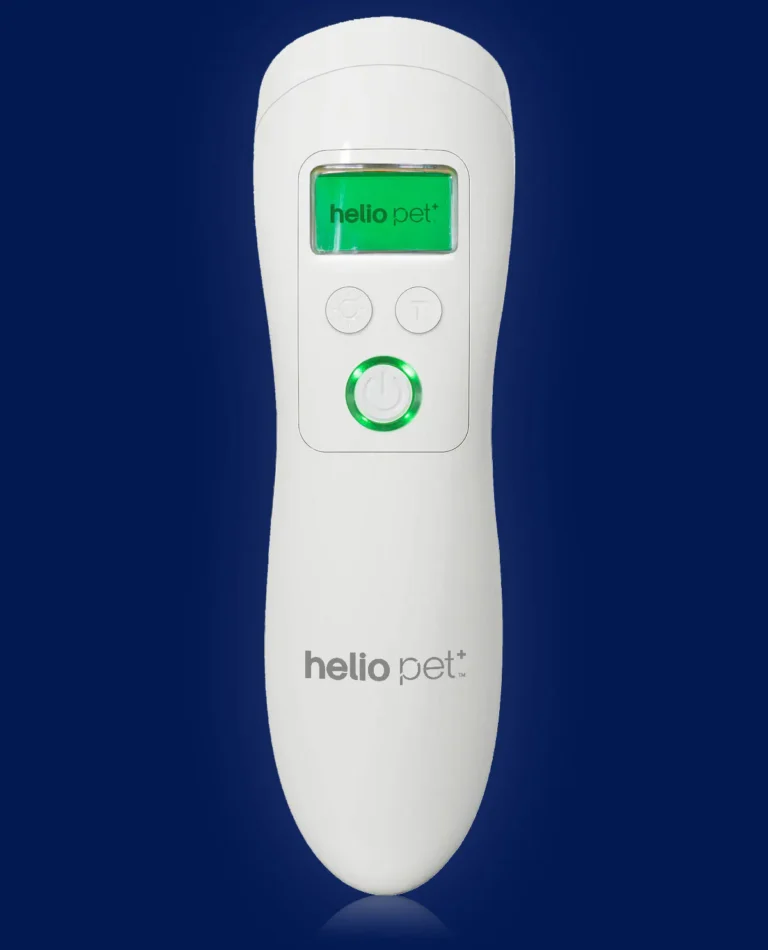
Yugo Pets publishes 650 nm red and 808 nm near-infrared wavelengths, both within the bands in WALT’s draft guidelines for veterinary treatment. Yugo Pets leaves out irradiance, which is the light power delivered per square centimetre, and the area needed to calculate it. That leaves the WAIT Test™ Pet Check unable to tell how the device compares with WALT’s irradiance ranges for your pet’s condition.
The WAIT Test™ result
Missing specs
Yugo Pets lists both wavelengths, but irradiance and treatment-head area are missing. The Pet Check can’t compare light at the skin with WALT’s draft ranges for dogs or cats. Under a black coat, too little light gets through over the joints and spine to compare, so clip or shave the area first, with your vet’s guidance. The wound check already assumes clipped skin.
Key Takeaways
- Yugo Pets gives exact wavelengths for both red and near-infrared light.
- The comparison uses 77 mW, conditional on the model in the cited FDA record matching the device Yugo sells. That figure is below WALT’s draft 200–1,400 mW cluster range.
- Without irradiance or the head area needed to calculate it, the Pet Check can’t establish how strong the light is at the skin.
- The FDA record Yugo cites lists specific human-use indications. Yugo’s clearance explainer also says veterinary uses are excluded.
Yugo Pets specs at a glance
These figures describe the Yugo Pets handheld device, checked November 18, 2026. The WAIT Test™ uses figures from the FDA summary for model GD-P-E on the assumption that the filing describes the unit Yugo sells.
| Spec | Yugo Pets | Source |
|---|---|---|
| Wavelengths | 650 nm red and 808 nm near-infrared | Yugo Pets |
| Light source | Class 3R laser diodes, conditional on the model match | FDA summary |
| Average power used by the comparison | 77 mW, conditional on the model match. 65 mW red and 12 mW near-infrared | WAIT Test™ comparison and FDA summary |
| Irradiance | Not published | WAIT Test™ comparison |
| Treatment-head area | Not published | WAIT Test™ comparison |
| Pulse modes | Continuous and pulsed modes in the cited filing | FDA summary |
| Session length | Product page promotes 10-minute sessions | Yugo Pets product page |
| Fur parting | Not stated in the comparison | WAIT Test™ comparison |
What WALT asks for at each target
| Target | Light WALT’s draft range needs at the skin (light coat) | Yugo Pets |
|---|---|---|
| Wounds on clipped skin | 30–100 mW/cm² (clipped, so no coat adjustment) | Missing specs |
| Most joints through a light coat | About 23–45 mW/cm² (WALT’s 50–100 through a light coat) | Missing specs |
| Hip through a light coat | About 45–114 mW/cm² (WALT’s 100–250 through a light coat) | Missing specs |
Ranges and coat assumptions come from the WAIT Test™ device comparison. A light coat lets about 45% of a device’s light reach the skin, so the ranges above are WALT’s draft ranges converted to the light needed at the skin. A device’s own irradiance never goes up; the coat only decides how much of it gets through.
Wondering which device fits your pet?
Talk through your pet’s condition and treatment area with a MedcoVet clinician.
Matilda
WAIT Test™ results for the Yugo Pets device
In short: Yugo Pets’ wavelengths are in range and its eye-safety class is stated, but its average power is below WALT’s draft range and it doesn’t publish the irradiance needed to compare its light at the skin. Choose your animal and coat below to see the Spec Check and Pet Check.
- W · Wavelength (in range): its 650 nm red and 808 nm near-infrared both fall within WALT’s draft bands.
- A · Average power (outside the range): 77 mW (65 mW red and 12 mW near-infrared) from the FDA summary for model GD-P-E, assuming it describes the unit Yugo sells. That’s below WALT’s draft 200–1,400 mW range. The filing lists pulsed and continuous modes without details.
- I · Irradiance (not published): Yugo Pets publishes no irradiance, and no treatment-head area to work it out.
- T · Target tissue (not published): Yugo Pets doesn’t say whether the device parts the fur, rests on the coat or is held off the skin. It gives only 10-minute treatments.
- Eye safety (in range): the FDA summary lists Class 3R laser diodes. Keep the beam away from eyes and follow the laser safety instructions.
⚑ Claim noted: its “FDA Cleared” claim (K241057) covers a human-use device, not pets. Claims never change a Spec Check mark.
Pet Check: for a 50 lb dog with a light coat, the hip needs about 45–114 mW/cm² of near-infrared light at the skin. That’s WALT’s draft range for hips, adjusted for the roughly 45% of light a light coat lets through (Hochman-Elam 2020). Yugo Pets doesn’t publish its irradiance, so we can’t say whether it reaches that range. The comparison’s estimate of about 500 minutes for the hip comes from average power alone and can’t be compared with WALT’s range; below that range, a longer session hasn’t been shown to make up for too little light. The same is true for every condition in the 10 lb cat. Under a black coat, too little light gets through over the joints and spine to compare, so clip or shave the area first, with your vet’s guidance.
- ✓In WALT’s range
- ~Partly
- ✗Outside WALT’s range
- ?Not published
- !Company’s figures conflict
- iFor information
- ⚑Claim noted (never changes a letter)
All devices × conditions at a glance
Each cell compares the device’s light with WALT’s irradiance range for that target, at the skin under your pet’s coat (Pet Check, step 2). The first five columns are the Spec Check, which assumes a light coat. Pick a device name or a cell to open it above.
Wavelengths
Yugo’s 650 nm red light sits within the draft 630–690 nm red band. Its 808 nm near-infrared light sits within the draft 780–860 nm near-infrared band. Using both bands is a genuine strength. The amount of light reaching the skin is the next question. See the wavelength checks.
Why irradiance matters
Irradiance describes how much light power reaches each square centimetre. The same total power can deliver different irradiance depending on how widely the device spreads the beam. Without that figure or the head area, it’s unclear how Yugo compares with the draft ranges for a wound, a joint or the back.
Below a target’s irradiance range, a longer session hasn’t been shown to make up for it (Huang 2009). A turkey left in a warm room for hours will still be raw. Roasting it takes a hot oven.
What the cited FDA record covers
The FDA does not have a premarket approval or 510(k) clearance pathway for devices intended for animal use. That means pet red light therapy devices cannot be FDA-approved for veterinary use. The FDA still oversees animal devices and can act on misleading labeling. Read MedcoVet’s guide to FDA regulation of veterinary devices.
The cited record, K241057, names the GD-P-E and lists specific human uses for temporary relief of minor chronic neck and shoulder pain and pain associated with carpal tunnel syndrome. Yugo’s own clearance explainer states that veterinary uses are excluded. The comparison notes the marketing claim separately from the Spec Check marks. FDA record · Yugo’s explainer.
How fur changes the light at the skin
A study in dogs found that coat color and shaving affected laser transmission. The WAIT Test™ uses the following estimates of how much of a device’s light reaches the skin. They come from research with other laser systems and do not measure this Yugo device (Hochman-Elam 2020).
| Coat over the treatment area | Share of the device’s light reaching the skin |
|---|---|
| Shaved | All of it |
| Light | About 45% |
| Dark brown | About 15% |
| Black | Not compared: clip or shave first, with your vet’s guidance |
For a black coat over a joint or the spine, clip or shave the area first, with your vet’s guidance. For a wound, the Pet Check already assumes clipped skin.
How it’s used
Yugo’s product page describes 10-minute sessions. A timer tells you when a session ends. To estimate dose per spot, you also need the irradiance where the light lands and the time spent on each placement. The comparison lacks those inputs for the Yugo device. Yugo product page.
What Yugo Pets does well
- It publishes exact red and near-infrared wavelengths, and both fall within WALT’s draft bands.
- It supplies a specific FDA record number, so buyers can check the cited model and indications.
- Its product guidance gives a session time, which makes the routine easier to understand.
What would change this result
A published irradiance measurement with distance and mode would let the WAIT Test™ compare the device against WALT’s draft ranges. Confirming the exact retail model, average power per wavelength, effective treatment-head area and placement instructions would help readers understand how much light reaches the skin.
When NOT to use red light therapy
Keep the beam away from eyes and follow the model’s laser safety instructions, including any required eye protection. Ask your vet before using light over suspected cancer or an active infection. If a pet suddenly can’t stand or walk, seek veterinary care right away. About veterinary devices.
How the Luma compares
MedcoVet’s Luma publishes its power and treatment-head area, allowing the WAIT Test™ to compare irradiance with the same draft ranges. The model credits its optical comb with reaching the skin through fur, a MedcoVet assumption that still needs measurement. See the Luma result.
Want to know if light therapy fits your dog? Take the 2-minute quiz.
Sprite
Clinical summary
- Mechanism The handheld device uses red and near-infrared laser light.
- Evidence level The reviewed sources provide specifications and a human-use regulatory record. They do not establish veterinary outcomes for this exact model.
- When it works best The available specifications leave that question open. A veterinarian can help match the device and dose to the condition.
- When not to use Over eyes, over known or suspected cancer, on active infections that need medical care, or in place of a veterinary diagnosis.
- Limitations Missing irradiance and treatment-head area, unclear light delivery through fur and a conditional link between the FDA record and the retail model.
Yugo Pets questions Pet Parents ask
How we checked, and sources
This review uses Yugo’s product specifications and the FDA record it cites. The power estimate applies conditional on the model match. The coat estimates come from the WAIT Test™ methodology and the canine transmission study listed under Evidence Citations.
Ready to discuss your pet’s plan?
Book a free consult with a MedcoVet clinician.
Spock
Evidence Citations
🐾 Ready to Take the Next Step?
Whether you’re just learning or ready to act — we’ve got you.
👉 Book a Free Consult
Talk to a licensed clinician about your pet’s condition and get a personalized plan. No pressure, just real help.
👉Learn More About the Luma
Explore how our at-home red light therapy device works, why it’s different, and what it can do for your pet.

About the Author
Alon Landa is the CEO and co-founder of MedcoVet, a leader in at-home red light therapy for pets. With over 20 years of experience in medical technology and firsthand involvement in developing the Luma, Alon combines deep technical knowledge with a passion for improving pet health. He regularly collaborates with veterinarians and pet parents to advance photobiomodulation (PBM) care at home.
📍 Based in Boston, MA
📖Read more from Alon here