What NOT To Look for in a Red Light Therapy Device
Red light therapy is powerful—when it’s done right. But the market is flooded with gadgets and gimmicks, and most of them? They’re selling sparkle, not science.
At MedcoVet, we cut through the noise. Here’s your ultimate guide to what NOT to look for in a red light therapy device for your pet—and the research-backed reasons why.

Many of the red flags we cover in this article are explored in even greater detail in a brilliant PDF written by three of the most respected voices in light therapy:
- Jan Tunér, DDS (Swedish Laser Medical Society)
- Lars Hode, DrSci
- Peter A. Jenkins, MBA (Australian Medical Laser Association)
👉 Download the full report: How NOT to Promote Laser Therapy (PDF)
If you’re a vet, rehab pro, or just want to make sure you’re not being sold snake oil—this is your must-read.
🚩 Red Flag #1: “Treats Through Clothing or Fur”
Light therapy only works when photons hit skin. Fur—like fabric—scatters and absorbs light, dramatically reducing the effective dose. That means a device that doesn’t reach the skin? Might as well be a flashlight show.
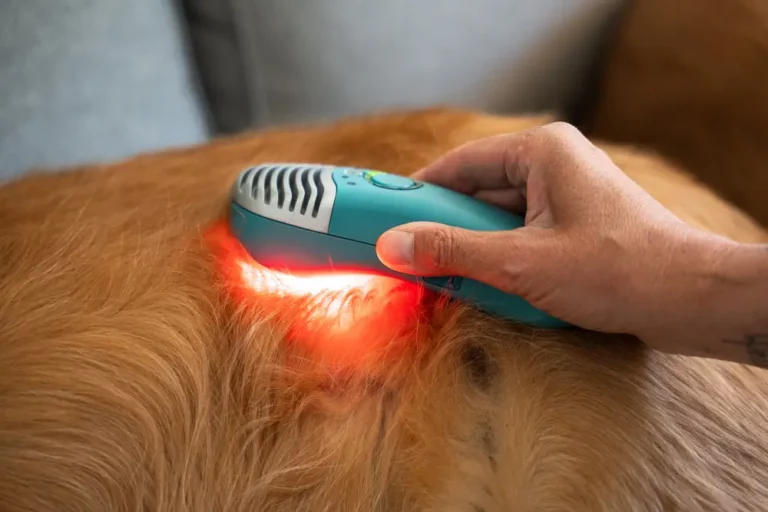
🔍 What to look for instead: Fur-parting applicators or designs that press directly on the skin.
🚩 Red Flag #2: “Class IV = Better”
Class labels (Class I–IV) are safety classifications related to eye & skin exposure risk, not therapeutic effectiveness. A Class IV laser isn’t automatically more powerful for healing—it just carries a higher risk of eye damage and burns.
In fact, studies show that low-to-moderate powered lasers often stimulate better anti-inflammatory and tissue repair responses, especially when applied for longer durations (Chow et al., 2009; Huang et al., 2009).
🔥 Bonus danger: Class IV devices usually require constant movement over the body to avoid overheating or singeing the fur. That means:
- You can’t maintain skin contact
- The dose is spread across a larger area, diluting its effectiveness
- Much of the light misses the target joint or muscle entirely
⚠️ What to look for instead:
Devices that specify:
- Average power output
- Target dose in J/cm²
- Wavelengths in the 600–850 nm range
Not the class label. That’s for eye & skin protection regulations, not healing outcomes.
🚩 Red Flag #3: “Penetrates 6–9 Inches Deep”
Nope. That’s not how light works. Light absorption by biological tissue limits even the most effective wavelengths to 2–3 cm of depth, especially in red and NIR ranges. Claims of inches are pure marketing fantasy.
✅ What to look for instead: Studies showing meaningful penetration (2–3 cm) and real-world results on joint, muscle, or post-op healing.
🚩 Red Flag #4: Peak Power Shell Games
Some devices brag about wild peak power—like “50,000 mW!”—but it’s just that: a peak. If that output lasts for a microsecond, the average power (what actually delivers energy to tissue) is negligible.
It’s like bragging your car can go 200 mph, but only for 0.0001 seconds. What matters is the average power over time. That’s what delivers the dose.
📉 What to look for instead: Average power output and treatment times that deliver 1–4 J/cm², the established therapeutic window.
🚩 Red Flag #5: Pre-Programmed Mystery Modes
“Program A” or “Healing Mode 7” isn’t helpful unless you know what it’s doing. If the device doesn’t explain wavelength, frequency, or dosage, you’re flying blind—and your pet deserves better.
🛠️ What to look for instead: Clear protocols—or better yet, custom guidance from a veterinary professional.
🚩 Red Flag #6: “Super Pulsed” = Super Effective?
Not always. Super pulsing can allow for short, high-intensity bursts, but the biological response depends on average power and total energy delivered, not just peak power. Also, not all “super pulsed” lasers are real—some are just blinking LEDs.
🧠 What to look for instead: Transparent pulse specs, and real clinical outcomes—not just buzzwords.
🚩 Red Flag #7: “More Power = Faster Healing”
Tempting logic. But the truth? Healing isn’t a race. Studies show that low-level irradiance over time yields better anti-inflammatory and regenerative effects than high-intensity, short bursts.
High power is great for temporary pain relief—but not necessarily for deep healing.
📏 What to look for instead: Devices that allow longer sessions at safe power levels to deliver the right dose over time.
🚩 Red Flag #8: “FDA Approved” for Pets? Nope.
There is no such thing as FDA “approval” for veterinary-use red light therapy devices. The FDA approves human medical devices—and even then, approval is device-specific and rarely includes veterinary applications.
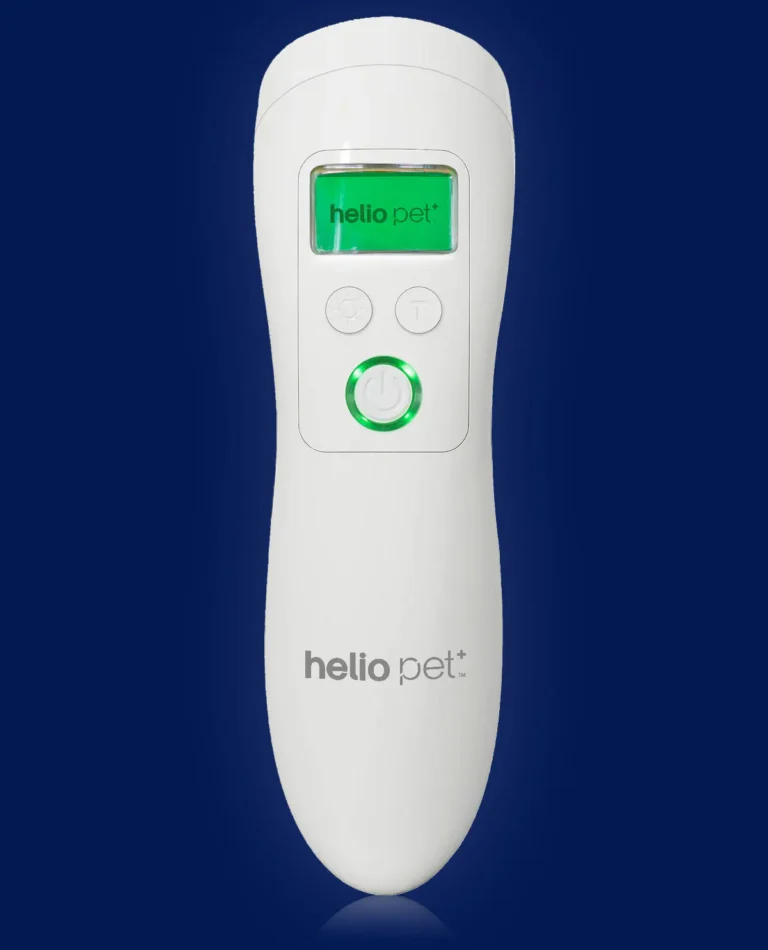
🐾 We reviewed one product marketed as “FDA approved for pets.” The actual approval? A heating pad for humans. Totally unrelated.
✅ What to look for instead: Honest transparency. “FDA registered” or “cleared for human OTC use” is fine—as long as it’s not misrepresented.

The FDA does regulate veterinary (animal) devices to ensure they’re not misbranded or unsafe—but it does not require any premarket approval or clearance (like 510(k) or PMA) for veterinary-use devices. Manufacturers aren’t even required to register or list their animal devices with the FDA.
In other words: There is no FDA “approval” process for red-light therapy devices intended for pets.
If someone claims FDA approval for a veterinary RLT device, they’re either misinformed or misleading customers. Always ask them to clarify exactly what was approved—and if they can’t answer, it’s a clear sign to walk away.
🚩 Red Flag #9: “Works Great on People—So It Must Work on Pets”
If every product photo shows a human calf, bicep, or lower back—and zero furry patients—take note. Human skin is hair-free, thin, and easy to light up. Pets? Not so much:
- Human-oriented applicators rarely part the coat or maintain pressure on pet anatomy.
- Dose guidelines for people (J/cm², session length) do not translate to dogs, cats, or horses.
What to look for instead:
Choose a device marketed for animals, with:
- Fur-parting or contact heads shown on real pets.
- Pet-specific protocols (weight, coat length, target joint).
- Veterinary or rehab-pro endorsements—not just fitness influencers.
🚩 Red Flag #10: Glamour Shots in “Hover Mode” (No Skin Contact, Big Scans)
Scroll for a few minutes online and you will see ads where the beam hovers inches away or sweeps quickly over the body. That’s usually a high-power Class IV unit in “scanning mode”—and it wastes light three ways:
- Inverse-square loss: Energy plummets the farther you hold the probe.
- No pressure, no parting: Fur + air gap = huge dose drop.
- Dose dilution: Rapid sweeps smear photons across a broad area—little hits the sore joint.
Class IV can help with surface pain, but it doesn’t magically push photons deeper; it mostly raises heat. For true tissue repair you need steady, skin-level contact.
What to look for instead:
- Look for contact-only instructions.
- Confirm the device’s irradiance stays < 300 mW/cm² so you can park it safely in place.
- Ask how long it takes (on-skin) to deliver 4–8 J/cm² to the target joint.
Final Word: Choose Science, Not Hype
Red light therapy can change your pet’s life. But only if it’s the right device—delivering the right light, the right way.
🔬 Focus on:
- Wavelength (660–850 nm)
- Average power, not just peak
- Dose (1–4 J/cm²)
- Skin contact
- Transparent specs
- Research-backed results
At MedcoVet, we don’t play games with your pet’s health. We build and recommend devices grounded in real science—designed to heal, not dazzle.
Want to see what real results look like with a research-backed device made just for pets? Learn more about MedcoVet’s Luma here.
🐾 Ready to Take the Next Step?
Whether you’re just learning or ready to act — we’ve got you.
👉 Book a Free Consult
Talk to a licensed clinician about your pet’s condition and get a personalized plan. No pressure, just real help.
👉Learn More About the Luma
Explore how our at-home red light therapy device works, why it’s different, and what it can do for your pet.

About the Author
Alon Landa is the CEO and co-founder of MedcoVet, a leader in at-home red light therapy for pets. With over 20 years of experience in medical technology and firsthand involvement in developing the Luma, Alon combines deep technical knowledge with a passion for improving pet health. He regularly collaborates with veterinarians and pet parents to advance photobiomodulation (PBM) care at home.
📍 Based in Boston, MA
📖Read more from Alon here