
Top Benefits of Red Light Therapy for Cats’ Health and Healing
Talk to a licensed MedcoVet clinician about your cat’s condition and get a personalized plan.


Apollo
Written by: Alon Landa
Medically reviewed by: Marilyn J. Jerome, M.S., LVT
(Specialties: Critical care, post-surgical healing, pain relief, emergency medicine, arthritis, acute mobility, complex case management, IVDD, dysplasia, clinical operations, and otitis)
Reviewed: October 2026
Updated: October 2026
Red light therapy for cats uses certain light wavelengths to help reduce pain and promote faster healing. It works by boosting cellular energy, supporting tissue repair, and lowering inflammation. In this article, you’ll learn how it works and how it can benefit your cat.
Key Takeaways
- Red light therapy enhances cellular energy production in cats, supporting healing and damaged cells, increasing blood flow, reducing inflammation, and alleviating pain.
- How red light therapy provides a treatment option for most pets that is non-invasive, safe for at-home use, and can effectively treat various conditions like arthritis, injuries, and skin irritations.
- Veterinarian-recommended devices like the MedcoVet Luma enable pet owners to administer professional-grade light therapy safely and conveniently at home.
Does Red Light Therapy Work for Cats?
Red light therapy, also known as photobiomodulation, may help cats by easing pain and inflammation while supporting tissue repair, mobility, and recovery. Veterinary research shows benefits for several musculoskeletal and healing issues, but there is less clinical evidence for cats than for dogs. Results depend on the condition, the type and amount of light used, how often treatments are given, and whether the light hits the right area.
For a deeper explanation of specific wavelengths, irradiance, dose, treatment frequency, and the cellular mechanisms involved, see Science of Red Light Therapy.
Red Light Therapy, Laser Therapy, and Photobiomodulation
These words frequently describe the same general type of treatment: using red or near-infrared light to influence cellular activity without cutting or damaging tissue.
Photobiomodulation (PBM): The scientific term for this treatment approach. PBM applies specific doses of non-ionizing red or near-infrared light and activates cells. These actions support processes such as cellular energy production involving adenosine triphosphate, blood flow, inflammation control, and tissue repair.
Red light therapy: A common, consumer-friendly term for PBM. Although it is called “red” light therapy, many devices also use invisible near-infrared wavelengths. Red light falls within the visible spectrum of wavelengths.
Laser therapy or Class IV laser therapy: Photobiomodulation delivered with a high-power therapeutic laser. Class IV lasers use greater power and irradiance, allowing treatment of deeper tissues in shorter sessions. Because they can generate heat, the treatment handpiece is typically kept moving and used by a trained veterinary professional. Class IV laser therapy is not the same as a surgical laser, which is designed to cut, vaporize, coagulate, or remove tissue.
LED therapy: PBM delivered with light-emitting diodes instead of a laser. The light source is different, but both LEDs and lasers can deliver therapeutic wavelengths when the device provides an appropriate dose.
In short, photobiomodulation is the scientific category. At the same time, red light therapy, cold laser therapy, LED therapy, and near-infrared therapy are commonly used terms that describe the light source, wavelength, or device (Anders et al., 2015). The most important differences between devices are their wavelength, power, irradiance, treatment time, and the dose delivered to the target tissue.
What Makes a Red Light Therapy Device Different From High-Power Clinical and Surgical Lasers?
The main differences between devices aren’t only about using a laser or an LED. What really matters is how much light energy reaches your pet’s tissue, how focused the beam is, how deep it goes, how fast it delivers the dose, and whether it produces heat.
Don’t mix up a device’s safety class with its power. In laser safety, the class mainly refers to the risk to eyes and skin, especially the chance of eye injury. A higher class doesn’t always mean more power, and a lower class doesn’t mean a device won’t work. Power, light strength, wavelength, beam size, how long you use it, and how you use it are all separate factors.
Type | Typical characteristics | Tissue heating | How it is used |
Low-power PBM / at-home device | Often up to 1 W, but most are lower than 1 W, in some veterinary home systems; may use LED or laser light | Minimal when used correctly | Can often remain stationary for a prescribed period |
High-power Class IV therapy laser | Many veterinary laser therapy systems operate around 15-25 W, although output varies widely | Can heat tissue | Usually kept in motion and used by trained professionals |
Surgical laser | Concentrated energy intended to cut, vaporize, coagulate, or remove tissue | Intentional thermal effect | Surgical procedures |
The “Class IV” designation in the table refers to the device’s laser-safety classification, not a universal power category. Class IV lasers can present a direct or reflected eye hazard and may also create a skin or fire hazard, depending on the device and operating conditions. A device’s wattage and therapeutic intensity should therefore be evaluated separately from its safety class.
Laser vs. LED: What Actually Matters?
Lasers are often described as coherent, monochromatic, and collimated. In practical terms, that means laser light is produced in waves that are highly synchronized, concentrated around a narrow range of wavelengths, and tightly focused.
Coherence is unlikely to be the main reason a therapeutic laser works. Once light enters tissue, scattering quickly reduces the organized wave pattern, and experts continue to debate how much coherence contributes to clinical outcomes (Zein et al., 2018).
Monochromatic means the light is concentrated around one color or wavelength. Older LEDs produced a wider mix of colors, but modern clinical LEDs can be highly specific in wavelength. This makes the difference between LED and laser light less important than the wavelength, irradiance, dose, treatment time, and delivery method.
Collimation, or beam focus, is the more practical distinction. A tightly focused beam can deliver light more efficiently to a small target and may reach deeper tissue with less spreading. That can help shorten treatment times in a clinical setting. However, that same concentration requires careful handling, especially around the eyes and when treating over fur.
LEDs generally produce more divergent light, meaning the beam spreads more as it travels. This can make them less efficient at reaching deep or highly localized tissues, but it can also make them easier to use safely over a wider treatment area. LED treatment may take longer, particularly when the light must pass through a thick coat or cover a larger area.
Why Beam Focus and Dose Matter in Light Therapy
Power alone does not determine safety or effectiveness. Irradiance, spot size, wavelength, treatment time, distance from the skin, beam focus, and device movement all affect how much energy reaches the target tissue.
High-power Class IV therapy lasers can deliver a therapeutic dose once the right amount of light reaches the target tissue, but their high irradiance can also heat tissue. This is why the treatment head is commonly kept moving across the skin and why protective eyewear is typically required.
A focused beam can also create a higher intensity at the treatment site. If the device is held too close, left in one place too long, or used with the wrong settings, the risk of excessive heating or eye injury increases. Professional training and device-specific protocols are therefore important when using high-power lasers.
LED Therapy for At-Home Care
For pet owners treating an animal at home, a device should be simple to position, easy to use consistently, and designed with clear dosing and eye-safety instructions.
LED therapy is often a good choice because it spreads light over a larger area and uses less concentrated energy than a high-power laser. Sessions may take longer, but this is usually manageable at home, where the focus is on regular treatment instead of quick clinic visits.
Just because a device uses LEDs doesn’t mean it’s safe for every situation. You still need to consider eye safety, how long you use it, the type of light, its strength, and how far it is from your pet. Always follow your device’s instructions, and don’t assume every red-light product is safe to use near the eyes or for all health issues.
Which Therapy Works Best: At Home or in the Clinic?
At home: A lower-power LED or PBM device may be appropriate for repeated treatment when the protocol is clearly defined, and the device is designed for home use. The treatment may take 20-30% longer than a high-power laser session, but the familiar environment can make it easier to maintain a regular schedule.
In a clinic: High-power lasers can be useful when a trained professional needs to treat deeper or more localized tissue quickly. Clinical staff can adjust the device, keep the treatment head moving, monitor tissue warmth, and use appropriate eye protection.
The best option depends on your cat’s condition, the area being treated, the device’s features, and your vet’s advice. A laser isn’t always better than an LED, and an LED isn’t always safer. Safety class only indicates the risk to eyes, not how strong or effective the device is.
The MedcoVet Solution: Collimated LED Light for At-Home Treatment
MedcoVet’s Luma combines the more extensive safety profile and home-use convenience of LED technology with a more focused delivery method.
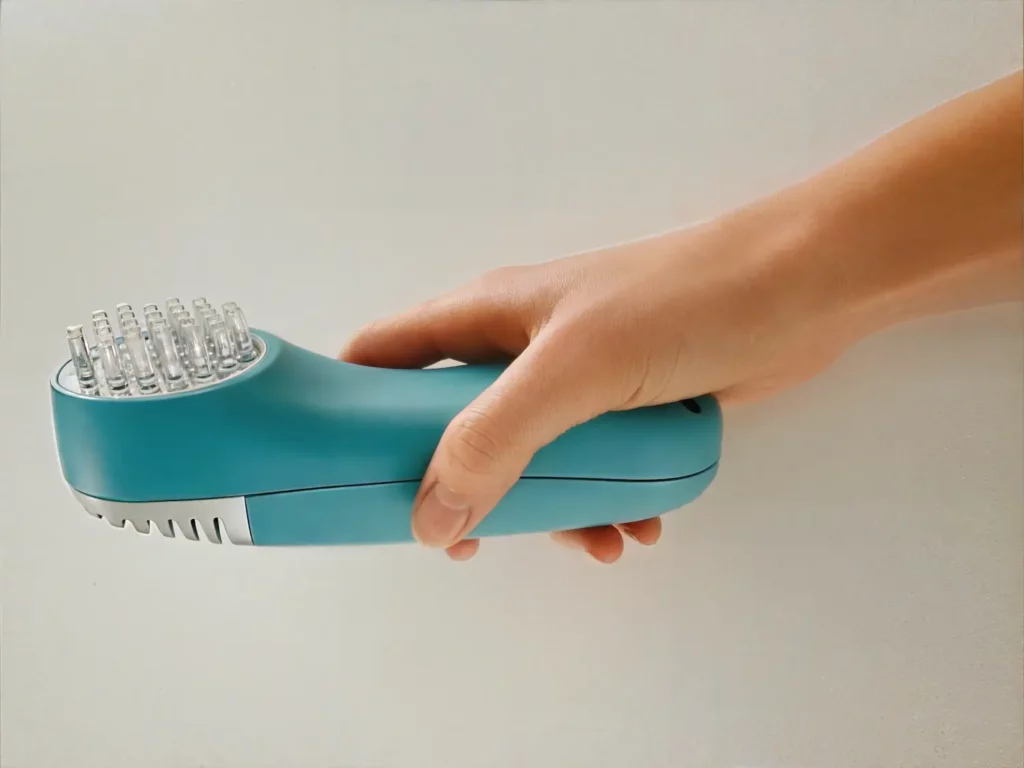
Its optical comb technology produces collimated LED light, helping direct it toward the treatment area rather than letting it spread immediately. This design is intended to improve light delivery through fur and into deeper tissues while maintaining the lower-power format used for at-home treatment.
The Luma has an average output near 1.1 W and is designed for stationary treatment. As with any PBM device, the appropriate treatment time and placement depend on the condition being treated and the device protocol.
The aim isn’t to make LED therapy the same as a high-power clinical laser. Instead, it offers a practical at-home option that delivers a controlled dose without the heat, special handling, or fast treatment times required for high-power lasers. Eye safety is key, while the performance and design is optimal.
Where NASA Fits Into the History
Research into photobiomodulation began with low-level lasers decades before LEDs became widely used for therapy. In the 1990s, NASA-supported research helped advance high-output LED technology originally developed for plant-growth experiments in space. Researchers including Harry Whelan and colleagues later studied these LEDs for biomedical applications, including tissue repair and wound healing.
In 2001, Whelan and colleagues published NASA-supported research examining red and near-infrared LED therapy in cell cultures, animal models, and human applications (Whelan et al., 2001). This work helped establish LEDs as another way to deliver therapeutic red and near-infrared light. Modern photobiomodulation can now be delivered using either laser or LED-based systems.
Signs Your Cat May Be in Pain
Cats instinctively conceal pain more than dogs do, which is one reason conditions like arthritis are often missed until they’re advanced (Bennett et al., 2012). Watching for behavior changes is usually more reliable than looking for obvious limping or vocalizing.
“One of the first common signs of pain or discomfort in cats often begins as subtle behavior changes. These changes may progress over time or even suddenly. A pet parent is most familiar with their pet and even the most subtle changes can be quite obvious”. Marilyn Jerome, MS, LVT
Behavior Change | What It May Indicate |
Reluctance to jump onto furniture | Joint pain, stiffness, arthritis |
Sleeping more than usual | Pain, fatigue, discomfort |
Reduced grooming, or overgrooming one area | Pain that makes grooming difficult, or localized pain drawing attention to one spot |
Hiding more than usual | General pain or discomfort |
Changes in litter box habits | Pain when squatting, climbing in or out, or moving to the box |
Decreased appetite or interest in play | Pain, illness, or discomfort |
Avoiding touch, or increased irritability and/or aggression | Localized pain or general discomfort |
Stiffness after rest, or changes in posture | Joint or muscle pain |
Increased need for affection or an unusual need to be closer to pet parent | Localized pain or general discomfort |
Excessive rubbing of the body, or specific parts of the body, on furniture | Localized pain or general discomfort |
Changes in, or emergence of, new vocalization habits and patterns | Localized pain or general discomfort |
Changes in breathing | Severe pain or an underlying condition |
If you notice any of these changes, a veterinary exam should come before starting or adjusting red light therapy. These signs can point to several different underlying conditions, and an accurate diagnosis determines the right treatment.
Not sure if your cat is a candidate?
Ask a clinician.
Gemma
Conditions Treated by Red Light Therapy in Cats
Veterinary medicine uses photobiomodulation to support the management of pain, inflammation, mobility problems, soft tissue injuries, wounds, post-surgical recovery, and other conditions. Evidence strength varies by condition, and feline-specific research remains more limited than canine research in several areas.
Condition | How PBM May Help | Evidence Strength | Learn More |
Arthritis & joint pain | Pain relief, reduced inflammation, improved mobility | Growing canine evidence (Barale et al., 2023); feline evidence more limited | |
Pain & mobility (general) | Supports a broader pain-management plan | Condition-dependent | |
Sprains & ligament injuries | Pain management, inflammation control, soft tissue recovery support | Limited direct feline evidence | |
Post-surgical recovery | Supports tissue repair; may improve incision cosmetic healing | Canine evidence (Wardlaw et al., 2019); feline evidence limited | |
Skin conditions & wound healing | Supports tissue repair and inflammation management | General PBM wound-healing evidence (Whelan et al., 2001); underlying cause still requires treatment | [Skin Conditions section below] |
Eosinophilic granuloma complex | Documented adjunctive use in one biopsy-confirmed case | Single clinical case study; not established for general use | |
Otitis & ear inflammation | May support comfort alongside treatment of the underlying cause | Limited evidence | |
Chronic kidney disease | Studied as adjunctive support alongside standard CKD care | Preliminary/observational MedcoVet clinical data | |
Neuropathy – peripheral | Studied as adjunctive support | Preliminary/observational MedcoVet clinical data | |
Inflammatory Bowel Disease | Studied as adjunctive support | Preliminary/observational MedcoVet clinical data |
Red Light Therapy for Arthritis and Joint Pain in Cats
Arthritis is common in older cats, but it can be easy to miss. One radiographic study found degenerative joint disease in most cats over age 12, though owners or veterinarians noted clinical signs in only a small percentage of cases (Hardie et al., 2002). Cats often show discomfort using behavioral changes, reduced mobility, reduced grooming, and altered activity, rather than obvious limping (Bennett et al., 2012). They may stop jumping, hesitate before using stairs, groom less, sleep more, or lose interest in play.
Photobiomodulation may be used as part of a wider arthritis treatment plan to help provide pain relief and decrease inflammation and support mobility.
Learn more: Red Light Therapy for Arthritis and Joint Pain in Pets.
Valentine’s parent noticed a change early in treatment:
“I’ve noticed in just the first week of treatments that Val is more playful!” – Linda Scribner
Speedy’s experience also shows how at-home treatment can help a cat that finds repeated veterinary visits difficult:
“Speedy is a senior cat (16 this year) and was having pain when walking, so bad that he was hunching his back and not moving his tail, due to arthritis in his spine and hips. We tried laser therapy at the vet, but he is very difficult during vet visits, and it wasn’t sustainable long term. Luma has been great since we can do the treatments at home. As part of a combined treatment plan (the Luma + Adequan and Solensia), it has helped him move more normally again. I am so happy we found out about the Luma!” – Diane Klimp
Speedy’s story is helpful because his parent refers to the other treatments he was getting. His progress happened as part of a combined plan, so it can’t be credited to PBM alone.
Case Study: Rehabilitation in an 18.5-Year-Old Cat With Osteoarthritis
Sleipnir was an 18.5-year-old cat with osteoarthritis, muscle loss, hind-leg weakness, reduced hip movement, and an unsteady, ataxic gait. His rehabilitation plan combined manual therapy, therapeutic exercise, balance and strengthening work, a home exercise program, heat, and red light therapy with the MedcoVet Luma.
His initial home Luma protocol focused on the lower back, lumbosacral region, and both hips. Treatment began daily and was adjusted over time based on his response. As his activity increased, treatment frequency was gradually reduced to every other day and later every third day.
Over several months, Sleipnir began standing taller, continued climbing stairs, progressed to harder balance and strengthening exercises, and remained active and engaged in his rehabilitation. His ataxic gait and hind-leg weakness did not resolve, so the goal of treatment was maintaining and improving function rather than restoring normal movement.
Because Luma was used alongside physical rehabilitation, exercise, heat, and other care, this case cannot show how much of Sleipnir’s progress came from photobiomodulation alone. It does show how at-home red light therapy can be incorporated into a broader rehabilitation plan for a very senior cat with arthritis and mobility problems.
Read Sleipnir’s full senior cat rehabilitation case study.
Is your senior cat slowing down?
Talk to a clinician about adding at-home light therapy to your cat’s plan.
Apollo
Is your senior cat slowing down? Talk to a clinician about adding at-home light therapy to your cat’s plan. Button: “Book a Free Consult”
Red Light Therapy for Pain and Mobility in Cats
Pain in cats may appear as hiding, reduced grooming, reluctance to jump, stiffness, changes in posture, decreased play, irritability, avoiding touch or other behavioral changes.
Photobiomodulation may help manage pain from arthritis, injuries, inflammation, surgery, and some muscle or joint problems, and other disease conditions. It’s usually just one part of a larger pain management plan to help pets become pain free.
Learn more: Red Light Therapy for Pain Relief in Dogs and Cats.
Olivia’s parent describes both better mobility and the difficulty of separating the effects of PBM from her other therapies:
“Overall, the treatment is easy. Sometimes she is grumbly about certain points on her body, so I do what I can without upsetting her. It is beneficial to have a treatment that doesn’t cause any negative side effects or pain. That has been great for our relationship. Olivia has gained two pounds while using this treatment. My pet seems to be moving better. She has arthritis, but she’s moving well. My overall impression is positive. I am using it along with other therapies, so it can be hard to tell which treatments are the most effective. The vet told me to keep doing whatever I am doing, though. She still has significant kidney disease, but I feel like her quality of life is good, thanks to this treatment.” – Hannah Henderson
Red Light Therapy for Sprains and Ligament Injuries in Cats
Cats can develop ligament injuries and sprains after falls, awkward landings, sudden movements, or other trauma. Depending on the severity, treatment may include rest, pain management, rehabilitation, surgery, and supplementary therapies such as PBM.
Photobiomodulation may support pain management, inflammation control, and soft tissue recovery as part of a veterinary treatment plan.
Learn more: Red Light Therapy for Sprains and Ligament Injuries in Pets.
Lola’s parent used at-home light therapy together with physical therapy during recovery from a hind-leg cruciate ligament tear:
“The light therapy was a comfortable and restful addition to Lola’s recovery plan, complementing her physical therapy. The Luma provided at-home support that could be done on a schedule that worked for her. My little girl was able to jump again!” – Betzi Hanc
Red Light Therapy for Post-Surgical Recovery in Cats
Photobiomodulation is also used in veterinary rehabilitation after some surgical procedures. Treatment goals can include supporting tissue repair, controlling inflammation and discomfort, and helping the cat progress through recovery. A study in dogs recovering from spinal surgery found that daily laser therapy improved the cosmetic appearance of the surgical incision compared to untreated controls (Wardlaw et al., 2019); feline-specific post-surgical PBM research is more limited.
PBM does not replace prescribed pain medication, wound care, activity restrictions, rehabilitation, or veterinary follow-up after surgery.
Learn more: Red Light Therapy for Post-Surgical Recovery in Pets.
The timing and treatment area should be determined by the type of surgery and your veterinarian’s recommendations. Incisions, infections, orthopedic procedures, and other surgical situations may require different protocols.
Red Light Therapy for Skin Conditions and Wound Healing in Cats
Photobiomodulation is also used to support tissue repair and alleviate inflammation in some wound and dermatologic cases of the superficial tissues (Whelan et al., 2001). The underlying cause of a skin condition still needs to be identified and treated appropriately. Allergies, infection, hot spots, immune-mediated disease, trauma, parasites, and other causes may require medication or additional veterinary treatment.
Atlas’s experience shows how PBM can fit into a longer-term treatment plan for chronic skin irritation:
“When I adopted Atlas, he would scratch the back of his neck well past the point of self-mutilation. After many unsuccessful interventions, we tried the Luma as a long shot. It did not magically cure him. However, there is an obvious difference in his compulsion to scratch on days when he has used the Luma vs. Days when he has not, and with the added help of the right medicine and some adorable little shirts, Atlas is finally healthy and whole. He seems to enjoy his therapy with the Luma. He actively asks for it and purrs the whole time. He’s only 7, so it’s a real relief having a therapy that is non-invasive and enjoyable for him in the long term.” – Abigail
Tiki’s parent used Luma while her skin healed following a severe burn:
“The Luma helped promote the healing of Tiki’s skin, as well as reduce the pain & swelling, after someone threw a firecracker on her back during a 4th of July celebration.” – Carol Ball
Gemma’s parent also reported improvement in a persistent wound:
“The Luma helped heal an ongoing wound issue for Gemma that was absolutely stumping veterinarians. She is all healed and back to her happy self!” – Lauren
These stories are personal accounts and don’t prove that PBM caused the results.
Red Light Therapy for Eosinophilic Granuloma Complex in Cats
Eosinophilic granuloma complex, or EGC, is a group of inflammatory skin and oral lesions seen in cats. Treatment depends on the underlying trigger and may involve corticosteroids, allergy management, dietary changes, antibiotics when indicated, and other veterinary care.
MedcoVet has also documented the use of at-home PBM as an adjunctive treatment in a cat with biopsy-confirmed EGC.
Trouble’s Case Study
Trouble, a 5-year-old domestic shorthair, developed eosinophilic granuloma complex affecting her mouth and throat. The lesions caused pain while eating and swallowing.
Her PBM protocol was adjusted over time according to her response. Visible improvement began around weeks 3 to 4. Prednisolone was also used during part of this period, so the early changes cannot be attributed to PBM alone.
After prednisolone was discontinued, PBM treatment continued, and the lesions continued to improve. By six weeks, the lesions were markedly improved, and Trouble was eating and swallowing comfortably.
This is just one case and doesn’t show that PBM works for every cat with eosinophilic granuloma complex.
Read Trouble’s full case study: Eosinophilic Granuloma Complex.
Red Light Therapy for Otitis and Ear Inflammation in Cats
Cats can develop otitis externa and other forms of ear inflammation from ear mites, allergies, bacterial or yeast infections, foreign material, skin disease, and other causes.
PBM may be used alongside veterinary treatment to support inflamed external ear tissue and improve comfort. It does not replace diagnosis, ear cleaning, medication, or treatment of the underlying infection or cause.
Learn more: Red Light Therapy for Otitis and Ear Inflammation in Dogs and Cats.
Seek veterinary care promptly for severe pain, head tilt, balance problems, hearing changes, facial weakness, bleeding, or symptoms suggesting middle or inner ear disease.
Red Light Therapy for Chronic Kidney Disease in Cats
Chronic kidney disease, or CKD, is common in older cats and requires ongoing veterinary management. Standard treatment may include therapeutic diets, hydration support, medications, phosphate management, blood-pressure management, and regular laboratory testing. Photobiomodulation is being studied as an adjunctive treatment for feline CKD.
A 15-month MedcoVet study followed 29 cats with stage II-IV CKD receiving at-home PBM while continuing their existing veterinary treatment. Nineteen cats were included in the final analysis. Eleven of those 19 cats had a reduction of at least 10% in creatinine, while six maintained relatively stable creatinine levels. Owners of 17 of the 18 cats completing the study reported good to excellent quality of life.
These results are promising, but they should be viewed with caution. The study didn’t have a control group, and the cats kept getting their usual CKD treatment, so we can’t know how much PBM helped on its own.
For the complete study design, results, limitations, and current research, see CKD Clinical Study.
Learn more: Red Light Therapy for Chronic Kidney Disease.
Suits’s parent describes an unusually detailed long-term treatment routine:
“The Luma has been instrumental in helping Suits maintain excellent kidney function. Before we started treatment, she was urinating 5-6 times per day and had a diluted specific gravity. We have been using the Luma for 18 months on 15 designated areas at 1 minute per area (every other day). Now she’s consistently urinating 2 times per day, and her specific gravity has improved as well as her creatinine value.” – Traceé L. Harris
Apollo’s parent also reported using Luma as part of his CKD routine:
“The Luma has made such a drastic difference for our cat, Apollo. Since beginning his treatment, Apollo has become calmer and seems happier! Using the Luma has become a part of our routine, which Apollo seems to look forward to. We are so happy that his chronic kidney disease is also stable!” – Angelina
Olivia’s experience provides another important perspective because her parent explicitly acknowledges the use of several therapies:
“Overall, the treatment is easy. Sometimes she is grumbly about certain points on her body, so I do what I can without upsetting her. It is beneficial to have a treatment that doesn’t cause any negative side effects or pain. That has been great for our relationship. Olivia has gained two pounds while using this treatment. My pet seems to be moving better. She has arthritis, but she’s moving well. My overall impression is positive. I am using it along with other therapies, so it can be hard to tell which treatments are the most effective. The vet told me to keep doing whatever I am doing, though. She still has significant kidney disease, but I feel like her quality of life is good, thanks to this treatment.” – Hannah Henderson
Testimonials are personal stories and don’t prove that PBM caused changes in kidney values, disease, movement, or quality of life.
Red Light Therapy for Neuropathy, Peripheral
Feline peripheral neuropathies involve damaged or abnormally functioning nerves outside of the brain and spinal cord. A neuropathy can be immune-mediated or secondary to existing diseases, such as diabetes mellitus or other conditions. Some signs of peripheral neuropathy include decreased sensation in limbs, poor limb function, hypersensitivity, pain, or a dropped, or plantigrade, stance in the tarsal and/or carpal joints.
Treatment is aimed toward the underlying cause if it is known, but specific treatments are not well researched in cats. While the research for the use of PBM in treating peripheral neuropathy in cats is still minimal, PBM can be utilized as an adjunctive supportive treatment to improve function and reduce discomfort.
Signs of neuropathy should always be discussed with a veterinary provider first to determine whether there are critical underlying causes.
Red Light Therapy for Inflammatory Bowel Disease
Inflammatory bowel disease, or IBD, is diagnosed by ruling out all other possible causes, it is an inflammatory and immune-mediated condition. Most cats have an ongoing history of vomiting, diarrhea, decreased appetite, weight loss and other signs.
Studies are limited but PBM has been utilized to provide relief from the symptoms associated with IBD. Clinical reports include improvement in appetite, decrease in vomiting and nausea, decreased pain and an overall improvement in well-being (Karnia, 2014). PBM serves as a supportive, adjunctive and non-invasive treatment in IBD. It can promote healing responses while decreasing inflammation in the intestines.
IBD should not be assumed as a diagnosis without first consulting a veterinary provider. PBM may be contraindicated and pose risks depending on existing underlying conditions.
Why More Vets Are Using At-Home Laser Therapy
Many conditions treated with photobiomodulation need several sessions over a few weeks. Treating at home can make it easier to keep up, especially for cats that get stressed by frequent vet visits.
Treatment schedules also matter for biological reasons.
Photobiomodulation Has a Biphasic Dose Response
PBM does not follow a “more is better” pattern. Research describes a biphasic dose response in which an appropriate dose can stimulate biological activity, while an excessive dose can produce less benefit or inhibit the response (Huang et al., 2009).
That means successful treatment depends on delivery. For treatment to work, you need to deliver enough light to the right area without exceeding the helpful range too often. This can make it practical to deliver measured doses repeatedly rather than relying on occasional high-intensity sessions. Photobiomodulation has a cumulative effect, like many medications. It can be easier to deliver the right amount of light 3 times at home, rather than traveling to a clinic for sessions.
Consistency Matters
Barale et al. (2023) followed 23 dogs with naturally occurring hip or stifle osteoarthritis through six consecutive weekly low-level laser treatments. Daily step count increased from the first week of treatment, while overall daily activity increased from week 2 and remained above baseline through week 6.
This study was done in dogs, so the results might not apply to cats. It also didn’t have a control group, so we can’t say the improvements were only from laser therapy. Still, it adds to the evidence about using repeated PBM for joint problems and mobility.
Cat-specific clinical research remains more limited, which is one reason treatment should be based on the individual cat’s diagnosis, response, and veterinary care plan.
How to Administer Red Light Therapy to Your Cat
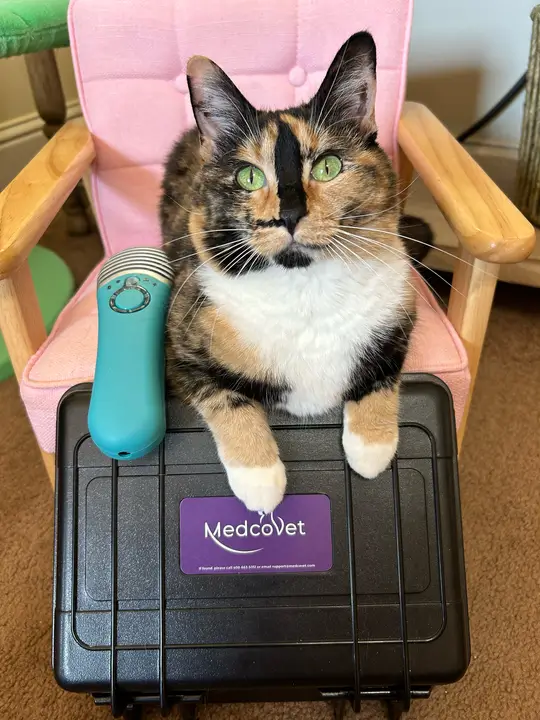
How long and how often you treat your cat depends on their condition and the device you use. A plan for arthritis will be different from one for surgery, muscle injuries, or kidney disease.
What a Cat Red Light Therapy Session Is Like
A typical at-home session is quiet and does not require sedation. Your cat can regularly stay on a favorite bed, blanket, couch, or your lap while treatment is performed.
Depending on your plan and device, treating one area usually takes about 3 to 8 minutes, and a full session is often less than 15 minutes. Each area may include several smaller spots, so follow the instructions for your device.
Most cats don’t feel much during PBM treatment. Some devices may feel a little warm. Many cats relax, purr, or even fall asleep once they get used to the routine.
With the Luma, treatment is typically delivered directly against the skin or with the fur parted so the light does not have to pass through the coat.
How Many Treatments Will My Cat Need?
There isn’t one treatment schedule that works for every cat.
For an acute injury or post-surgical problem, a clinician may recommend daily or every-other-day treatment during the early phase, often for about one to two weeks, before reducing frequency as the tissue improves.
For a chronic condition such as arthritis, an initial schedule may involve approximately two to four treatments per week for three to six weeks. Once comfort and function improve, treatment may be reduced to a maintenance schedule.
The correct frequency depends on diagnosis, severity, tissue depth, dose, device output, and your cat’s response. Your veterinarian or rehabilitation clinician may change the schedule as treatment progresses.
Long-term treatment is possible for chronic issues. For example, Suits’ owner treated 15 spots for one minute each, every other day, for 18 months as part of Suits’ kidney care.
Personal stories show what treatment looks like day to day, but they don’t prove that PBM caused any particular health changes.
When Will I See Results?
Response time varies.
Some cats may show early comfort changes within the first few treatments or within 24-48 hours. With chronic arthritis and longstanding mobility problems, clearer functional changes may take two to four weeks or longer.
Rather than looking only for a dramatic change, track specific behaviors from week to week:
- Is your cat jumping onto furniture more easily?
- Is grooming becoming easier or more frequent?
- Is your cat hiding less?
- Has appetite changed?
- Is your cat playing more?
- Does your cat rise more easily after sleeping?
- Is there less stiffness after rest?
- Is your cat using stairs or climbing again?
Watching these behaviors can help you notice small changes over time.
Why At-Home Treatment Can Help With Consistency
PBM works best with regular, repeated treatments instead of one big session. There’s an ideal dose range, so it’s better to treat consistently at the right level than to use too much at once.
Treating your cat at home removes a major hurdle for many pet owners. It’s often easier to give regular treatments when your cat can relax in a familiar place, instead of making frequent trips to the clinic.
At-home PBM should still follow a defined protocol. Wavelength, power, irradiance, treatment time, placement, skin contact, and frequency all affect the dose that reaches the tissue.
Questions about where, how long, and how often?
Ask a clinician.
Lola
Safety During Treatment
Safety instructions depend on the device.
High-power Class IV lasers can get hot and need protective eyewear and skilled handling. Lower-power devices have different safety rules. Don’t assume every red light or laser device is safe for eyes just because it’s sold for home use.
Follow the eye-safety instructions provided with the specific device. Do not intentionally direct therapeutic light into your cat’s eyes unless the device and protocol specifically permit treatment in that area.
If your cat seems uncomfortable or the treated area feels too warm, stop the treatment and check their skin.
Clinical Summary
Mechanism
Photobiomodulation uses red and near-infrared photons to influence cellular signaling. Proposed mechanisms include effects on mitochondrial cytochrome c oxidase, ATP production, nitric oxide signaling, reactive oxygen species, circulation, and inflammatory pathways (Hamblin, 2017). These responses can influence pain signaling, inflammation, and tissue repair.
Evidence Level
Veterinary evidence is condition-specific.
Evidence for PBM in canine osteoarthritis includes randomized controlled and prospective clinical studies showing improvements in pain, mobility, activity, and, in some studies, medication requirements (Barale et al., 2023).
Evidence specifically in cats is smaller. Published feline literature includes individual case reports and preliminary studies involving post-surgical healing, pain, and recovery. Cat-specific CKD research is also developing, including observational clinical data using at-home PBM.
Results from studies in dogs, people, or labs don’t always mean the same thing will happen in cats.
When It Works Best
PBM is most useful when:
- the underlying condition has been identified
- the target tissue can be treated accurately
- the wavelength and dose match the treatment goal
- fur is parted, or direct skin contact is used when required
- sessions are repeated at an appropriate interval
- progress is tracked over several weeks
- treatment is used along with your vet’s care, medication, rehab, or changes in activity when needed
When Not to Use Red Light Therapy
Don’t use PBM instead of getting a diagnosis or urgent care from your vet.
It’s especially important to get your vet’s advice if your cat has cancer, is pregnant, has active bleeding, an unexplained lump, severe or worsening pain, a possible infection, a broken bone, or serious nerve symptoms.
Device-specific contraindications also apply. Follow the manufacturer’s instructions and the treatment plan provided for your cat.
Not sure if your cat is a candidate?
Ask a clinician.
Speedy
Common Questions About Red Light Therapy for Cats
Evidence Citations

About the Author
Alon Landa is the CEO and co-founder of MedcoVet, a leader in at-home red light therapy for pets. With over 20 years of experience in medical technology and firsthand involvement in developing the Luma, Alon combines deep technical knowledge with a passion for improving pet health. He regularly collaborates with veterinarians and pet parents to advance photobiomodulation (PBM) care at home.
📍 Based in Boston, MA
📖Read more from Alon here
About the Medical Reviewer
Marilyn J. Jerome, M.S., LVT
Clinical Focus: Critical care, post-surgical healing, pain relief, emergency medicine, arthritis, and complex case management.
Marilyn J. Jerome brings over 25 years of experience in veterinary medicine, specializing in emergency care, critical care, and specialty veterinary nursing. A graduate of the Bel-Rea Institute of Animal Technology, she spent a decade providing emergency and intensive nursing care before expanding into specialty medicine at BluePearl Pet Hospital.
Her career includes working alongside specialists in internal medicine, oncology, neurology, and critical care, as well as supporting community veterinary programs throughout New York City. Marilyn also holds a Master of Science in Health Informatics from National University, combining extensive clinical expertise with a commitment to improving patient outcomes.

