Can Red Light Therapy Help with Knee Osteoarthritis in Pets?
Get Your Dog’s Arthritis Plan
Medically reviewed by: Christine Cranston, MPT CCRP (Specialties: Pet rehabilitation, pain management, photobiomodulation)
Reviewed: [April 2026]
Updated: [April 2026]
Does red light therapy help knee arthritis in dogs?
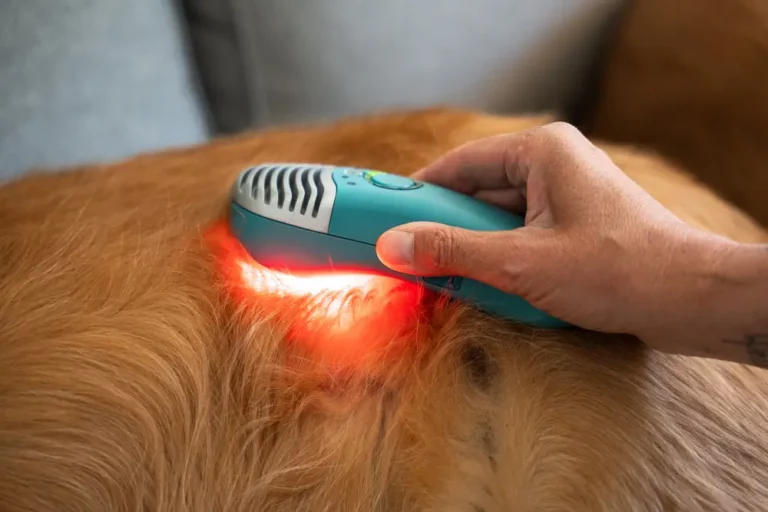
Photobiomodulation (PBM), also called red light therapy, low-level laser therapy, LED therapy, cold laser, and near-infrared therapy, refers to the same therapeutic category using light energy to influence cellular biology. It is used in veterinary medicine to help reduce inflammation and manage pain in dogs with knee osteoarthritis. If you’re new to this approach, start with our full guide to red light therapy for dogs.
When delivered at appropriate wavelengths and dose, it can improve blood flow, support joint health, and reduce joint pain in affected joints. It does not reverse structural damage in the dog’s joints but is commonly used as part of a multimodal approach to managing arthritis in dogs.
Looking for a complete guide to arthritis and red light therapy? See Red Light Therapy for Arthritis in Pets.
Not sure if this applies to your dog?
Get a clear answer in minutes.
Anderson
Quick summary
- Supports pain relief and helps manage pain in arthritic joints
- Helps decrease inflammation in synovial joints
- Most effective when used consistently as part of a treatment plan
- Commonly used alongside physical therapy, joint supplements, and medications
- Helps many dogs maintain mobility and quality of life
Why KOA Matters
Knee osteoarthritis is more than an old-dog problem. It’s a mobility killer. And it’s massive:
- Affects over 654 million people worldwide, with rising numbers in aging and overweight populations (Liu et al., 2023).
- In dogs, it’s one of the most common causes of lameness, especially in seniors and large breeds.
- Symptoms include joint pain, stiffness, reduced activity, and limping.
- Up to 90% of cats over age 12 show signs of osteoarthritis on radiographs, and many suffer in silence because cats are masters at hiding pain (Lascelles et al., 2010).
And here’s the kicker: There’s no cure. No treatment to stop it from getting worse. Just management—until now.
Knee arthritis in dogs: what’s actually happening
Knee arthritis in dogs is a form of degenerative joint disease that affects the synovial joints, leading to joint inflammation, breakdown of joint cartilage, and ongoing pain.
In many dogs, this condition develops after a cranial cruciate ligament rupture, which destabilizes the joint and accelerates wear. Over time, this leads to damage in one or more joints, especially in the back legs, where load and movement are highest.
Other contributing factors include:
- Hip dysplasia or elbow dysplasia
- Normal wear from activity over time
- Muscle atrophy and reduced muscle mass
- Poor joint health or prior injury
As arthritis progresses, the dog’s joints become less stable, more inflamed, and increasingly painful. This impacts mobility, posture, and overall quality of life.
In veterinary medicine, knee osteoarthritis is one of the most common causes of chronic joint pain and reduced mobility in dogs, particularly in older dogs and large breeds.
Signs of knee arthritis in dogs
Early detection matters. Many dogs show subtle clinical signs before more obvious mobility issues appear.
Common signs include:
- Limping or favoring one leg
- Stiffness after rest
- Difficulty standing or climbing stairs
- Reduced interest in regular exercise
- Muscle loss around the affected joints
- Notice swelling around the knee
- Changes in gait or posture
Some dogs may still try to stay active, even when in pain. Pet parents often miss early signs, especially in younger dogs or highly motivated breeds.
As arthritis progresses, these symptoms become more consistent and may start to impact your dog’s ability to maintain a healthy weight, stay active, and enjoy normal daily movement.
🩺 Seeing these signs?
Don’t wait until it gets worse..
What causes knee arthritis in dogs
Arthritis in dogs is rarely caused by a single issue. It typically develops from an underlying cause combined with long-term stress on the joints.
Common causes include:
- Cranial cruciate ligament rupture (one of the most common drivers)
- Joint instability and abnormal motion
- Degenerative joint disease from normal wear
- Previous injury or trauma
- Genetic conditions like hip dysplasia or elbow dysplasia
Over time, these factors lead to joint inflammation, cartilage breakdown, and pain that becomes chronic.
Standard treatment options for knee arthritis in dogs
Managing arthritis in dogs typically involves a multimodal approach that combines several treatment options.
Common approaches include:
Pain relief medications
Veterinarians often prescribe nonsteroidal anti inflammatory drugs (NSAIDs) to manage pain and decrease inflammation. These are among the most common drugs used in veterinary medicine for canine arthritis.
Other options may include:
- Anti nerve growth factor therapies
- Additional pain relief medications
- Multiple medications for more advanced cases
Joint support and supplements
Joint supplements such as fatty acids and other compounds may support joint health and reduce inflammation over time.
Physical therapy and rehabilitation
Physical rehabilitation plays a key role in managing arthritis and maintaining mobility.
This may include:
- Therapeutic exercise
- Motion exercises
- Underwater treadmill work
- Targeted strength building
These approaches help maintain muscle mass, reduce muscle atrophy, and support joint stability.
Lifestyle modifications
Daily habits matter more than most pet owners realize.
This includes:
- Weight control and weight loss when needed
- Maintaining a healthy weight
- Regular exercise without overloading the joints
- Avoiding slippery floors that increase strain
Surgical options
In severe cases, procedures like total hip replacement or other surgical interventions may be considered.
Where red light therapy fits in a treatment plan
Red light therapy is best viewed as part of a broader treatment plan, not a standalone solution.
In veterinary medicine, it is often used alongside:
- Pain management strategies
- Physical therapy and physical rehabilitation
- Joint supplements
- Lifestyle modifications
As a non invasive option, it provides an additional way to manage pain, reduce inflammation, and support joint health without adding more medications.
For many pet parents, this makes it an appealing option for long-term use, especially when managing arthritis in dogs over time.
Red light therapy as part of a multimodal approach
Managing arthritis in dogs requires more than a single intervention. Most treatment plans in veterinary medicine follow a multimodal approach that combines several strategies to support joint health and reduce pain.
This may include:
- Pain relief medications such as nonsteroidal anti inflammatory drugs (NSAIDs)
- Joint supplements including fatty acids to support joint health
- Physical therapy and physical rehabilitation
- Therapeutic exercise and motion exercises
- Weight control and maintaining a healthy weight
- Lifestyle modifications such as avoiding slippery floors
Red light therapy fits into this framework as a non invasive option that helps reduce inflammation, improve blood flow, and support healing in the dog’s joints without adding additional medications.
For many pet parents, this makes it a valuable tool for long-term pain management, especially when managing arthritis in older dogs.
Red Light Therapy: What It Does
Red light therapy, also known as low-level light therapy (LLLT) or photobiomodulation (PBM), uses red and infrared light to:
- Reduce inflammation
- Boost cell energy by stimulating cytochrome c oxidase in mitochondria
- Support tissue regeneration and healing
Most people think of RLT as a pain reliever—and yes, it is.
But here’s what’s more important: it reduces inflammation, too. And that’s a big deal.
Why? Because chronic inflammation doesn’t just cause pain—it actively damages the joint over time, accelerating the progression of osteoarthritis. Reducing inflammation isn’t just about comfort. It’s about protecting the joint and preserving mobility in the long run.
In pet terms? Less limping. More zoomies.
What is photobiomodulation (PBM)?
Photobiomodulation (PBM), also called red light therapy, low-level laser therapy, LED therapy, and near-infrared therapy, refers to a therapeutic approach that uses light energy to influence cellular biology.
In both human medicine and veterinary medicine, PBM is used to:
- Stimulate cellular activity
- Increase blood flow to affected joints
- Reduce inflammation and joint inflammation
- Support tissue repair in joint cartilage
These effects are especially relevant in conditions like canine arthritis, where inflammation and degeneration of synovial joints drive ongoing pain and reduced mobility.
Photobiomodulation is a well-studied therapeutic category with decades of research supporting its role in pain management, inflammation control, and tissue repair across both human and veterinary applications.
Want the full breakdown of how this works at the cellular level?
See the Science
Prove It: What the Research Says
Let’s cut through the noise and look at the actual studies:
🔬 Pain Relief
- A 2023 systematic review and network meta-analysis of 13 trials found that LLLT significantly outperformed placebo in relieving KOA pain (SMD = 0.96, 95% CI 0.31–1.61), but not stiffness or function (Liu et al., 2023).
- Another 2023 meta-analysis confirmed that LLLT reduced both pain and disability when delivered at the right wavelength and dose—4–8 J with 785–860 nm or 1–3 J with 904 nm per treatment point (Wang et al., 2023).
📏 Wavelengths That Work
- 904–905 nm was the most effective for KOA pain relief (SUCRA 86.90%), followed by 785–850 nm (SUCRA 54.97%) (Liu et al., 2023).
- Multi-wavelength systems didn’t outperform sham significantly.
💡 Dosage Recommendations
- WALT recommends:
- 780–860 nm → ≥ 4 J/cm^2 per point
- 904 nm → ≥1 J/cm^2 per point
- 780–860 nm → ≥ 4 J/cm^2 per point
- 904 nm → ≥1 J/cm^2 per point
- These match well with the dosing used in studies showing meaningful results (Wang et al., 2023).
🐀 As Effective as NSAIDs?
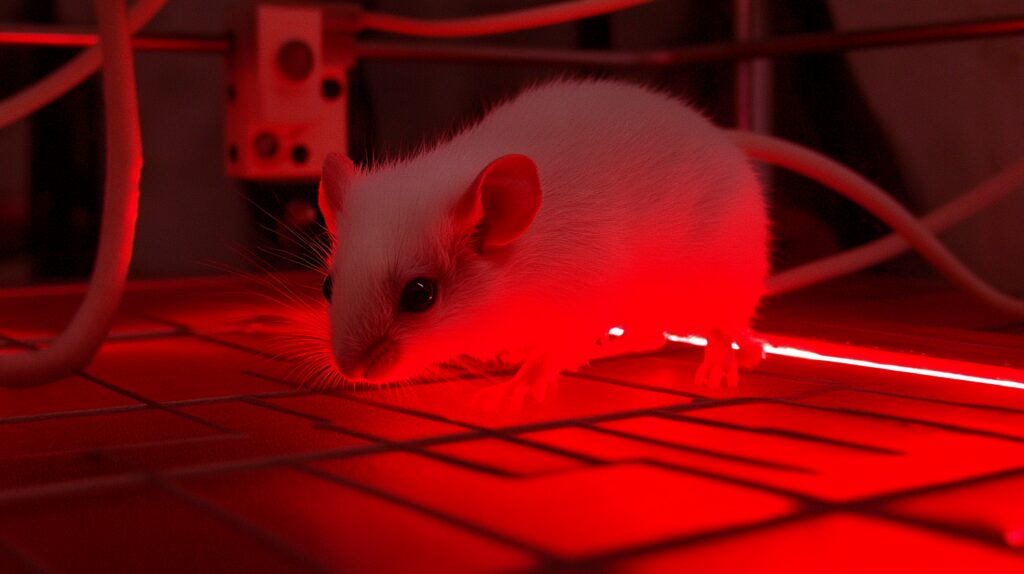
In one study on rats with KOA, LLLT (830 nm, 6 J/knee) reduced inflammatory markers—such as metalloproteinases and inflammatory cells—similar to diclofenac. But it was even more effective at reducing key pro-inflammatory cytokines (Alghadir et al., 2019).
For a deeper breakdown, see the science of red light therapy.
Real-World Application: Luma Protocol for Knee Osteoarthritis
Using the MedcoVet Luma, here’s a recommended at-home protocol based on WALT guidelines and the latest research:
🟣 Device Specs
- Wavelengths: 850 nm (IR) + 635 nm (Red)
- Power Density: 75 mW/cm²
- Aperture Size: 43 mm
- Total Power: 1100 mW
🟠 Protocol
- Treatment Area: Medial and lateral sides of the stifle (knee), targeting the joint capsule
- Time per Point:
- To deliver 4 J/cm^2 per point at 75 mW/cm²:
- 4 J /cm^2 ÷ 0.075 W/cm² = ~53 seconds per point
- To deliver 4 J/cm^2 per point at 75 mW/cm²:
- 4 J /cm^2 ÷ 0.075 W/cm² = ~53 seconds per point
- 4 J /cm^2 ÷ 0.075 W/cm² = ~53 seconds per point
- Points per Knee: 2–3
- Total Time per Knee: ~2–3 minutes
- Frequency: Daily for 2–3 weeks, then taper to 2–3x/week as maintenance
🎯 Goal: Reduce pain and inflammation, potentially delaying progression and improving mobility
What’s Still Emerging

While red light therapy shows strong evidence for reducing pain and inflammation in KOA, research on its effects on stiffness and joint function is still developing. The quality of existing studies varies, and many have small sample sizes or inconsistent dosing protocols (Liu et al., 2023).
Major guidelines (like OARSI) haven’t fully embraced it yet—not necessarily because it doesn’t work, but because more standardized, high-quality research is still needed to make it a go-to intervention across the board (Bannuru et al., 2019).
That said, the results so far are compelling—especially when protocols are clearly defined and followed.
Why consistency matters for results
Red light therapy works through cumulative effects on cellular activity, blood flow, and inflammation.
That means:
- One session may help temporarily
- Multiple sessions are needed for sustained results
- Consistency is critical for managing arthritis
Most dogs respond best when treatment is part of a regular routine, similar to physical therapy or exercise.
When used consistently, many dogs show improvements in:
- Pain levels
- Mobility
- Overall comfort
- Ability to maintain normal activity
Beyond the Joint: How Light Heals
The benefits of PBM go beyond joint pain. Research shows it can:
- Modulate inflammatory cytokines (IL-1β, IL-6)
- Shift macrophages from M1 (pro-inflammatory) to M2 (healing mode)
- Reduce synovitis and fibrosis—key features in advanced OA
- Stimulate angiogenesis and potentially aid cartilage repair
- Even modulate chronic pain by acting on spinal glial cells (Gonçalves et al., 2022)
Supporting your dog’s joints beyond treatment
No single therapy works in isolation. Supporting your dog’s joints requires a full-picture approach.
To help your dog maintain mobility and quality of life:
- Keep your dog at a healthy weight
- Use joint support strategies early, not just after symptoms worsen
- Maintain regular exercise to preserve muscle mass
- Follow veterinary advice for long-term care
- Combine therapies for better outcomes
This kind of multimodal approach helps many dogs live comfortably and maintain a normal lifespan, even with arthritis.
Clinical summary
Mechanism:
Photobiomodulation delivers red and near-infrared light energy into tissue, stimulating mitochondrial activity, increasing blood circulation, and modulating inflammatory pathways in arthritic joints. This supports tissue repair, reduces inflammation, and improves function in affected joints.
Evidence level:
Moderate. Systematic reviews and meta-analyses show significant reductions in pain scores in knee osteoarthritis when appropriate wavelengths and doses are used. Evidence in veterinary medicine aligns with findings in human medicine.
When it works best:
Mild to moderate arthritis, inflammation-driven joint pain, early stages of degenerative joint disease, and cases where consistent treatment sessions are maintained. Particularly useful alongside physical therapy, joint supplements, and other treatment options.
When not to use:
Severe structural joint damage, bone-on-bone degeneration, or when arthritis is not the primary underlying cause of pain. Should be used with veterinary advice as part of a broader treatment plan.
Clinical questions about red light therapy for knee arthritis in dogs
LLLT isn’t a magic wand. But with the right wavelength, correct dosage, and consistent use, it’s a powerful tool for managing knee pain in dogs with OA.
Final Take

Pain goes down. Movement goes up. No pills required.
Just light.
🐾 Ready to Take the Next Step?
Whether you’re just learning or ready to act — we’ve got you.
👉 Book a Free Consult
Talk to a licensed clinician about your pet’s condition and get a personalized plan. No pressure, just real help.
Evidence Citations
Sources & References
- Lascelles, B.D.X., et al. (2010). Cross-sectional study of the prevalence of radiographic degenerative joint disease in domesticated cats. Veterinary Surgery, 39(5), 535–544. PubMed: 20861491Arthritis is a common affliction in older dogs, leading to pain, stiffness, and reduced mobility. Finding effective treatments, like laser therapy, to manage your pet’s arthritis pain and enhance their quality of life is a priority for many dog owners.
- Liu, J., et al. (2023). Efficacy of low-level laser therapy in alleviating symptoms of knee osteoarthritis: a systematic review and network meta-analysis. PMC11455796
- Wang, Y., et al. (2023). Effectiveness of low-level laser therapy on pain and disability in knee osteoarthritis: a systematic review and meta-analysis. PMC10687633
- Alghadir, A. H., et al. (2019). Anti-inflammatory effects of laser therapy on knee osteoarthritis in animal models: a comparative study with NSAIDs. PMC6830679
- Bannuru, R. R., et al. (2019). OARSI guidelines for the non-surgical management of knee, hip, and polyarticular osteoarthritis. PubMed: 31845042
- Gonçalves, M., et al. (2022). Photobiomodulation therapy modulates macrophage polarization and promotes synovial remodeling in knee osteoarthritis. PMC9812996
🐾 Ready to Take the Next Step?
Whether you’re just learning or ready to act — we’ve got you.
👉 Book a Free Consult
Talk to a licensed clinician about your pet’s condition and get a personalized plan. No pressure, just real help.
👉Learn More About the Luma
Explore how our at-home red light therapy device works, why it’s different, and what it can do for your pet.

About the Author
Alon Landa is the CEO and co-founder of MedcoVet, a leader in at-home red light therapy for pets. With over 20 years of experience in medical technology and firsthand involvement in developing the Luma, Alon combines deep technical knowledge with a passion for improving pet health. He regularly collaborates with veterinarians and pet parents to advance photobiomodulation (PBM) care at home.
📍 Based in Boston, MA
📖Read more from Alon here

About the Medical Reviewer
Chris Cranston has over 20 years of hands-on experience in small animal physical rehabilitation and is a trusted voice in pet mobility and recovery. She is co-host of the PetAbility Podcast and was among the first 100 professionals worldwide to earn her Certified Canine Rehabilitation Practitioner credential through the University of Tennessee. Chris founded FlowDog in Massachusetts and continues her work through concierge rehab, consulting, and teaching.
Read More about Chris here.